
Peptide vendor sentenced to nearly 6 years in prison: ‘An incredible trail of harm’

▶ Watch Video: Man speaks out after peptide vendor’s sentencing: “I wanted to die”

SOUTH BEND, Ind. – A federal judge on Thursday sentenced the owner of a peptide company to nearly six years in prison after finding he built a massive business by deceiving customers and selling products that were adulterated with steroids.

Matthew Kawa, who ran Paradigm Peptides, pleaded guilty last year to selling unapproved drugs and illegally importing them from abroad. His sentence marks a rare criminal penalty for a seller of peptides that are labeled “for research use,” a largely unregulated marketplace that has become a go-to source for many people who look beyond established medical channels for ways to boost their health.

“You focused on what you wanted to build instead of thinking about the people,” U.S. District Court Judge Cristal Brisco said in sentencing Kawa to 70 months in prison, adding that Kawa ignored “numerous warnings” from regulators and left “an incredible trail of harm.”

Prosecutors estimated that Paradigm had 54,000 unique customers in all 50 U.S. states and in 80 countries. Kawa, 48, agreed to forfeit $5 million in proceeds from the business.

Kawa, wearing a gray suit, acknowledged that Paradigm’s customers relied on his false statements about the company’s products. 

“I’m deeply sorry I betrayed that trust,” he told the court. “I should have asked harder questions and made sure what we did followed the law.” Kawa declined to comment to CBS News after the sentencing.
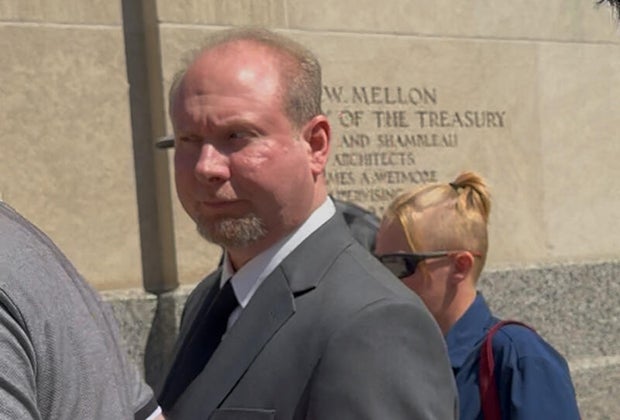
Matthew Kawa
Matthew Kawa, who ran Paradigm Peptides, pleaded guilty to selling unapproved drugs and illegally importing them from abroad. 

CBS News

Before it was shut down in March 2024, Paradigm Peptides looked like many vendors on the internet today: advertising its offerings as made in America, of 99% purity, tested by third-party labs — and with the disclaimer that they were “for research use only.” But its business, prosecutors say, was built on lies.

Paradigm imported its products from China, India and other countries, court filings show. Kawa admitted they forged laboratory certificates to lend credibility to their peptides. And when the government tested six compounds designed to mimic the effects of testosterone, prosecutors said that all of them contained actual testosterone — a steroid hormone subject to strict regulation because of the risks involved in taking it.

For years, Paradigm maintained that its products were only for research use, but Kawa admitted in his guilty plea that this was false. “I knew that Paradigm’s products were being marketed and sold for human consumption,” his plea deal states.

Brisco also sentenced Jennifer Stechkober, Kawa’s 32-year-old sister and main employee at Paradigm, to 16 months in prison after she too pleaded guilty. The judge found she was “not the mastermind” but “played an integral role” in Paradigm’s business and false statements.

“These individuals are taken out of circulation,” Adam Mildred, U.S. attorney for the Northern District of Indiana, said in an interview. “Hopefully this sends a deterrent message that this sort of behavior is not acceptable, to be lying to the American public.”

Peptides are chains of amino acids that deliver a set of instructions to the body — to store or burn energy, or to release more of a hormone — that have become wildly popular with people hoping to lose weight, gain muscle or even live longer. Such compounds are increasingly migrating into mainstream use despite a lack of FDA approval, with licensed physicians prescribing them and even New York bodegas getting in on the action.

“I would hope it’s a wake-up call for a lot of the other research-use-only companies out there because this is actual prison time, not just maybe a cease-and-desist or slap on the wrist,” said David Holt, an attorney who founded a boutique healthcare law practice. “That’s a whole different world.”

A life disrupted

In addition to peptides, Paradigm also sold products known as SARMs — or selective androgen receptor modulators — which can help build muscle but also come with a range of dangerous side effects, from elevating the risk of heart attacks to psychosis, the FDA has warned.

Paradigm labeled its SARMs as dietary supplements, and that made some customers, like Dan Murphy, comfortable that they must be safe.

“It’d be no different than taking vitamin D,” Murphy, a 32-year-old marketing consultant, said in an interview.

Murphy started taking SARMs from Paradigm in 2023. He was a believer in alternative, holistic medicine and comfortable with the biohacking ethos promoted by peptide vendors that, like Paradigm, tacked on a research-use disclaimer to their products. He had recently lost a lot of weight and was looking for a supplement to help build muscle.

“When I started taking the product, right away I felt an increase in energy,” he said. “I was really happy with that.”

Murphy found he could push his body more than ever before and began working out obsessively, he recalled. But as he took more SARMs from Paradigm over several months, he began having trouble sleeping. His sense of his business acumen became grandiose. He developed cystic acne on his back so acute that it was painful to put on a shirt.

He began suspecting his wife was conspiring to hold him back, and became paranoid that his mother-in-law was going to kill him, he said. Murphy had never before experienced mental illness and testified he didn’t recognize what was happening as he lost touch with reality and repeatedly thought about killing himself, he said.

“I lost friends, family, colleagues, clients and almost lost my life,” Murphy said. “I had gotten so detached from reality that I could not make any connection to the supplements as the cause.”
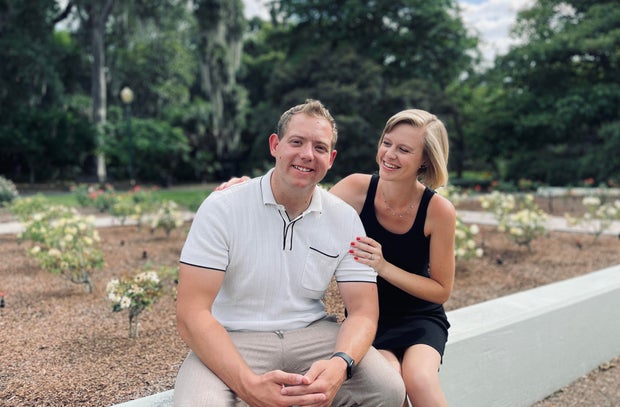
Dan Murphy
Dan Murphy, seen here with his wife Laura, is suing Paradigm Peptides over SARMs that he says tested positive for testosterone.

Courtesy of Murphy family

He was at a low point when, in February of 2025, he received a letter from the U.S. Department of Justice with the subject line: “Federal Investigation of paradigmpeptides.com.” Investigators had determined that many of Paradigm’s products that were marketed as SARMs “in fact contained testosterone.”

Initially Murphy thought it might be a scam. But soon, it became his Rosetta stone for understanding what had happened to him: He wasn’t a monster, he thought. He was a victim.

“It was this lightning rod of clarity,” Murphy said.

Murphy and his wife, Laura, found a bottle of a SARM he had ordered and had it tested by an independent lab. It came back positive for testosterone, according to Murphy and court records.

In his guilty plea, Kawa said he “did not test the SARM products that my business sold to customers.” He didn’t know that they contained testosterone, according to a memo by prosecutors, who argued that the lack of testing “demonstrates the recklessness” of his actions.

Murphy was ultimately evaluated by a medical expert, Erik Messamore, who diagnosed him with “steroid-induced psychosis.” Murphy hired a lawyer and is suing Paradigm Peptides, which Kawa is contesting.

“A game of whack-a-mole”

Prosecutors hope that the sentence will deter others involved in the booming peptide industry from similar conduct, but legal experts say the impact remains to be seen. Robert F. Kennedy Jr., the nation’s top health official, has talked up the benefits of peptides and urged the FDA to make them more widely available to consumers.

Just last week, an independent advisory committee to the agency recommended — over the objections of agency staff — to broaden access to six peptides. One of them, BPC-157, was among the unapproved drugs that Kawa was charged with selling.

“You go on these podcasts and listen to the secretary of [Health and Human Services] talk about peptides and wanting to expand availability to consumers,” George Karavetsos, a former FDA lawyer and federal prosecutor, said. Prosecuting bad actors, he said, is “a game of whack-a-mole.”

Even after Paradigm’s website went offline, similarly named websites have sprung up to offer the same products, sometimes with the same labels. One such site, paradigmpeptides.is, also promotes “research-grade peptides in the USA” that are “independently verified to 99%+” purity. The bottles featured on its site use what appears to be the same font, colors and design as Kawa’s company.

“We would like to clarify that we have no affiliation whatsoever with the previous Paradigm Peptides website, its former owner Matthew Kawa, or any related business,” the company said in an emailed response. The email stated that the company was “not aware that certain design elements could be perceived as resembling those used by the previous Paradigm Peptides,” adding “if any aspect of our labels or branding creates concern, we are fully willing to redesign and replace them.”

En el corazón histórico de Washington arranca una carrera de IndyCar respaldada por Trump

Los espectadores comenzaron a llegar en masa al centro de Washington este sábado para presenciar el primer día del Gran Premio Freedom 250, un evento de carreras callejeras de dos días cuyos motores rugirán entre el cercano Capitolio de Estados Unidos y los museos nacionales de estilo neoclásico de la ciudad.El tramo de la Calle 3 que servirá como línea de salida y meta está pintado de rojo, blanco y azul cobalto, con una gruesa franja de bandera a cuadros en blanco y negro que eclipsa las rayas más comunes de un paso peatonal cercano. Se instalaron grandes vallas metálicas alrededor del lugar para proteger a los asistentes que acudieron en masa al evento de IndyCar para ver pasar a toda velocidad los elegantes automóviles, que pueden alcanzar hasta 290 km/h.Con varias carreras preliminares programadas, las celebraciones de este sábado sirven de antesala para la carrera principal del domingo, a la que el presidente Donald Trump tiene previsto asistir. Antes de la carrera, el presidente dará una vuelta ceremonial al circuito en la limusina presidencial, conocida como “La Bestia”, y mostrará la bandera verde desde su asiento, según un funcionario de la Casa Blanca. El circuito de 2,6 kilómetros pone el broche final a un verano de celebraciones por el 250.º aniversario de la nación.El presidente aceleró los preparativos de la carrera mediante un decreto en enero, con el que eludió los obstáculos burocráticos locales e hizo realidad, menos de un año después de que fuera propuesta por el presidente de Penske Corporation, Bud Denker, el evento que se espera que atraiga a casi 300.000 personas en dos días.Los aficionados empezaron a llegar a la amplia zona del circuito bajo una ligera llovizna alrededor de las 8:00 a.m., hora de Miami, mientras los equipos se preparaban para las primeras sesiones de práctica. Hacia las 11:00 a.m., ya había varios miles de personas en el lugar. El mal tiempo no mermó el entusiasmo de los seguidores más acérrimos de las carreras, que viajaron desde distintos puntos del país para asistir al Gran Premio.Tom Lantz viajó desde Altoona, Pensilvania, con su familia —incluido su hijo de 12 años, Levi Steele— para asistir al evento. Lantz ha estado en varias carreras anteriormente, pero esta era la primera vez para Levi.“Me alegra mucho estar aquí”, dijo Levi.El circuito comienza en la Calle 3, junto al National Mall y frente al Monumento a Washington, y luego gira hacia la Avenida Pensilvania, la calle donde se encuentra la Casa Blanca. Desde allí, continúa por la Calle 9, pasa por la Galería Nacional de Arte y los Archivos Nacionales. La Avenida Pensilvania era crucial para el circuito porque su anchura permitió instalar una zona de pits donde los monoplazas de IndyCar se detendrán para cambiar neumáticos, cargar combustible y realizar reparaciones.Luego, el circuito gira hacia Constitution Avenue y atraviesa la calle 7, atraviesa el National Mall antes de girar hacia Independence Avenue, junto al Museo Nacional del Aire y el Espacio del Smithsonian. Después gira hacia Maryland Avenue y regresa a la Calle 3, con un recorrido de menos de 1,7 kilómetros y siete curvas.El domingo, los pilotos darán 147 vueltas alrededor de los monumentos, una cifra simbólica para celebrar el 250 aniversario de la nación con una carrera de 400 kilómetros.Los seguidores dijeron este sábado que estaban especialmente entusiasmados por los escenarios históricos de la carrera, ya que el Capitolio de EE.UU. visible desde una de las rectas del circuito.“La nostalgia de Washington, su legado: elegiría esto cualquier día”, dijo Scott Talbott, quien estaba de visita desde Dallas.Los espectadores se reunieron junto al circuito durante las sesiones de práctica, mientras algunos padres subían a sus hijos pequeños sobre los hombros para que pudieran ver mejor. Se colocaron pequeños bloques de concreto en intervalos regulares para ofrecer una mejor vista a quienes no estaban en las gradas.Los pilotos pasaron este sábado familiarizándose por primera vez con las complejidades del circuito. Parecían alcanzar las velocidades máximas en la recta de la Avenida Pensilvania antes de llegar a una curva cerrada en la Calle 9 NW. Más de un piloto pareció pasarse de la curva, lo que los obligó a dar la vuelta para regresar al circuito.Muchos residentes de Washington sentirán el impacto de la carrera aunque no asistan, ya que los funcionarios planean amplias restricciones de tránsito y estacionamiento en toda la ciudad con motivo del evento. La Administración Federal de Aviación (FAA, por sus siglas en inglés) también anunció que suspenderá los vuelos desde el Aeropuerto Nacional Ronald Reagan de 10:15 a.m. a 1:15 p.m. el domingo, aunque esos horarios podrían cambiar.Algunos de los emblemáticos museos Smithsonian de la ciudad se encuentran en el recorrido de la carrera, y los visitantes necesitarán una entrada para Gran Premio Freedom 250 para acceder a ellos. La Galería Nacional de Arte, situada junto a la calle de los pits de la carrera, informó que realizó un “exhaustivo estudio de vibraciones” y aplicó una serie de medidas de seguridad para proteger a los visitantes y a sus colecciones de arte de posibles daños causados ​​por la competición.Tanto la Galería Nacional de Arte como los cercanos Archivos Nacionales, que albergan los documentos fundacionales del país, estaban prácticamente vacíos cuando comenzaron las sesiones de práctica, algo inusual para un sábado de verano.La Freedom 250 no será la primera carrera celebrada en Washington para conmemorar el aniversario de Estados Unidos. En 1801, el presidente Thomas Jefferson celebró el 25 aniversario del país con una carrera de caballos cerca de los mismos terrenos donde está construido el circuito de IndyCar, según la Asociación Histórica de la Casa Blanca.Organizar esta carrera resultó algo más complejo de lo que habría sido en otra época.Para una ciudad acostumbrada a realizar malabares logísticos en eventos como la investidura presidencial, el Gran Premio planteó desafíos únicos, entre ellos reparar calles, instalar grandes y pesadas vallas y obtener permisos para llevar la carrera al centro de la ciudad.Antes de las rondas clasificatorias de este sábado, el equipo de Denker niveló con silicona casi 50 tapas de alcantarilla para evitar que los autos a gran velocidad las hicieran saltar.La seguridad será un aspecto crítico de cara al Gran Premio del domingo, ya que está prevista la asistencia del presidente y de varios miembros de su gabinete. Los asistentes deberán pasar por altos arcos detectores de metales, similares a los controles de seguridad de los aeropuertos.Desde este sábado, se desplegó un importante dispositivo policial que incluía a agentes del FBI, la Guardia Nacional, la Policía de Parques de EE.UU. y el Servicio de Investigación Criminal Naval.Las autoridades de Washington solicitaron al Gobierno federal que clasificara el evento como “Evento de Seguridad Nacional Especial” (NSSE, por sus siglas en inglés), una categoría reservada para las reuniones de mayor perfil y riesgo del país, como el discurso del Estado de la Unión y los funerales de Estado. El Gobierno de Trump denegó la petición y optó por aplicar el nivel 1 de la Evaluación de Clasificación de Eventos Especiales (SEAR, por sus siglas en inglés), la categoría de mayor rango inmediatamente inferior a un NSSE.Otro desafío para los organizadores fue atender a los residentes de Washington que viven en plena zona de actividad. Denker, presidente de Penske, previó que surgirían inquietudes sobre las molestias y el ruido, por lo que en mayo se reunió con vecinos y personas con oficinas cerca del circuito para exponer su plan y resolver dudas.Fuera de los accesos al recinto, quienes no tenían entrada estiraban el cuello para intentar ver los autos desde zonas públicas, como las inmediaciones de la estación de metro Archives-Navy Memorial, donde aún era posible divisar la pista.La mayor parte de las extensas obras para la carrera se realizó durante la noche, pero provocó la indignación de residentes molestos por las perturbaciones a gran escala en el centro de Washington.El costo de más de US$ 35 millones, pagado en su totalidad por IndyCar, apuesta por la carrera como una forma de atraer a nuevos seguidores y conmemorar el aniversario del país.“Lo primordial para mí —y suena cursi— es celebrar el 250 aniversario de nuestro país de formas que nadie esperaba ver”, dijo Denker.The-CNN-Wire™ & © 2026 Cable News Network, Inc., a Warner Bros. Discovery Company. All rights reserved.
Read Next Story