
Lindsay Clancy murder trial centers on ex’s 911 call: ‘She killed the kids’

▶ Watch Video: Lindsay Clancy trial features emotional testimony from ex-husband

As the triple murder trial of Lindsay Clancy continues on the South Shore of Massachusetts, jurors have heard a 911 call made by her ex-husband and were presented with harrowing details from the defense of the mother’s severe mental health struggles that persisted months before she strangled their three children on Jan. 24, 2023.

Prosecutors and Clancy’s attorneys have provided conflicting narratives: Plymouth County prosecutors allege the 35-year-old mother made a “calculated decision” in killing her kids, while the defense says she was overmedicated and suffering from extreme postpartum psychosis.

The trial so far has centered on Patrick Clancy’s testimony about his ex-wife’s past suicidal ideation and alleged statements that she had thoughts of harming the children. 

Lindsay Clancy has pleaded not guilty to three counts of first-degree murder in the deaths of her children — 5-year-old Cora, 3-year-old Dawson and 8-month-old Callan — in the family’s home in Duxbury. According to court testimony, after strangling the children, she then attempted suicide by cutting her wrists and neck and jumping out of her second-floor bedroom window.

Here’s what to know following Day 2 of the high-profile trial:

Patrick Clancy’s 911 call: “She killed the kids”

Patrick Clancy, who is divorced from Lindsay Clancy and has since remarried, testified Wednesday that he found his bloodied ex-wife outside the home after he returned from picking up takeout food and medicine for the kids on that tragic night.
david-l.jpg
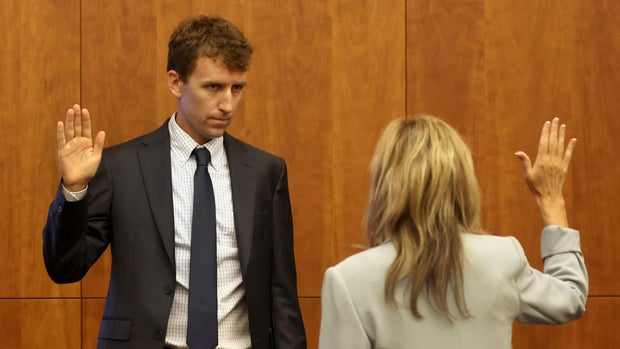
Patrick Clancy is sworn in for his second day of testimony in Plymouth Superior Court on Wednesday, July 29, 2026.

David L. Ryan/Pool

In the harrowing 911 call that lasted roughly 6 minutes, Patrick could be heard telling the dispatcher that his wife attempted to kill herself as he tried to keep her from losing consciousness.

“Lindsay, what did you do?” Patrick Clancy is heard in the call. “Where are the kids, Lindsay?”

He testified that she answered that the children were in the basement. She did not indicate that they were in danger or injured, he told the court.

Patrick Clancy is later heard in the call telling the dispatcher, “I’ve got to go check on my kids.” His footsteps can be heard as he apparently looks through the house before he’s heard screaming, “I need help in the basement right now … She killed the kids.”
Lindsay Clancy murder trial
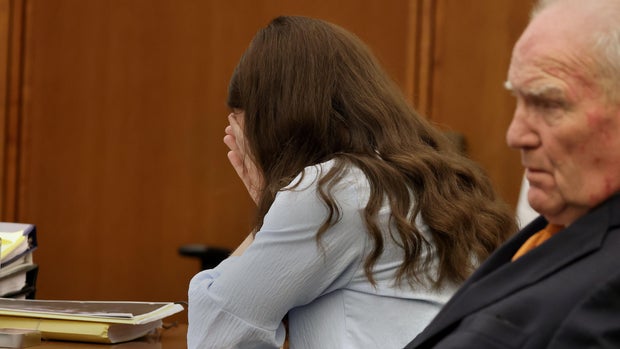
Lindsay Clancy cried as she listened to the 911 recording from Jan. 24, 2023, at her trial in Plymouth Superior Court on July 29, 2026.

David L. Ryan/Pool

In the courtroom, Lindsay audibly sobbed as she listened to the call for the first time with her face in her hands. Patrick Clancy had already left the courtroom after finishing his testimony before the call was played.

The judge previously approved Patrick Clancy’s request to keep the audio of the 911 call private and not release it to the media.

CBS Boston’s Kristina Rex, who was inside the courtroom, said hearing the call was “as horrific as you can imagine.”

Prosecutors show children’s clothes as ex-husband recalls gruesome details

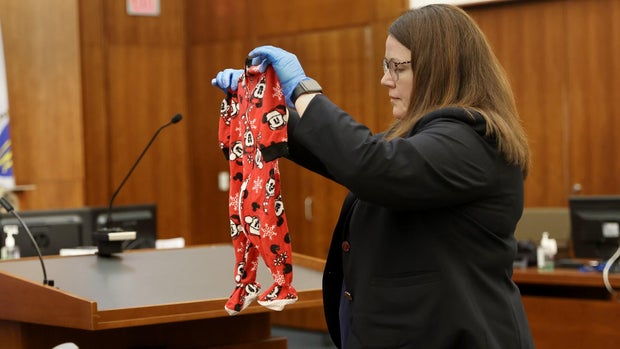
Before playing the distressing 911 call, the prosecution showed the jury the clothing worn by the three children and the exercise bands Lindsay Clancy allegedly used to strangle them. The mother did not look up during the presentation of evidence.
david-l-2.jpg
Pajamas are presented as evidence during Lindsay Clancy’s murder trial.

David L. Ryan/Pool

Patrick Clancy testified that when he reached the basement, he first saw his 5-year-old daughter, Cora.

“She had a band around her neck,” he said, referring to the exercise band. “She was face down.”

Patrick Clancy said he untied the band, but she was unresponsive. He said he then saw 8-month-old Callan next to her with an exercise band around his neck as well. The father said he next searched for 3-year-old Dawson and found him in his office, also with a band around his neck.

“I knew he was gone,” Patrick Clancy testified. 

He said he went “back and forth” between the children, trying to give CPR before first responders arrived and took over.

Patrick Clancy testifies ex-wife “heard a man’s voice”

Patrick Clancy said that his ex-wife was a loving mother to her kids, but she struggled with chronic insomnia, anxiety and intrusive thoughts. He said her mental health deteriorated in the months leading up to the tragedy.

“She was very dedicated. She did everything,” Patrick testified under cross-examination, adding that Lindsay would read the children books, make up songs, and bring them to music classes.

Patrick Clancy said he got a phone call from Lindsay Clancy a week after the children’s deaths, during which she talked about what she was going through at the time.
david-l-1.jpg
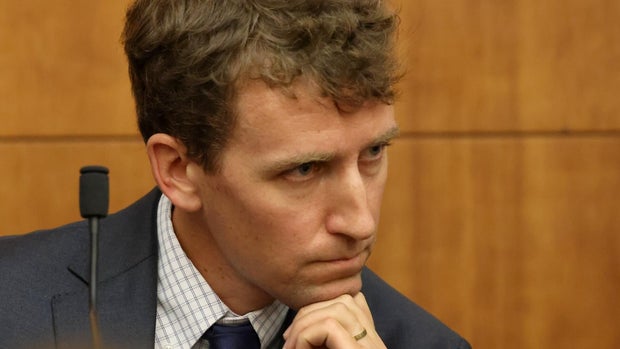
Patrick Clancy testifies in the murder trial of his ex-wife, Lindsay Clancy, who is accused of killing their three children.

David L. Ryan/Pool

“She said she heard a man’s voice telling her if she didn’t do it now she would lose her chance, or something like that,” Patrick testified.

He said he didn’t remember if Lindsay Clancy told him that she had psychosis.

“I didn’t know what psychosis was until after this happened,” he said.

Defense attorney details long list of Lindsay Clancy’s medications

Defense attorney Kevin Reddington on Wednesday detailed the long list of medications Lindsay Clancy had been prescribed, showing a diary the mother kept of how they made her feel.

One entry dated Dec. 12 said, “2.5 valium 200 seroquel — slept well horrible thoughts & no motivation.”

Patrick Clancy testified that Lindsay Clancy took the medications as she was instructed, but when questioned by Assistant District Attorney Jennifer Sprague, he clarified that he believed she did but “was not standing over her as she took the pill.”

On Monday, Patrick Clancy also spoke about his ex-wife’s mental health struggles, which included a stay at McLean Hospital for psychiatric treatment about one month before the children were killed.

He said that despite her recent struggles, Lindsay Clancy had “one of her best days” in the hours leading up to their deaths.

What’s next in the Lindsay Clancy trial

Jurors on Friday will visit the Duxbury home where Lindsay Clancy is accused of killing her three children, the judge said. 
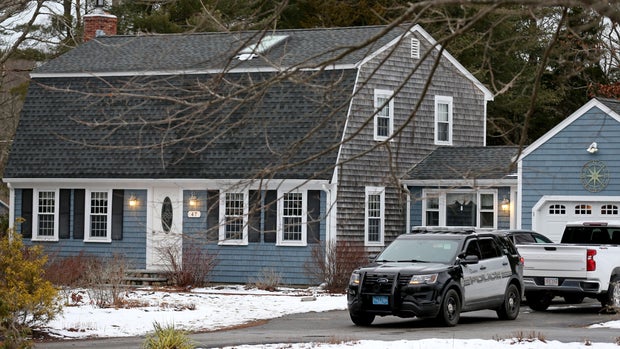
Duxbury Murder
A police cruiser sits in the driveway at 47 Summer Street, the home of Lindsay Clancy, 32, who strangled her three children and then attempted suicide, Jan. 24, 2023, in Duxbury, Massachusetts.

Matt Stone/MediaNews Group/Boston Herald via Getty Images

Police will secure the area during the jury visit on Summer Street.

“The parties will be permitted to visually inspect the outside of the property as well as the following interior areas: the basement, all rooms on the first floor, and all rooms on the second floor of the premises,” the court order states. “Parties are not permitted to open closet doors, touch any items within the premises, or disturb items.”


If you or someone you know is in emotional distress or a suicidal crisis, you can reach the 988 Suicide & Crisis Lifeline by calling or texting 988. You can also chat with the 988 Suicide & Crisis Lifeline here.

For more information about mental health care resources and support, The National Alliance on Mental Illness HelpLine can be reached Monday through Friday, 10 a.m.–10 p.m. ET, at 1-800-950-NAMI (6264) or email info@nami.org.

En el corazón histórico de Washington arranca una carrera de IndyCar respaldada por Trump

Los espectadores comenzaron a llegar en masa al centro de Washington este sábado para presenciar el primer día del Gran Premio Freedom 250, un evento de carreras callejeras de dos días cuyos motores rugirán entre el cercano Capitolio de Estados Unidos y los museos nacionales de estilo neoclásico de la ciudad.El tramo de la Calle 3 que servirá como línea de salida y meta está pintado de rojo, blanco y azul cobalto, con una gruesa franja de bandera a cuadros en blanco y negro que eclipsa las rayas más comunes de un paso peatonal cercano. Se instalaron grandes vallas metálicas alrededor del lugar para proteger a los asistentes que acudieron en masa al evento de IndyCar para ver pasar a toda velocidad los elegantes automóviles, que pueden alcanzar hasta 290 km/h.Con varias carreras preliminares programadas, las celebraciones de este sábado sirven de antesala para la carrera principal del domingo, a la que el presidente Donald Trump tiene previsto asistir. Antes de la carrera, el presidente dará una vuelta ceremonial al circuito en la limusina presidencial, conocida como “La Bestia”, y mostrará la bandera verde desde su asiento, según un funcionario de la Casa Blanca. El circuito de 2,6 kilómetros pone el broche final a un verano de celebraciones por el 250.º aniversario de la nación.El presidente aceleró los preparativos de la carrera mediante un decreto en enero, con el que eludió los obstáculos burocráticos locales e hizo realidad, menos de un año después de que fuera propuesta por el presidente de Penske Corporation, Bud Denker, el evento que se espera que atraiga a casi 300.000 personas en dos días.Los aficionados empezaron a llegar a la amplia zona del circuito bajo una ligera llovizna alrededor de las 8:00 a.m., hora de Miami, mientras los equipos se preparaban para las primeras sesiones de práctica. Hacia las 11:00 a.m., ya había varios miles de personas en el lugar. El mal tiempo no mermó el entusiasmo de los seguidores más acérrimos de las carreras, que viajaron desde distintos puntos del país para asistir al Gran Premio.Tom Lantz viajó desde Altoona, Pensilvania, con su familia —incluido su hijo de 12 años, Levi Steele— para asistir al evento. Lantz ha estado en varias carreras anteriormente, pero esta era la primera vez para Levi.“Me alegra mucho estar aquí”, dijo Levi.El circuito comienza en la Calle 3, junto al National Mall y frente al Monumento a Washington, y luego gira hacia la Avenida Pensilvania, la calle donde se encuentra la Casa Blanca. Desde allí, continúa por la Calle 9, pasa por la Galería Nacional de Arte y los Archivos Nacionales. La Avenida Pensilvania era crucial para el circuito porque su anchura permitió instalar una zona de pits donde los monoplazas de IndyCar se detendrán para cambiar neumáticos, cargar combustible y realizar reparaciones.Luego, el circuito gira hacia Constitution Avenue y atraviesa la calle 7, atraviesa el National Mall antes de girar hacia Independence Avenue, junto al Museo Nacional del Aire y el Espacio del Smithsonian. Después gira hacia Maryland Avenue y regresa a la Calle 3, con un recorrido de menos de 1,7 kilómetros y siete curvas.El domingo, los pilotos darán 147 vueltas alrededor de los monumentos, una cifra simbólica para celebrar el 250 aniversario de la nación con una carrera de 400 kilómetros.Los seguidores dijeron este sábado que estaban especialmente entusiasmados por los escenarios históricos de la carrera, ya que el Capitolio de EE.UU. visible desde una de las rectas del circuito.“La nostalgia de Washington, su legado: elegiría esto cualquier día”, dijo Scott Talbott, quien estaba de visita desde Dallas.Los espectadores se reunieron junto al circuito durante las sesiones de práctica, mientras algunos padres subían a sus hijos pequeños sobre los hombros para que pudieran ver mejor. Se colocaron pequeños bloques de concreto en intervalos regulares para ofrecer una mejor vista a quienes no estaban en las gradas.Los pilotos pasaron este sábado familiarizándose por primera vez con las complejidades del circuito. Parecían alcanzar las velocidades máximas en la recta de la Avenida Pensilvania antes de llegar a una curva cerrada en la Calle 9 NW. Más de un piloto pareció pasarse de la curva, lo que los obligó a dar la vuelta para regresar al circuito.Muchos residentes de Washington sentirán el impacto de la carrera aunque no asistan, ya que los funcionarios planean amplias restricciones de tránsito y estacionamiento en toda la ciudad con motivo del evento. La Administración Federal de Aviación (FAA, por sus siglas en inglés) también anunció que suspenderá los vuelos desde el Aeropuerto Nacional Ronald Reagan de 10:15 a.m. a 1:15 p.m. el domingo, aunque esos horarios podrían cambiar.Algunos de los emblemáticos museos Smithsonian de la ciudad se encuentran en el recorrido de la carrera, y los visitantes necesitarán una entrada para Gran Premio Freedom 250 para acceder a ellos. La Galería Nacional de Arte, situada junto a la calle de los pits de la carrera, informó que realizó un “exhaustivo estudio de vibraciones” y aplicó una serie de medidas de seguridad para proteger a los visitantes y a sus colecciones de arte de posibles daños causados ​​por la competición.Tanto la Galería Nacional de Arte como los cercanos Archivos Nacionales, que albergan los documentos fundacionales del país, estaban prácticamente vacíos cuando comenzaron las sesiones de práctica, algo inusual para un sábado de verano.La Freedom 250 no será la primera carrera celebrada en Washington para conmemorar el aniversario de Estados Unidos. En 1801, el presidente Thomas Jefferson celebró el 25 aniversario del país con una carrera de caballos cerca de los mismos terrenos donde está construido el circuito de IndyCar, según la Asociación Histórica de la Casa Blanca.Organizar esta carrera resultó algo más complejo de lo que habría sido en otra época.Para una ciudad acostumbrada a realizar malabares logísticos en eventos como la investidura presidencial, el Gran Premio planteó desafíos únicos, entre ellos reparar calles, instalar grandes y pesadas vallas y obtener permisos para llevar la carrera al centro de la ciudad.Antes de las rondas clasificatorias de este sábado, el equipo de Denker niveló con silicona casi 50 tapas de alcantarilla para evitar que los autos a gran velocidad las hicieran saltar.La seguridad será un aspecto crítico de cara al Gran Premio del domingo, ya que está prevista la asistencia del presidente y de varios miembros de su gabinete. Los asistentes deberán pasar por altos arcos detectores de metales, similares a los controles de seguridad de los aeropuertos.Desde este sábado, se desplegó un importante dispositivo policial que incluía a agentes del FBI, la Guardia Nacional, la Policía de Parques de EE.UU. y el Servicio de Investigación Criminal Naval.Las autoridades de Washington solicitaron al Gobierno federal que clasificara el evento como “Evento de Seguridad Nacional Especial” (NSSE, por sus siglas en inglés), una categoría reservada para las reuniones de mayor perfil y riesgo del país, como el discurso del Estado de la Unión y los funerales de Estado. El Gobierno de Trump denegó la petición y optó por aplicar el nivel 1 de la Evaluación de Clasificación de Eventos Especiales (SEAR, por sus siglas en inglés), la categoría de mayor rango inmediatamente inferior a un NSSE.Otro desafío para los organizadores fue atender a los residentes de Washington que viven en plena zona de actividad. Denker, presidente de Penske, previó que surgirían inquietudes sobre las molestias y el ruido, por lo que en mayo se reunió con vecinos y personas con oficinas cerca del circuito para exponer su plan y resolver dudas.Fuera de los accesos al recinto, quienes no tenían entrada estiraban el cuello para intentar ver los autos desde zonas públicas, como las inmediaciones de la estación de metro Archives-Navy Memorial, donde aún era posible divisar la pista.La mayor parte de las extensas obras para la carrera se realizó durante la noche, pero provocó la indignación de residentes molestos por las perturbaciones a gran escala en el centro de Washington.El costo de más de US$ 35 millones, pagado en su totalidad por IndyCar, apuesta por la carrera como una forma de atraer a nuevos seguidores y conmemorar el aniversario del país.“Lo primordial para mí —y suena cursi— es celebrar el 250 aniversario de nuestro país de formas que nadie esperaba ver”, dijo Denker.The-CNN-Wire™ & © 2026 Cable News Network, Inc., a Warner Bros. Discovery Company. All rights reserved.
Read Next Story