
▶ Watch Video: Fast-moving fires rip through West
Spokane, Washington — More than 40 large wildfires are burning in the West, fueled by severe drought, as over 100 blazes scorch parts of western Canada.
The Bug Fire near Reno, Nevada, has burned more than 15,000 acres, getting dangerously close to homes and forcing thousands of residents to evacuate over the weekend.
In Utah, two pilots were killed after their helicopter crashed on Friday while fighting the Widemouth 2 Fire, which has grown to more than 100,000 acres.
And in British Columbia, Canada, which borders Washington, the Bald Range Fire burned out of control, nearly doubling overnight as residents raced out. More than 20,000 people were ordered to evacuate the area of Summerland — 150 miles east of Vancouver — and officials say some residents had to be rescued.
“Aerial response teams were converted to emergency evacuation personnel,” said Ravi Parmar, minister of forests of British Columbia. “Eighteen of our aircraft were used to rescue more than 50 individuals.”
British Columbia declared a province-wide state of emergency Saturday as more than 100 wildfires burned across the province amid windy weather and prolonged drought.
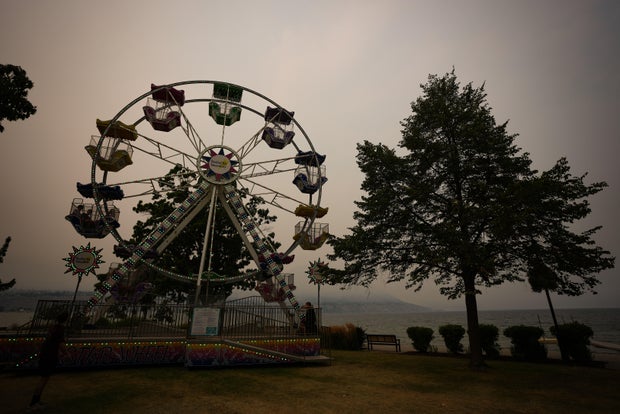
Darryl Dyck/The Canadian Press via AP
Last week, fires near Spokane, Washington, showed how quickly conditions can escalate. Blazes there destroyed nearly 1,000 structures.
Some evacuations in Spokane eased Sunday, but the hardest-hit neighborhoods remain closed while crews check for hot spots.
Spokane County Sheriff John Nowels said authorities were doing everything they could to get people back in their homes “as soon and as safe as possible.”
Officials have not said exactly when families in the hardest-hit areas can go home. Crews are still monitoring for hot spots and removing hazardous materials.