Man confesses from jail to killing wife, says he will reveal location of body

A Frenchman convicted for the murder of his wife who disappeared more than half a decade ago — and whose body was never found — has confessed from his jail cell to killing her, his lawyer said on Monday.

Cedric Jubillar, 38, was sentenced in October to 30 years in prison for murdering Delphine Jubillar, 33, following a trial that shocked France but in which he had always maintained his innocence.

Delphine went missing in rural southern France in December 2020 at the height of the COVID pandemic.

In four weeks of hearings in the southern town of Albi, the defense argued that because the body of his wife had never been found there was no certainty a crime had been committed, BBC News reported. But the jury of six civilians and three magistrates decided that there was enough circumstantial evidence to conclude that Jubillar was guilty of murder.
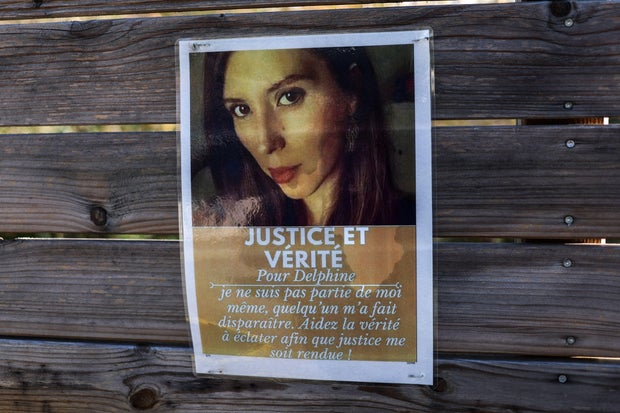
FRANCE-CRIME-JUSTICE-WOMEN-INQUIRY
A photograph shows a poster reading as “Justice and truth for Delphine, displayed in the neighborhood of the home of Delphine and Cedric Jubillar in Cagnac-les-Mines, France on Dec. 7, 2022. 

CHARLY TRIBALLEAU/AFP via Getty Images

But in a dramatic about-turn just over two months before his appeal was due to be heard, Jubillar wrote a “confession” admitting his involvement, his lawyer Pierre Debuisson told a news conference.

Jubillar is ready to “cooperate fully with the judicial authorities” and tell investigators where the body is located after hiding the corpse on the night of Dec. 15-16, 2020, he said.

He expressed hope that Jubillar’s move will allow their two young children to “grieve and give Delphine a proper burial,” adding his client “clearly regrets” his actions.

“It was the worst thing he did in his life,” the lawyer added. It remains unclear how Delphine Jubillar was killed.

FRANCE-MISSING-POLICE-RESEARCH
People take part in a search organized by French gendarmes in the woods of Milhars, France on Dec.23, 2020, to look for Delphine Jubillar.

FRED SCHEIBER/AFP via Getty Images

His legal team now believes it is impossible that the appeal trial can take place as scheduled in September, as their client will need to be re-interrogated and searches for the body take place.

Debuisson said Jubillar would give further details when interrogated.

In his confession letter, he mentions a dispute between the couple but does not give further details.

He had been convicted on the basis of a string of corroborating evidence, despite the lack of a body or any DNA evidence linking him to the crime. The trial heard Delphine asked for a divorce while having an affair with another man.

“We are relieved for the children,” said Malika Chmani, lawyer for the two young children.

“Now it is important that he tells us where the body is. I believe that is what will happen — at any rate, that is what we hope for,” she added.

During the murder trial, BBC News reported the court heard that Delphine had began an affair with a man she met online. Prosecutors alleged that on the evening of her disappearance, she had told Cédric Jubillar for the first time about the affair, which led to a fight and her ultimate death, probably by strangulation, the BBC reported.
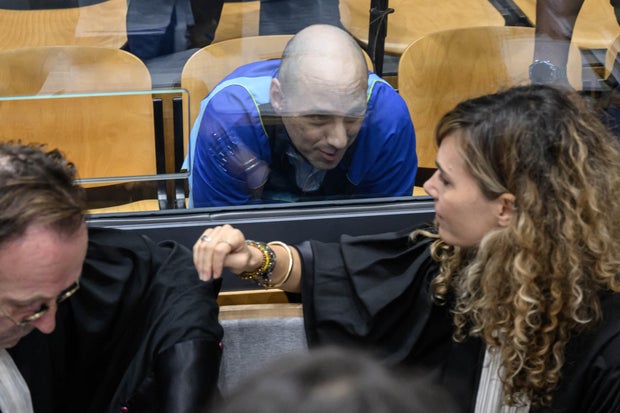
FRANCE-CRIME-MURDER-WOMEN
Cedric Jubillar reacts as he sits in the dock in the courtroom of the Tarn Assize Courthouse in Albi, France, on Sept. 22, 2025, on the opening day of his trial. 

ED JONES/AFP via Getty Images

Propietarios de viviendas demandan por la aplicación del impuesto a segundas viviendas en Nueva York

Un grupo de propietarios de viviendas de la ciudad de Nueva York demandó el viernes al alcalde Zohran Mamdani y al director de finanzas de la ciudad debido a la implementación del nuevo impuesto sobre segundas viviendas llamado pied-à-terre.Tres demandantes —Simon Hedley, Rachel O’Brien y Carmine Morano— alegan que “la ciudad identificó incorrectamente sus viviendas como potencialmente sujetas al recargo pese a que esas propiedades sirven como sus residencias principales”, según un comunicado de prensa.Aunque la demanda en sí no cuestiona la legalidad del impuesto, sí examina minuciosamente la publicación por parte de la ciudad de un padrón fiscal que incluía nombres y direcciones de más de 900.000 propietarios de viviendas de la ciudad de Nueva York, incluso si no estaban sujetos al impuesto, así como la distribución de avisos enviados a algunos de esos residentes.Según el Departamento de Finanzas de la ciudad, el padrón incluye viviendas familiares, así como cooperativas y unidades de condominio, pero señaló que “la gran mayoría de las propiedades y unidades listadas” no están sujetas al recargo. Un total de 17.000 propietarios recibieron las cartas que advertían que posiblemente estaban sujetos al impuesto.Una de las propietarias que interpuso la demanda afirma que fue incluida erróneamente en el registro de propiedades.“Es absolutamente absurdo que la ciudad identificara públicamente nuestra casa como una posible segunda residencia cuando mi esposo y yo vivimos aquí, criamos a nuestra familia aquí y la hemos convertido en nuestro hogar permanente”, dijo la demandante Rachel O’Brien en el comunicado. “La ciudad tenía registros disponibles que podrían haber confirmado eso antes de publicar nuestro nombre y dirección. Las familias no deberían verse obligadas a corregir los errores del Gobierno porque se apresuró una implementación políticamente conveniente”.Los demandantes están representados por Randy Mastro, quien se desempeñó como primer vicealcalde del exalcalde de la ciudad de Nueva York, Eric Adams.La demanda solicita al tribunal que declare ilegales tanto las notificaciones como el registro de propiedades del Departamento de Finanzas, y pide la retirada inmediata de la lista del dominio público. Asimismo, los demandantes buscan suspender cualquier obligación de respuesta para los propietarios que recibieron las notificaciones mientras el caso avanza, así como impedir nuevas medidas de aplicación hasta que el tribunal emita una decisión.Matt Rauschenbach, portavoz del alcalde Mamdani, declaró: “Tal como ha señalado el alcalde, somos conscientes de que, siempre que el Gobierno solicita algo nuevo a los neoyorquinos, tenemos la responsabilidad de garantizar que el proceso sea claro, transparente y accesible. Por ello, el Departamento de Finanzas ha trabajado sin descanso para resolver dudas, brindar asistencia y asegurar que los propietarios sujetos a este recargo dispongan de la información necesaria”. Añadió que “el Departamento Jurídico está preparado para defender enérgicamente a la ciudad frente a esta demanda”.El impuesto pied-à-terre, que impone un recargo a las segundas residencias en la ciudad de Nueva York valoradas en más de US$ 5 millones, así como a cooperativas valoradas en US$ 1 millón o más, se implementó como parte del presupuesto del año fiscal 2027 del alcalde Mamdani en un intento por cerrar la brecha presupuestaria de la ciudad. La gobernadora Kathy Hochul respaldó a Mamdani en esta idea.El Gobierno fue objeto de críticas por parte de propietarios de toda la ciudad debido a una lista pública publicada en internet el mes pasado, la cual incluía los nombres y direcciones de residentes de los cinco distritos, incluso de aquellos cuyas propiedades no estaban sujetas al impuesto. Aunque el registro fiscal se publica anualmente, esta vez generó una mayor atención pública debido a la implementación del nuevo gravamen.Los residentes afectados por el impuesto recibieron una carta del Departamento de Finanzas de la ciudad en la que se les informaba que debían acreditar que sus viviendas constituían su residencia principal antes de una fecha determinada para evitar el recargo. Tras las críticas recibidas, Mamdani anunció durante el fin de semana que el plazo se ampliaría cuatro semanas, hasta el 18 de septiembre.The-CNN-Wire™ & © 2026 Cable News Network, Inc., a Warner Bros. Discovery Company. All rights reserved.
Read Next Story