
I tried eating Erling Haaland’s World Cup ‘Viking diet’ for a day

▶ Watch Video: Breaking down Erling Haaland’s 6,000-calorie daily Viking-like diet to stay World Cup ready

Erling Haaland has become one of the biggest stars in world soccer. The Norway star currently making his mark on the World Cup is known for an extraordinary goal-scoring ability, imposing 6-foot-5 frame, silly social media personality — and a seemingly endless appetite.

The Manchester City striker has been reported to consume around 6,000 calories every day during periods of intense training and competition. Much of that comes from simple, protein-rich meals sourced from some of his favorite farms, delis and butchers around Manchester.

I decided to find out what eating like a Viking is really like.

Our first stop was breakfast.

The order was straightforward but substantial: Four scrambled eggs, two thick slices of sourdough toast, a large bowl of Greek yogurt and berries and a black coffee with a splash of maple syrup.

It was plenty filling, but Haaland has also spoken about drinking raw milk, so I washed down the already substantial breakfast with a bottle of the rich, creamy beverage

By lunchtime, I was already questioning my life choices. But the mission was just beginning.  

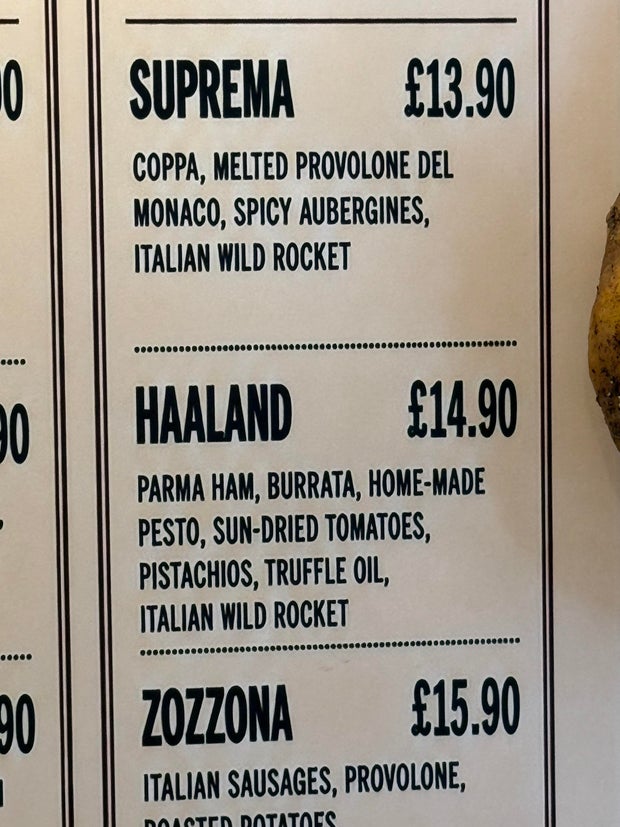
We headed to Haaland’s favorite Italian deli, Ad Maiora, where they’ve even named a sandwich after him. 
img-6699.jpg
The Haaland sandwich at Ad Maiora. 

Leigh Kiniry

“The Haaland” has Parma ham, burrata, pesto, sun-dried tomatoes and truffle oil, all stuffed into a fresh flatbread that’s about a foot long.

The struggle was real.

But dinner was still looming, and causing the most anxiety. Haaland loves a large steak. 

We visited the local butcher in Cheshire, an area outside Manchester where a number of famous footballers live. At The Cheshire Smokehouse, Wayne the butcher told us Haaland stops by to purchase many of his steaks, as well as venison, because it’s naturally lean and lower in cholesterol.

But I wasn’t there to take the sensible option. If it was going to be the full Haaland experience, it had to be a giant steak.

That evening, we headed to the Hawksmoor steakhouse, where the huge slabs of beef are seared over charcoal. We were told Haaland regularly orders bone marrow as an accompaniment, so that’s how I kicked off the meal.

On an already full stomach, with no bread or wine to ease its path, the marrow almost proved to be my breaking point.

Then the steak arrived.

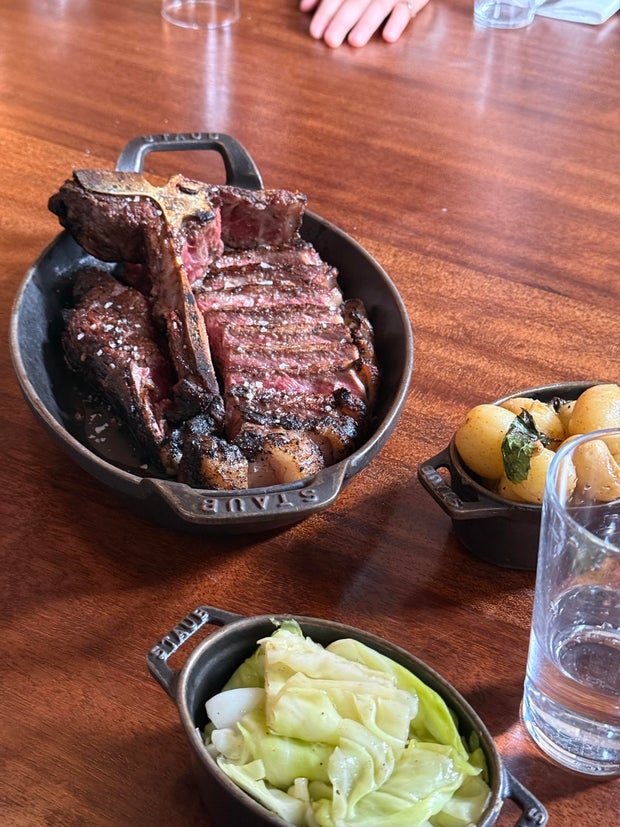
A beautifully charred, perfectly medium-rare porterhouse weighing an astonishing 2.6 pounds.

I gave it everything I had. But eventually, I had to admit defeat.
img-6730.jpg
A steak at Hawksmoor steakhouse. 

Leigh Kiniry

Eating like one of the world’s best soccer players is a lot harder than it looks. But then, I’m not a 25-year old professional athlete burning thousands of calories a day. 

I’m a 30-something mom of three who tried to keep up with one, for just 24 hours.

The experience brought a new appreciation for the extraordinary physical demands on elite athletes. All that meat and no wine?!

Haaland has captivated fans around the world with his goals, his personality and his larger-than-life presence. Norway’s success thus far in the World Cup has shown a global audience that, whether it’s scoring goals or clearing dinner plates, few people can keep up with “The Striking Viking.”


How Canada’s retaliation could hurt American businesses and consumers

(CNN) — Canada has a number of arrows in its quiver as it prepares to retaliate against the United States, and they could land hit American consumers and businesses.Already, Ottawa has vowed to match Washington’s latest tariffs dollar for dollar. But Canada also has other tools at its disposal, including restrictions on key exports to the United States.Here’s what Canada could do next — and what each move could mean for Americans.The first move: tariffsCanada’s first move in the brewing trade war is likely to be a straightforward eye-for-an-eye response.Retaliatory tariffs “will be concentrated in sectors such as steel, dairy, appliances, agricultural equipment, pulp and paper, and electronics,” Prime Minister Mark Carney said over the weekend, adding that more details would be shared “in the coming days.”With the exception of steel, all of those industries are also covered by President Donald Trump’s new tariffs. Canada is an important market for US exporters in those sectors: Last year, it ranked as either the largest or second-largest destination for American exports across most of those industries, according to US trade data.Carney also said Canada is considering tariffs aimed at industries Trump has already targeted with separate duties, including cars, steel, aluminum, lumber and copper.The risk for Americans here is that steep Canadian tariffs could weaken demand for these goods, which could force employers to cut workers’ hours or, in some cases, resort to layoffs.The bigger weaponsTrump already signaled he may go beyond the latest tariffs in his trade fight with Canada, threatening on Monday to double tariffs on Canadian cars and auto parts to 50% starting January 1.If Trump follows through — or escalates in other ways — Ottawa could use other ammunition.Canada could restrict key exports to the US, such as energy and a key fertilizer ingredient known as potash, said Diamond Isinger, a policy strategist and former special advisor on Canada-US relations to Prime Minister Justin Trudeau.Another vulnerable area is electricity. Ford said in an interview published Monday that Canada should be prepared to cut off electricity exports to the United States if the trade war worsens, putting a potentially powerful weapon on the table. Ontario supplies electricity to several US states, including New York, Michigan and Minnesota.Carney echoed Ford on Monday, telling reporters that “nothing is off the table.”Any such moves could add to the price pressures Americans have faced this year. Altogether the cost of living is up 3.4% from a year ago, according to July Consumer Price Index data. Gas prices, up almost 25% compared to last year, have weighed heavily on consumers’ finances. The cost of powering homes is also up, with electricity and piped gas both costing around 4% more annually.How badly will it hurt?Tariffs could make it harder for US companies to sell their goods in Canada.Restrictions on energy, electricity or critical minerals, something Ford also floated, could instead raise costs for American companies and consumers by making key inputs more expensive or harder to obtain.For instance, last year, Ontario briefly applied a 25% surcharge on electricity imports to the United States. The Ontario government estimated at the time that it would affect 1.5 million American homes, costing up to $400,000 CAD (around $280,000 USD) “every day the surcharge remains in place.”Restrictions on these key Canadian goods could quickly be felt by US businesses and consumers, making it harder to stay afloat, Isinger said.The-CNN-Wire™ & © 2026 Cable News Network, Inc., a Warner Bros. Discovery Company. All rights reserved.
Read Next Story