
Horse trainer discovers pre-dug grave of missing California teen

▶ Watch Video: Justine’s Voice

It was Labor Day weekend 2003 when Matt Scribner, a local horse farrier and trainer who also competes in long-distance horse races, was on his usual ride in a remote part of the Sierra Nevada foothills — just a few miles northeast of Auburn, California —when he noticed a freshly dug hole along the trail that piqued his curiosity. 

“48 Hours” correspondent Natalie Morales revisited the site on horseback with Scribner, who told her, “The rest of my ride, I kept trying to justify why [the hole] was there.”

“It sort of haunted you, it sounds like,” said Morales.   
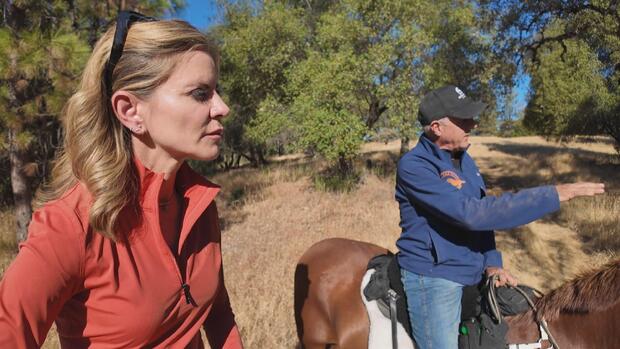
Matt Scribner and Natalie Morales
Matt Scribner, with “48 Hours”‘ Natalie Morales, points out where he saw the freshly dug hole along a trail in 2003. He found out later it was used to bury 17-year-old Justine Vanderschoot. 

CBS News

“It did,” Scribner agreed. And it would haunt him for years to come as Scribner tells Morales in an encore of “Justine’s Voice,” airing Saturday, July 25 at 9/8c on CBS and streaming on Paramount+.

Scribner had returned with his horse to ride the same trail a week later. He saw a search team gathering at the park and ride nearby. Like everyone in the community, Scribner was aware that local teen Justine Vanderschoot had been missing. As he rode past the area where he had seen the freshly dug hole, he now saw a mattress. Scribner says he didn’t suspect anything since the area was used as a dumping ground of sorts. It would be another week-and-a-half before he would realize he was a key witness in a murder case, when the local paper reported that Justine’s remains had been found, and her boyfriend, Danny Bezemer, and his roommate, Brandon Fernandez, had been arrested and charged with her murder.

“The Auburn Journal had a photo of just the brush … where Justine had been buried,” Scribner said. “I went, ‘Oh my gosh.’  … I saw the freshly dug hole three days prior to her disappearance. … I immediately … contacted the [Placer County] sheriff’s department.”

Retired Placer County Sheriff Ed Bonner told “48 Hours,” “That was a big piece of evidence … that’s absolutely coldblooded, premeditated.”
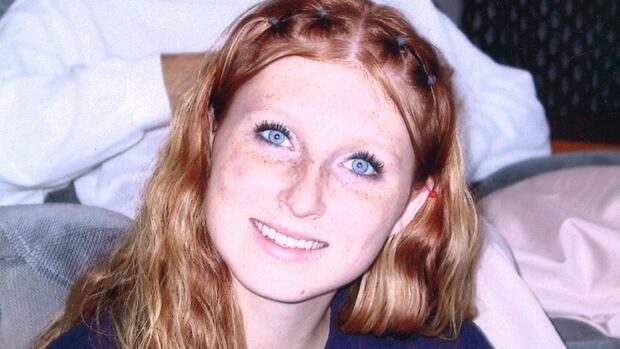
Justine Vanderschoot

Lynnette Vanderschoot

Justine’s parents, Don and Lynnette Vanderschoot, had reported her missing on Sept. 2, 2003, after Lynnette had awoken in the early morning hours to find that Justine wasn’t in her bedroom and her truck, normally parked in the driveway, was gone. They reached out to their community for help finding her, but more than two weeks passed with no sign of Justine.

 “It felt sinister,” Bonner told “48 Hours.”

Sheriff’s detectives spoke with people within Justine’s inner circle, and quickly zeroed in on Bezemer and Fernandez. Bezemer was known to be jealous and possessive, and, according to Justine’s friends, he believed she was cheating on him. 

“There is a belief right away,” Bonner said, “that [Bezemer and Fernandez] are concealing something about Justine’s disappearance. … We needed to separate them, number one, but to have one roll on the other.”

Placer County Sheriff’s detectives enlisted the help of the FBI. On Sept. 17, 2003, FBI agent Jeff Rinek and his partner Chris Hopkins interviewed Fernandez at the FBI building in Sacramento while Bezemer was questioned by detectives at sheriff’s headquarters. 

Rinek — who had earned a reputation for eliciting confessions, particularly in cases involving children — asked Fernandez a key question: “Have you ever seen anyone die, Brandon?” Under pressure, Fernandez confessed and led investigators to Justine’s grave — the same spot where Scribner had seen the hole freshly dug, then covered up. Fernandez said Bezemer had strangled Justine and made him help bury her. Her autopsy would later indicate she was still breathing when she was buried.

Bezemer admitted to detectives he strangled Justine, but alleged Fernandez was the mastermind. Placer County District Attorney Morgan Gire told Morales, “Brandon does a pretty good job incriminating Danny, and Danny does a pretty good job of incriminating Brandon.” 
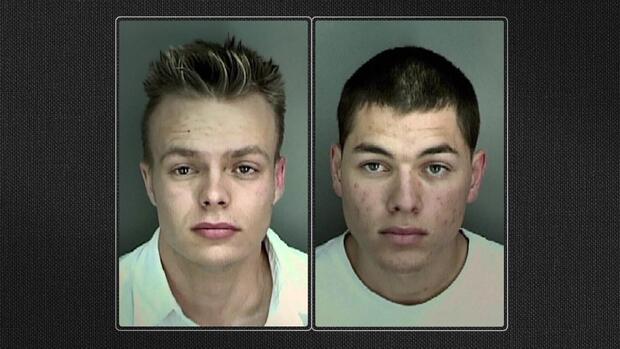
Danny Bezemer, left, and Brandon Fernandez

Placer County Sheriff’s Office

Taking into consideration Justine’s family’s wishes to avoid a painful, prolonged trial, both men were offered plea deals. In 2005, Bezemer pleaded guilty to first-degree murder and received a sentence of 25 years to life, while Fernandez pleaded guilty to second-degree murder in exchange for a sentence of 15 years to life. 

But after a 2018 change to the law of murder in California, Fernandez petitioned to have his murder conviction thrown out. The new law reduced the culpability of defendants who didn’t actually do the killing and didn’t intend for anyone to die, like a getaway driver in a robbery gone wrong. Fernandez asked to be resentenced as an accessory after the fact. His defense attorney Steve Defilippis told “48 Hours” his client is not guilty of Justine’s murder and insists Bezemer threatened him into helping him after the fact. 

Change in California law could provide path to freedom for a convicted killer

03:34

“Clearly Brandon was … in the wrong,” Defilippis said. “He shouldn’t have participated in the cover-up of this, and that’s what he did.”

Both sides would have to present their case in an evidentiary hearing in May 2024. If Fernandez’s petition is granted, he would be released on time served — a terrifying thought for the Vanderschoots, who say he is still dangerous.

“He still has not taken any responsibility,” Lynette said. “He’s guilty just as much as Danny.” 

“We’re fighting for her,” Justine’s sister, Christine, told Morales. “She doesn’t have a voice, so we’re her voice.”
Iranian women defy efforts by hardliners to enforce wearing of hijab

(CNN) — A cultural fault line in Iran has re-emerged in recent months amid the turmoil of war and the revamping of the country’s hardline leadership: how and whether to enforce the wearing of the hijab by women.At the height of the conflict with the United States this year, women without the headscarf were often seen at pro-government gatherings and in state media. The government and internal security forces had bigger issues to deal with.In one video an unveiled woman carrying an Iranian flag said her husband was in the military, and that she was proud of him.But in recent weeks, the clamor for restoring a hard line on what conservative clerics and politicians call “public nudity” has grown.Many Iranian women are openly flouting the rule – and authorities seem wary of launching a crackdown, for now. The regime appears to have more pressing priorities – presenting the conflict with the United States as an existential struggle, managing the deep economic fall-out and reorganizing the security apparatus under the leadership of Mojtaba Khamenei.Still, state media have been highlighting stories about cafes and other businesses being forced to close for failing to enforce rules on clothing. A CNN tally of articles in Iranian media at the end of last month found examples in half a dozen cities, including Tehran.Four years ago, the protest movement “Woman Life Freedom” ignited after the death in police custody of Mahsa Amini, a young woman who had been detained on accusations she was improperly dressed. It was brutally suppressed.Amnesty International reported at the end of 2024 that the Iranian authorities were waging war on women and girls “through an increasingly violent crackdown on those defying draconian compulsory veiling laws.”But the protests had lasting consequences. Despite the drumbeat of warnings and sporadic enforcement, there is widespread defiance of official regulations, especially among young Iranian women.On July 19, at least seven cafes and restaurants in Tehran were closed down for not enforcing the mandatory hijab, according to human rights group HRANA. The group also compiled lists of social media accounts that have been blocked for defying public dress codes.HRANA said authorities were using vague concepts such as “violation of norms,” “violation of modesty” and “failure to observe Islamic decency” in pursuing alleged offenders. But in one instance this month, it said a boutique was closed “due to unveiling,” without giving further details.On Monday the Tehran Prosecutor’s office said it would take serious action against alleged “indecency” violations and offenses at certain cafes and restaurants in Tehran, as well as shops selling clothing deemed “unconventional” or inappropriate.In the South Khorasan Province in eastern Iran, 10 cafes have been closed over alleged violations of “social norms and mandatory hijab rules,” the Mehr news agency reported, citing the province’s chief prosecutor.The relentless state media campaign on the issue often cites prayer leaders who insist the hijab is part of Iranian cultural identity and that women should observe modesty.Mohammad Javad Haj Ali Akbari, who leads Friday prayers in Tehran, claimed there were organized efforts to promote “nudity” and that some people are paid to appear in public with “improper” dress.There have been some high-profile cases. In June a popular Iranian singer, Parastoo Ahmadi, together with eight members of her band and production team, were sentenced in Qom to 74 lashes and banned from leaving the country for two years. Ahmadi had appeared with bare shoulders and uncovered hair at an event that she livestreamed on her YouTube channel in 2024.The charges included “offending public decency through the production and publication of vulgar and immoral content on cyberspace platforms.”Hardliners are stepping up pressure on the authorities. The editor of the journal Kayhan, Hossein Shariatmadari, wrote that enforcement is both a legal obligation and a religious duty for officials.A television show – “Park Way” – produced for the Tehran Municipality has devoted several episodes to the issue of women’s dress, calling for action against those who flout approved dress codes. One said that “unconventional behaviors should not be exhibited by anyone in public places such as parks.”Women have also been mobilized to demand the hijab be worn. At a small rally in Isfahan this week, one placard read: “Netanyahu: Unveiled women are our soldiers for free.”Netanyahu is not on record as making that remark, but the slogan reflects a broader narrative promoted by Iranian hardliners, portraying women who do not wear the hijab as, at the very least, disloyal to their country.But there’s plenty of evidence that many Iranian women are not intimidated by official campaigns.Social media videos have popped up showing young women on scooters wearing helmets, but no headscarves. The government is yet to fulfil a promise that women will be issued licenses to ride motorbikes.The videos include convoys of young women on scooters riding through Tehran and other cities. One Instagram post features a group of women declaring: “We’re the motorcycle girls of Shiraz! Shiraz girls, let’s go!”Another Instagram account posted video of about 20 female motorcyclists in the central city of Isfahan, describing it as “the biggest female motorcycle event in Isfahan.”As with so many social and cultural issues in Iran, the wearing of the hijab seems to some a misplaced priority at a time of conflict and economic crisis.That appears to include President Masoud Pezeshkian. Referring to an interview with a conservative cleric, he said: “The cleric mentioned hijab… Well, there are neighborhoods, there are mosques – go and work on it there! Can you really change people’s behavior through laws?”Pezeshkian went on to say that his daughter sometimes disagreed with him.“Does it mean I should force her?!” he asked.“Changing behavior is a cultural matter; it’s about belief. You can’t create belief in people through force.”Former MP Gholamali Jafarzadeh Imanabadi argued officials should focus on inflation and livelihoods instead of the hijab.And an unofficial media outlet posted an article entitled: A Provocation to a War-Weary Public - What Is Behind the Return of Hijab Patrols and Business Closures?Iranian authorities first began urging women to wear the hijab after the 1979 revolution. Before that, the monarchy had promoted a more secular and westernized image of women.Article 638 of Iran’s Islamic Penal Code criminalizes women appearing in public without “Islamic hijab,” although it does not precisely define what that means. A much tougher law approved in 2024 would have introduced a broader system of escalating penalties and surveillance, but its implementation was halted following intervention by the Supreme National Security Council.This has antagonized hardliners. One member of Iran’s parliament, Mohammad-Taqi Naqdali, said this week: “We see what the state of nudity and public vice is like in our midst…Israel and America cannot destroy us, but this decay that has plagued our religious culture and is spreading nudity in a disastrous and widespread manner in society will.”But the regime is treading carefully – for now.“They still don’t dare say anything to people on the street. Girls in Tehran are out and about wearing crop tops, shorts, and all kinds of clothes, and headscarves are practically no longer a thing,” one Tehran woman in her 60s told CNN by phone.“I don’t think they can make these girls wear headscarves again. But then again, that’s also what we thought when the revolution happened. We never thought they would be able to force us to wear them, but in the end, they did.”The-CNN-Wire™ & © 2026 Cable News Network, Inc., a Warner Bros. Discovery Company. All rights reserved.
Read Next Story