▶ Watch Video: The Day My Mother Never Came Home
Reginald Reed Jr., known as Reggie, spent more than two decades wondering who killed his mother, Selonia Reed, when he was only 6 years old. Selonia, a bank teller, was 26 when her body was found in her car in Hammond, Louisiana.
One of the last memories Reggie has of that day is his mother buying him a chocolate chip cookie at the Hammond Square Mall. He also remembers her kissing him goodbye but everything else is a blur.
“48 Hours” and contributor Vladimir Duthiers investigate what happened in the decades that followed in “The Day My Mother Never Came Home,” now streaming on Paramount+.
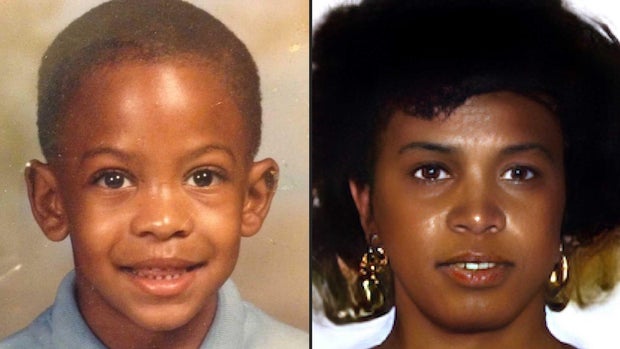
It was a hot summer day in August 1987 when Selonia’s body was found inside her blue Chevy Sprint in a parking area about one-and-a-half miles from the Reed home. Police said she had been bludgeoned, stabbed multiple times and stripped naked. It was clear, police said, that she was sexually assaulted.
Selonia’s husband Reginald Reed Sr. had reported her missing an hour or so before her body was found. Reginald told police on the morning of Aug. 23, 1987, that Selonia told him she was going out with a girlfriend the night before. That girlfriend later told police the two had “no plans” to go out that night, but Reginald stuck to his story.
As the investigation unfolded, police learned that Selonia had told relatives that Reginald was physically abusive and had talked about getting a divorce. He became an early suspect, but none of that suspicion reached the ears of Reggie, who was only a child.
Louisiana State Police
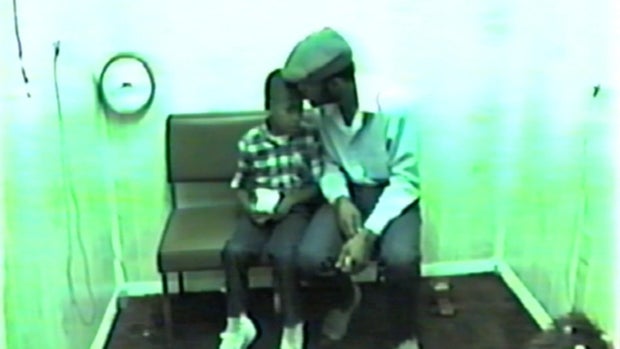
Reggie was questioned by police after they received permission from his father. The police videotaped Reggie’s interview with a police detective while his father sat next to him. He vouched for his father’s version of events, saying the two of them spent the evening playing video games and sleeping in the same sofa bed. In effect, Reggie became his father’s alibi. Years later, Reggie viewed that interview and became emotional when he saw his 6-year-old self crying that he wanted his “mommy” and “daddy.”
“I just can’t imagine what it’s like as a 6-year-old to have to sit there,” said Duthiers.
“Looking at that, it’s still hard to believe that that’s me,” said Reggie. “Watching that video just brings back so … so many questions and — and pain because … I see me crying.”
Reggie wrote a memoir about his experiences titled, “The Day My Mother Never Came Home.”
Reggie had no idea that his father was the prime suspect in the case until 25 years later in 2012 when a Texas Ranger showed up at his home. By then, Reggie was 31, had graduated college and was working for a pharmaceutical company near San Antonio.
“I was like, where’s this coming from?” Reggie told “48 Hours.” “I remember asking, is there any new evidence that was surfaced?”
But over the next few years, the new lead investigator in the case, Lt. Barry Ward of the Louisiana State Police, was able to come up with new evidence. Eventually, it was enough that Reginald and an alleged accomplice were indicted for second-degree murder.
The accomplice, a friend of Reginald named Jimmy Ray Barnes, agreed to testify against Reginald in exchange for a five-year prison sentence. In November 2022, Reginald Reed Sr. was found guilty of second-degree murder for killing Selonia Reed and was later sentenced to life in prison.
Ward told Reggie that police believe Reginald likely murdered Selonia in their bedroom while Reggie slept. Detectives believe he then placed her body in her car and drove to the spot where it was found. Reginald’s co-conspirator Jimmy Ray Barnes testified at trial that he met Reginald at the crime scene and saw Reginald in that car next to Selonia’s body.
To this day, Reggie continues to question his father’s guilt.
“I want justice, but I didn’t think justice was gonna come at the price of my dad going to prison for life,” Reggie told Duthiers who asked: “Do you believe that your father murdered your mother?”
“I don’t know … another question — do I think my dad had some involvement? Maybe. I don’t know though. I don’t know. So that’s where I’m just, it’s like a tug-of-war game.”
Reggie said he struggles to square what the state claims with the father he knew. Reggie appreciates that his father was loving to him, put him through private school and raised him to be the man he is today.
“Just knowing the type of father he is,” Reggie said. “I can’t just turn a page and just look at my father as a complete monster.”