(WASHINGTON) — Democrats on Thursday offered their prebuttal to President Donald Trump’s prime time address that they expect to focus on the 2020 election.
Georgia Democratic Sen. Jon Ossoff, whose home state has been the target of many of the administration’s election challenges, told reporters Thursday, “If the president declares Georgia’s elections illegitimate, or if the president declares Georgia’s sitting United States senators illegitimate, he is declaring Georgia voters illegitimate. It’s Donald Trump who tried to defraud Georgia voters in that election.”
Ossoff is up for re-election in November and his seat is being targeted by Republicans as a possible pickup opportunity. He predicted that Trump would use his speech to rehash challenges to the 2020 election that failed in court.
“Here’s what’s going to happen tonight: the world’s most famous sore loser will deliver a prime-time presidential sour grapes address to pursue his six-year-old grievances about the 2020 election, while his war in the Middle East spirals out of control and the cost of living continues to rise for Americans across the country,” Ossoff said.
In a White House briefing Thursday, press secretary Karoline Leavitt was tight-lipped about what the president would say besides that he will discuss “protecting the integrity of our elections.”
When pressed by a reporter about concerns from some Republicans that the president was litigating past elections that could turn off some swing voters, Leavitt said that Trump would focus on secure elections as key to American democracy.
“I’ve seen a lot of reporting and, frankly, misreporting about what the president will say. I think the American people will be relieved to hear what they are hearing from the president of the United States and his commitment to transparency and the focus on the integrity of our elections tonight,” she said.
When later pressed by ABC News’ Rachel Scott about the political concerns of some Republicans, Leavitt said only that people should wait until they’ve heard the speech.
Outgoing Republican Sens. Thom Tillis and John Cornyn and Rep. Thomas Massie said Trump looking back on the 2020 elections is not a productive message for the party as it heads into the upcoming midterm cycle.
Asked if he thought Trump focusing on the 2020 election going into the midterms was a good messages for Republicans, Tillis said, “No, not at all. Look, we can’t re-prosecute that campaign. Anytime you’re looking back, you’re not looking ahead and I’m looking ahead to these elections, and the president should as well.”
Massie said that the White House was “trying to convince the American people the problem is the elections” rather than other issues they are concerned about.
“The problem is not that we didn’t win the elections. The problem is that we broke our promises when we got here … So, it’s a ruse because they’re trying to convince the American people the problem is the elections. The problem is the people that they’ve elected.”
Cornyn said that he wasn’t pleased with Jay Clayton’s answers on the 2020 election during his Senate Intelligence Committee confirmation hearing to be Trump’s director of national intelligence on Tuesday when he refused to answer who won.
“I thought a lot of it was pretty silly,” Cornyn said of Clayton’s performance. “I don’t know why we’re still talking about the 2020 election on either side of the aisle. We got important work to do and I think the most important is coming up here in the midterms. “In the meantime, to continue to do the people’s work, and when we’re talking about what happened six years ago, I don’t think we’re doing them any favors.”
Sen. Mark Warner, the top Democrat on the Intelligence Committee, said Trump’s speech could influence how he votes on Clayton.
“If Donald Trump does what I expect and makes outrageous claims and uses those claims as an attempt to interfere in the elections, boy oh boy, more than ever do you need somebody in that role that’ll take truth to power,” he said.
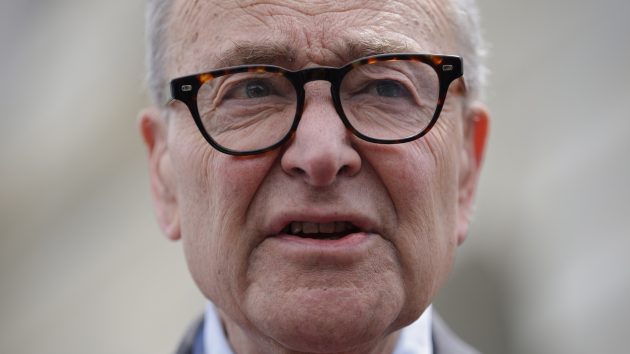
Senate Minority Leader Chuck Schumer told reporters that Trump is “scared to death that he will lose in 2026” and is trying to change the subject.
“The bottom line is, if Trump wants to win the American people over, instead of the bulls— that he’s peddling about 2020, he ought to focus on lowering people’s costs, getting rid of the chaos in administration, getting rid of the corruption,” Schumer said.
ABC News’ Michelle Stoddart contributed to this report.
Copyright © 2026, ABC Audio. All rights reserved.