
Cyclosporiasis cases in Michigan surpass 3,000 as health officials say lettuce or salad greens could be source

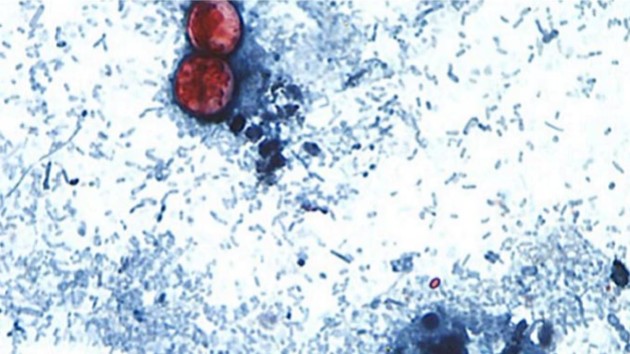
Cyclospora cayetanensis is a unicellular parasite that causes an intestinal infection called cyclosporiasis. (CDC)

(NEW YORK) — Reported cases of cyclosporiasis, an intestinal illness caused by a parasite, have surpassed 3,000 in Michigan, the state’s health department said on Tuesday.

Cases jumped more than 600 since Monday. There have been a total of 3,309 cases since June 22, according to the Michigan Department of Health and Human Services (MDHHS). At least 44 people have been hospitalized. Michigan typically sees about 50 cases per year.

Most cases have been reported in southeastern Michigan, including Wayne County, where Detroit is located, according to MDHHS.

On Monday, Michigan health officials said lettuce or salad greens could be the source of illnesses in the state.

MDHHS data shows that most cases have been among adults, with 30 to 39 year olds making up the highest share.

The outbreak was first identified on June 29, when the Monroe County Health Department announced it was investigating a cluster of cases.

Michigan health officials previously told ABC News the outbreak could be linked to food contamination. So far no produce, grower or supplier have been identified.

Earlier this month, MDHHS sent out recommendations to restaurants and other commercial kitchens in southeast Michigan to reduce risks of exposure.

The parasite usually spreads through food or water contaminated with feces, according to the Centers for Disease Control and Prevention. It does not typically spread person-to-person. 

Foodborne outbreaks of cyclosporiasis in the past have been linked to various types of imported fresh produce, such as raspberries, basil, snow peas, mesclun lettuce and cilantro, according to the CDC.

At least 31 other states have reported cases of cyclosporiasis, according to an ABC News tally, analyzing CDC data and state health department data.

As of Friday, New York has reported the second-highest number of cases at 470 cases since May 1, followed by Ohio at 364, state health officials told ABC News. Meanwhile, Illinois and Florida are each reporting more than 100 cases as of Friday, according to their respective health departments.

The CDC said it has confirmed 843 domestic cases from May 1 to July 9. The agency wrote on its website that it is “aware that states are likely to report higher case counts of cyclosporiasis than reflected in CDC data and is working closely with states to update numbers as additional cases are confirmed.”

The agency said it expects a six-week reporting lag between illness onset and case reporting to the CDC as it receives and reviews the data. 

Cyclosporiasis is treated with the oral antibiotic trimethoprim-sulfamethoxazole (TMP-SMX), commonly sold as Bactrim, Septra and Cotrim, and taken for 10 days, according to the CDC.

The agency says people can prevent infection by thoroughly washing produce, cutting away bruised or damaged parts of fruits and vegetables and refrigerating pre-prepared or pre-cut produce.

Additionally, the CDC recommends washing hands thoroughly with soap and water before handling or preparing raw fruits and vegetables.

ABC News’ Youri Benadjaoud contributed to this report.

Copyright © 2026, ABC Audio. All rights reserved.

Senate approves bill to fund government into December

Washington — The Senate approved a continuing resolution on Saturday to keep the government funded through Dec. 11, sending the bill to the House as Congress looks to avoid a government shutdown ahead of the midterm elections this fall. In a 90 to 6 vote, the Senate approved the measure, which would keep the government funded at current levels with some exceptions for six weeks beyond the Sept. 30 end of the fiscal year. It now goes to the House, where lawmakers have pursued a different approach. Before leaving town for its August recess, the House approved a separate continuing resolution that would also fund the government into December. But the GOP-led bill was passed with widespread opposition from Democrats. In the Senate, which has a 60-vote threshold to advance most legislation, GOP leaders pursued a bipartisan approach to the funding extension — acknowledging the need for support across the aisle. Top Republican and Democratic appropriators in the Senate announced on Sunday an agreement on a stopgap funding bill. Democrats touted, among other wins, a provision in the bill closing a loophole preventing the administration from transferring funds to Border Patrol, after they refused to fund immigration enforcement agencies earlier this year. GOP Sen. Susan Collins of Maine, the chair of the Senate Appropriations Committee, praised the stopgap funding measure for avoiding "any poison pills." Democrats had sought additional provisions that could have imperiled its passage. But one provision could still pose hurdles in the House, should it take up the bill when it returns from recess later this month. The bill includes language to temporarily prevent political appointees in the administration from implementing a proposed rule about federal grants. Democrats have warned that the rule will allow the administration to cancel grants and "take even more federal funding hostage," and have sought to permanently ban the rule. But even the temporary ban could cause the measure to lose support among Republicans. If House Speaker Mike Johnson moves forward with the Senate bill, it could pick up support from Democrats to propel it to passage. But whether pressure from members of his own conference pushes him to pursue a different course remains to be seen.The Senate approved the measure as it churned through a number of priorities while preparing to depart for a five-week August recess. The House is set to return from its recess on Aug. 31, at which point the lower chamber will have a matter of weeks to coalesce behind a plan to keep the government funded. For the bulk of lawmakers, following two record breaking government shutdowns within the last 12 months, the appetite for another funding lapse appears low. And with the midterm elections quickly approaching, both sides of the aisle appear inclined to push off the fight for now. 
Read Next Story