
Court dismisses Elon Musk’s case against Sam Altman and OpenAI

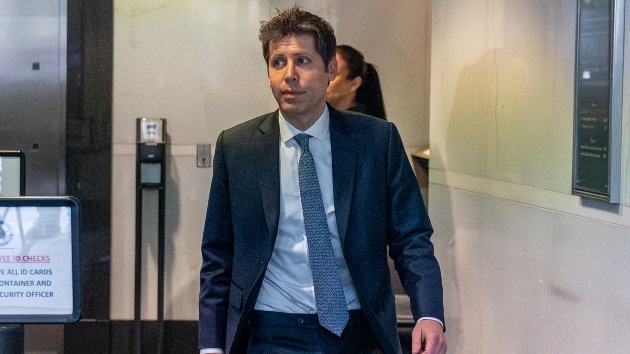
OpenAI CEO Sam Altman arrives to court at the Ronald V. Dellums Federal Building on May 12, 2026 in Oakland, California. (Photo by Benjamin Fanjoy/Getty Images)

(NEW YORK) — A jury on Monday found that Elon Musk waited too long to bring claims accusing OpenAI, under Sam Altman’s leadership, of abandoning its public-benefit mission as it moved toward a for-profit structure.

The nine-person advisory jury determined that the claims against OpenAI and Altman were barred due to the statute of limitations. Judge Yvonne Gonzalez Rogers accepted the determination and dismissed the claims.

The three-week trial at a federal courthouse in Oakland, California, featured testimony from Musk and Altman, as well as Microsoft CEO Satya Nadella.

When Musk sued OpenAI and Altman two years ago, he claimed that the company abandoned its mission of benefiting humanity.

Musk, a co-founder of OpenAI, said he reached an agreement with the company’s leaders on the nonprofit course of the firm when it launched in 2015.

Musk accused the company of later breaching agreement when it made ChatGPT-4 available for use by Microsoft — meaning the tech giant got access to the then-most powerful version of its popular chatbot under an exclusive licensing agreement. Microsoft and OpenAI have renegotiated the exclusive licensing agreement, allowing OpenAI to strike deals with other tech firms.

OpenAI rebuked the charges, calling them “baseless.” Microsoft also denied any wrongdoing. Musk, the world’s richest person, counts $803 billion in wealth, according to Forbes. He was seeking $150 billion in damages from the tech companies, as well as the removal of Altman from OpenAI’s board of directors.

Musk also sought a legal order that requires OpenAI to abide by its alleged founding mission of aiding humanity and retaining its nonprofit form

OpenAI, which is not publicly traded, valued itself at $852 billion after a round of funding in March. Microsoft’s value — as measured by market capitalization — stands at about $3.1 trillion.

Musk pleaded two claims against OpenAI: unjust enrichment and breach of charitable trust.

Lawyers for Altman argued that Musk was motivated by a pursuit of control over OpenAI, rather than an effort to safeguard its non-profit status. In fact, Musk sought to fold OpenAI into Tesla — a move that would have absorbed the venture into a for-profit entity, lawyers for Altman said in a legal filing.

In 2018, Musk told a former OpenAI employee that financial support from Tesla would help OpenAI compete with tech giant Google, the filing said.

“Tesla [was] the only path that could even hope to hold a candle to Google,” Musk said, according to the legal filing.

For his part, Musk said in the lawsuit that the agreement on OpenAI’s non-profit status was memorialized in a legal filing when OpenAI was incorporated.

In the lawsuit, Musk alleged that Altman and OpenAI President Greg Brockman reaffirmed the founding agreement in written messages over the ensuing years.

“[I] remain enthusiastic about the non-profit structure!” Altman wrote to Musk in 2017, according to the lawsuit.

Musk, who helped bankroll OpenAI, launched a rival for-profit AI company in 2023 called xAI, which built a chatbot that competes with ChatGPT.

Acknowledging his previous criticism of the pace and ambitions of AI development, Musk said in a conference call on X in July 2023 that he entered the industry reluctantly.

Copyright © 2026, ABC Audio. All rights reserved.

Who can see this year’s total solar eclipse — and why

(CNN) — Michael Zeiler is currently aboard the expedition ship Ocean Explorer, heading to the fjords of Greenland to view the upcoming total solar eclipse on Wednesday.The veteran eclipse chaser has an ambitious goal: to make the first-ever observation of an aurora during solar eclipse totality. He also said he hoped to spot a few meteors flying by from the ongoing Perseid meteor shower.Spotting these dazzling celestial displays together will take some luck. The good news? Seeing a total solar eclipse on its own does not. Thanks to powerful computer models and precise measurements, scientists can determine the path of an eclipse years, decades or even millennia in advance.Zeiler, an eclipse cartographer and founder of the website EclipseAtlas.com, knows this most of all. He has created eclipse maps for over two decades, visualizing for the public the path of totality so that others get the chance to see and even chase eclipses. Zeiler has been chasing them since he saw his first total eclipse in 1991.“My personal mission is to combine scientific accuracy with cartographic beauty. So, I think that for an eclipse map to really work, the first requirement is it has to be correct, has to be accurate, but it also has to effectively communicate the important information,” Zeiler said.The maps Zeiler creates are built on thousands of years of astronomical observations, mathematical calculations, and increasingly precise measurements of the Earth, moon and sun system that allows scientists to predict exactly where the moon’s shadow will fall on our planet — and who will have a front-row seat to totality.Who can see this year’s total solar eclipseA total solar eclipse darkens the skies when the moon passes between the sun and Earth, casting a shadow onto the planet and blocking the sun’s light from some areas of the world, according to NASA.Because the moon — about 2,159 miles (3,475 kilometers) in diameter — is much smaller than Earth, its darkest central shadow, known as the umbra, is only a few hundred kilometers wide. As the moon moves in its orbit, that narrow shadow sweeps across Earth’s surface, creating what’s known as the path of totality.People within the path of totality experience a total solar eclipse, which unfolds when the skies go momentarily dark as the sun disappears behind the moon’s shadow. During this year’s eclipse, totality will be visible for observers in parts of Greenland, Iceland, northern Spain and northeastern Portugal.Outside the path of totality, those viewers in the moon’s lighter outer shadow, called the penumbra, will see a partial eclipse, in which only part of the sun’s light is blocked from view. People in parts of Europe, Africa and North America will experience a partial solar eclipse this year.The narrow path of totality will span a length of 5,157 miles (8,300 kilometers), starting over the Arctic coastline at around 1 p.m. ET and ending near the Balearic Islands at around 2:30 p.m. ET. Depending on where one is located, the duration of totality can vary. For example, in Reykjavík, Iceland, totality will begin at around 1:48 p.m. ET (5:48 p.m. local time) and last for about one minute, whereas in León, Spain, totality will begin around 2:28 p.m. ET (8:28 p.m. local time) and last for about two minutes. To check when the eclipse will occur in your area, and what it will look like, check Time and Date’s website.Eclipse maps also can help people determine where they want to be to observe an eclipse. Some eclipse chasers prefer to observe from the edge of totality to see certain phenomena that you can’t see near the center, Zeiler said. One of these events is known as Baily’s Beads, when flashes of light shine through gaps along the moon’s uneven edge.Totality maps are highly accurate for the most part, but there is always room for improvement.“Right now, the most accurate is somewhere around a kilometer to maybe a kilometer and a half,” said solar physicist Alex Young, associate director for science communication in the heliophysics science division at NASA’s Goddard Space Flight Center in Greenbelt, Maryland. “We haven’t gotten down to the meter scale yet. But I think that we perhaps will eventually get down to that scale.”Young pointed to calculations from the most recent total solar eclipse that was visible from Mexico, the United States and Canada in April 2024. They showed that the sun’s radius was slightly different than previously estimated. That small difference shifted the predicted edges of the path of totality in some areas.“There are also a lot of solar missions that are still up that will be continually providing data that may allow us to make even better calculations,” he added.After Wednesday’s event, the next total solar eclipse won’t happen until August 2, 2027. The spectacle will be visible in North Africa and the Middle East. And it won’t be until August 23, 2044, that a total solar eclipse will be visible from some parts of the contiguous United States.How eclipse paths are determined and mappedTotal solar eclipses never repeat along exactly the same path. However, the recurring alignment of the Earth, sun and moon about every 18 years means they do follow a cycle that brings them across similar paths. Earth’s rotation causes the path to slightly shift a few degrees, said Philippe Escoubet, a space plasma scientist and spokesperson with the European Space Agency.This cycle, now called the saros cycle, was first recorded by the ancient Babylonians, who used clay tablets in late BC years to track celestial objects and planets, according to the European Space Agency.Because of this cycle, astronomers can predict the path of totality well in advance. If you are on the path of totality, you’re guaranteed to see something spectacular, Escoubet added.“With our models that we have, we can predict when the eclipse will take place within a minute,” Escoubet said. “The only thing that could change is if you change the orbit of the moon or the Earth. This means that you would need a very big asteroid hitting one of them, and then you would change the orbit, you know, of the moon or the Earth. But the probability to have that is very low.”Over the years, predictions have become more accurate as our understanding of space has advanced. For example, Galileo observed that the moon was not perfectly spherical in 1610, allowing for a more precise prediction of where the natural satellite’s shadow will fall during an eclipse.The saros cycle is still used today to identify patterns in future eclipses. But there are many other factors to consider, such as the moon’s position in its orbit, the moon’s distance from Earth and Earth’s orbit around the sun, Young said.Not only is this geometry complicated, but Earth’s rotation and other objects in space shift over time and have to be accounted for. The moon, for example, will be far enough away from Earth in about 600 million years that our planet won’t experience total eclipses anymore, Young added. This movement from the moon causes Earth’s rotation to slow — but our planet’s rotation also fluctuates unpredictably from year to year. To account for these changes in Earth’s spin, astronomers use a correction called Delta T, which accounts for the small difference between Earth’s predicted rotation and its actual rotation over time.This offset and the uncertainty in Delta T are why predictions of eclipses can only go back or forward a certain amount of time. Typically, the area of confidence lies around 3,000 years into the future and about 2,000 years into the past, Young added.But even with all this sophisticated science behind eclipse predictions, it’s not just for “astronomy geeks,” eclipse chaser Zeiler said. “It’s for everyone, because during the precious moments of totality, darkness suddenly rushes over you, and in a blink of an eye, you see the sun’s corona around the moon, and you see an amazing light show all around you. That’s why people like us go.”The-CNN-Wire™ & © 2026 Cable News Network, Inc., a Warner Bros. Discovery Company. All rights reserved.
Read Next Story