
Truck computer contains clues to motive in murder, prosecutors say

▶ Watch Video: Sneak peek: The Hit-and-Run Homicide of Davis McClendon

When authorities in Greenwood, South Carolina, arrived at the deserted intersection after 1 a.m. on May 7, 2023, they found a mangled BMW sedan in the road with debris scattered around it. On the shoulder near the woods, lay the car’s fatally injured owner, 46-year-old Davis McClendon. But something about the scene seemed strange.

McClendon was about 50 feet away from his car, suggesting he’d been outside standing next to it and been hit. His shirt and shoe were lying on the pavement. There was no other vehicle with relevant damage.

McClendon’s girlfriend, Meredith Haynie, was there by the time authorities appeared, but she said she hadn’t been there to see the collision. Authorities would use an array of evidence to build a murder case against Haynie’s soon-to-be-ex-husband Bud Ackerman, who would claim hitting McClendon with his truck had been an accident. But prosecutors argued the touch screen computer in the dashboard of Ackerman’s Ford F-250 pickup truck provided a blueprint of the intent they needed to prove he’d been targeting McClendon that night — and killed him with “malice aforethought.” 
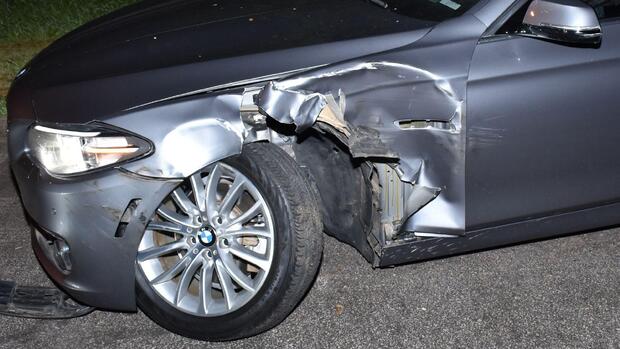
Davis McClendon's mangled BMW sedan.
Davis McClendon’s mangled BMW sedan. His body was found about 50 feet away from the vehicle,  suggesting he’d been outside standing next to it and been hit.

Greenwood County Sheriff’s Office

Haynie tells “48 Hours” correspondent Anne Marie Green she’d been on a date with McClendon that night, before he’d vanished out of a local club at 12:51 a.m. Haynie’s only TV interview is featured in “The Hit-and-Run Homicide of Davis McClendon.” An encore of the broadcast airs Saturday, August 22 at 10/9c on CBS and streaming on Paramount+.

Haynie told authorities she and McClendon had begun the evening at a restaurant called Break on the Lake. Next, they’d gone to a party and then to a well-known club called Key West. When McClendon suddenly left out the back door, she said she had suspected he was going to meet Ackerman, who had been critical of her and McClendon for seeing each other before Ackerman’s and Haynie’s divorce was final. She said Ackerman had been compulsively calling her that night. And she allowed investigators access to her phone, which turned out to contain texts supporting her account.

“What did the text messages reveal?” Green asked lead detective Lt. Matthew Womack of the Greenwood County Sheriff’s Office. 

“It showed the pattern of what she was explaining to the on-scene investigators,” Womack replied. “Like him calling multiple times, him texting multiple times, things of that nature.”    
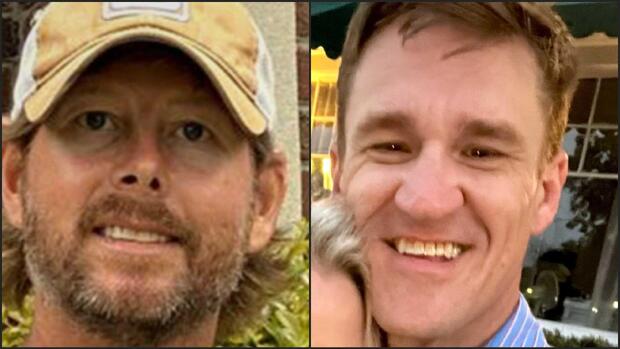
Bud Ackerman, left, and Davis McClendon.

Meredith Haynie

Within minutes of arriving at the scene of the crash, authorities suspected Ackerman had run McClendon down. There was an oil trail leading from the crash site directly to the house where Ackerman was living. And evidence suggested Ackerman’s pickup sideswiped the sedan, hitting McClendon next to the driver’s door, carrying him across the road and depositing his body where it was found.

Having heard Haynie’s story, investigators hoped they could get more information from Ackerman himself. They soon located him at his parents’ home about a half mile from the crash site and they found his pickup truck leaking oil in the driveway. But when they tried to question him, Ackerman referred them to his attorney.

In the coming days, investigators would retrieve time-stamped video showing Ackerman at the locations where Haynie and McClendon had spent their evening out and soon afterward, near the crash site itself. But Ackerman still wasn’t talking much to them.

That’s when his truck started speaking for him.

Womack says the touch screen computers or “infotainment systems” in many modern cars measure and store incredibly detailed information about how, when and where the vehicle is being operated. And Ackerman’s pickup truck was no exception. When authorities extracted data from the onboard computer, they found a motherlode of incriminating measurements.
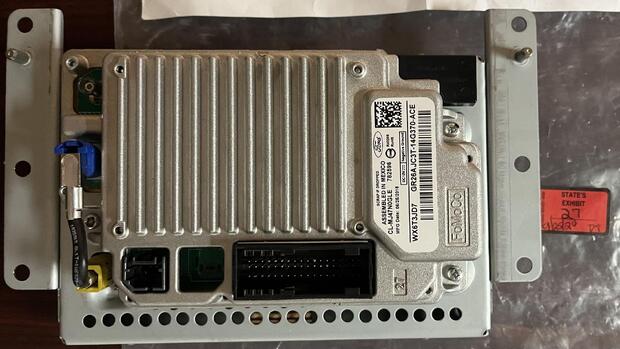
Ackerman infotainment system
The touch screen computer or infotainment system from Bud Ackerman’s pickup truck stored incredibly detailed information about how, when and where the vehicle was being operated.

Greenwood County Sheriff’s Office

“… In a 24-hour time period, it’s over 3,000 events …” Womack told Green. “And then each one is time-stamped … for each event.”

He says Ackerman’s “infotainment system” logged a series of communications almost like  digital “handshakes,” in which the truck automatically pinged public Wi-Fi systems it happened to pass.

“…Let’s just say there was … a fast-food restaurant … and the device will do what we call a handshake with that,” Womack explained. “Essentially the fast-food restaurant will say, hey … your device can connect to me and … the vehicle says, I see you …” 

By plotting the locations of the truck’s digital handshakes and using other data from that night, authorities were able to establish a route Ackerman had traveled. It showed that over the course of the evening, he’d driven past the Key West Club, Haynie’s house, Break on the Lake restaurant, and onto McClendon’s street. Data also showed Ackerman’s truck had been near the scene of the collision when it occurred.

And that’s not all. Womack told “48 Hours” the pickup also stored performance information, including measurements like speed and acceleration.

“It told you … speed, um, it told you the braking. Whenever he shifts the gears, when he opens the door, when he connects his phone, when he disconnects his phone … I mean, it tells you a lot of information.”

Experts would determine that seconds before the impact, Ackerman was driving about 25 miles per hour on the dark road. It was in his neighborhood, so it’s likely he would have known it was a dead end. At precisely 1:11:33 a.m., the data showed a “wheel slip,” in which acceleration or braking caused the tires to lose contact with the road.

“… We could narrow it down to tenths of seconds when the collision occurred,” Womack said, adding that data show seconds later, Ackerman’s truck had stopped. “… Bud’s opening the door to his vehicle, um then … he shifts it to park.”

Womack said Ackerman then got out of the truck.

“… Then he gets back in and then it’s shifted to drive,” Womack continued, adding that minutes later, Ackerman’s truck stops again and his phone disconnects from the vehicle’s computer. “That’s when he got home and got out,” Womack said. 

“And took his phone with him?” asked Green. 

“And took his phone with him. That’s correct,” Womack replied.

Bud Ackerman had been arrested within hours after the collision, but his attorney Jack Swerling says much of the authorities’ narrative of that night is not correct.
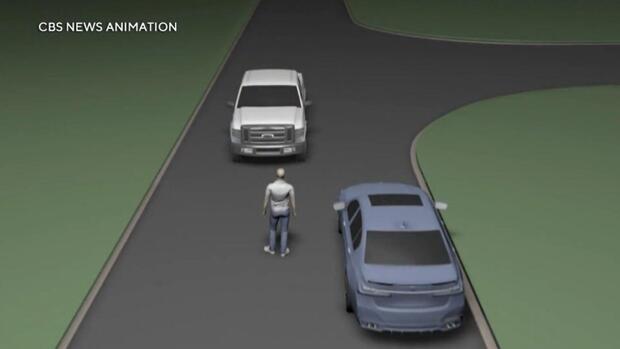
CBS News animation of defense theory
A still from CBS News animation based on the defense theory that Davis McClendon was standing further out toward the center of the road, not next to his vehicle.

CBS News

Swerling acknowledged Ackerman was unhappy his wife had begun dating before the divorce was final and even that Ackerman hit McClendon and his BMW that night. But he says his client was meeting with McClendon merely to speak with him. According to Swerling, McClendon was standing further out toward the center of the road than prosecutors contend. And it was too dark for Ackerman to see him before the last few moments. Swerling says hitting McClendon was an accident, in fact arguing Ackerman aimed for McClendon’s empty car to stop the truck’s forward momentum.

“… He’s trying to avoid hitting him,” Swerling said.

After a seven-day trial last fall, a jury disagreed, convicting Bud Ackerman of murdering Davis McClendon. The judge sentenced Ackerman to 45 years in prison.
Liberia once offered Black Americans a new home. Decades on, it is receiving migrants the US wants out

(CNN) — Is Liberia an American dumping ground — or a place where a new generation of arrivals can build a new life?That’s the question Liberians are asking themselves after the first people to be deported to the West African country from the United States arrived in the capital, Monrovia.The 20 people on the flight from Louisiana were the first to be sent under an agreement that could see up to 1,200 people transferred to Liberia, a country of less than 6 million people, many of them descendants of formerly enslaved Black Americans.Liberian officials said the new arrivals were from “African and western hemisphere countries.”Liberia is one of several countries that have agreed to take migrants being deported from the US under the Trump administration’s anti-immigration crackdown. The arrivals are coming to a nation whose history is deeply tied to migration from the US.Nearly two centuries ago, free and formerly enslaved Black Americans crossed the Atlantic to settle in what would become Liberia – a name that translates as “land of the free.”Now, a country shaped in part by that migration is accepting people the US wants to remove.For Liberians, that has thrown up a mix of feelings in a country still recovering from a long and bloody civil war.“This country is going through a lot, and having more people come in — can we handle all of this?” said Pheta Morris, 48, a descendant of the Black Americans who settled in Liberia.But she said she sees the new arrivals through the lens of Liberia’s history and is struck by the contrast.“I think about the Americo-Liberians — people who were rejected where they were and needed somewhere to go, and Liberia opened its arms to them,” she said.“Back then, people needed somewhere they could be free, accepted and welcomed. Now, people are being rejected from the US, and Liberia is opening its doors to them.”The first transfer has already faced complications.Reuters reported that five migrants who refused to disembark after arriving in Monrovia were flown instead to Equatorial Guinea in Central Africa, where they are held with more than 30 other migrants previously sent there by the US.A US State Department spokesperson said implementing the Trump administration’s immigration policies was a “top priority,” adding that the department generally does not comment on private diplomatic communications with other governments.CNN has contacted Liberia’s information ministry for more details about the agreement and its terms.A country shaped by AmericaThe first group of free Black Americans arrived in Liberia in the early 1820s.Over the following decades, thousands more made the journey, with the American Colonization Society helping to establish settlements along the West African coast. The US State Department says about 16,000 Black Americans migrated to Liberia during the 19th century.The migration was complicated. Some Black Americans saw Liberia as a chance to escape racism and build a new life, while others opposed the colonization movement and rejected the idea that free Black people should leave the US.Africans rescued from slave ships by the US Navy were also brought to Liberia. The settlements eventually formed the Republic of Liberia, which declared independence in 1847.The American influence remains visible today. Liberia’s flag resembles that of the US; its capital was named Monrovia after America’s fifth President James Monroe, and its early institutions were heavily influenced by Washington.Conmany Wesseh, a former Liberian lawmaker and member of the ruling Unity Party who was nominated as Liberia’s ambassador to the United Nations and later the European Union under former president Ellen Johnson Sirleaf, said that history continues to shape how Liberians view the US.For Wesseh though, the arrival of the deportees raises a more immediate question: Can Liberia, a country still struggling with basic infrastructure and services, accommodate more people?The cost of taking them inLiberia began rebuilding after a 14-year civil war ended in 2003, but Wesseh said the country still needs major investment. Poverty levels remain high and youth unemployment stands at 40%, according to African Development Bank data.“Our country needs a great deal of support,” he said. “We are short on medical facilities, and we have problems with education.”He questioned how the country would manage an influx of people from abroad.“They will have to go to the same hospitals. You won’t create a new hospital for them,” he said. “There’s no spare housing. We don’t have existing housing to put new people in.”Wesseh said Liberia’s development needs may have influenced the government’s decision, with officials hoping the agreement would bring support from Washington.Liberian authorities described the arrangement as humanitarian and said the deportees will be treated as guests who can seek asylum or leave the country.Asked whether he viewed the deal as humanitarian assistance, a diplomatic arrangement or the US outsourcing its immigration enforcement, Wesseh chose the latter.“I think (the administration of US President Donald Trump) just sees this as a place to dump people,” he said. “They want to take them off their hands and dump them in this country.”A chance for a new startFrancis Dennis had long known that his family had roots in the migration of Black Americans to Liberia in the 19th century. But just a few weeks ago, he became curious about his family’s past and began using AI genealogy tools to dig deeper into that history.The 71-year-old former president of the Liberia Chamber of Commerce told CNN he traced his great-great-great-grandfather to Snow Hill, a town on Maryland’s Eastern Shore in the US, using the technology and notes left by his father.He said the research also pointed him to the name of the vessel that carried his ancestor across the Atlantic to Liberia, along with a list of its passengers.Generations later, Dennis is watching another group arrive in Liberia from the US. But he does not believe their circumstances have to define what comes next.“People may have their apprehension about a new life, but it’s also an opportunity,” he said. “Some may be happy, some may resent it, but it opens a new window, a new opportunity.”His own ancestor crossed the Atlantic generations ago and became part of the community that helped shape modern Liberia.Now, he hopes those arriving under very different circumstances will also see the country as a chance for a fresh start.“The ball will be in their court,” Dennis said. “Are they going to seize it as an opportunity for a new start, a fresh start, a new life? Or will they be thinking about the past?”The-CNN-Wire™ & © 2026 Cable News Network, Inc., a Warner Bros. Discovery Company. All rights reserved.
Read Next Story