
Toddler diagnosed with cancer after unusual symptoms makes full recovery

Meghan Jenkins had her hands full with her toddler, Malachi. He was energetic and inquisitive, eager to explore the world around him. He loved anything to do with the Miami Dolphins and played constantly with dinosaurs and monster trucks. He was settling in at day care while Jenkins returned to work after taking a year off. Life was busy, but happy.  

In March 2021, Jenkins noticed Malachi was tired and lethargic. He also had a lingering cough. One day, he threw up. When Jenkins changed his diaper, she found black stool. Immediately concerned, she and Malachi went straight to the emergency room. 

Things moved quickly then, Jenkins said. Malachi was “connected to all these cords.” Someone said he might need a blood transfusion. Hours passed with no answers. Jenkins grew more scared by the minute. Finally, Malachi was admitted to the pediatric intensive care unit, where doctors performed a bone marrow biopsy. 

Finally, a doctor sat Jenkins down for the diagnosis: Acute lymphoblastic leukemia. 

“In that moment, you question God. You ask him ‘Why did this happen?'” Jenkins said. “I was so lost. This was my only child. I was young still, going through life, trying to figure things out. And then I had a big hit.” 
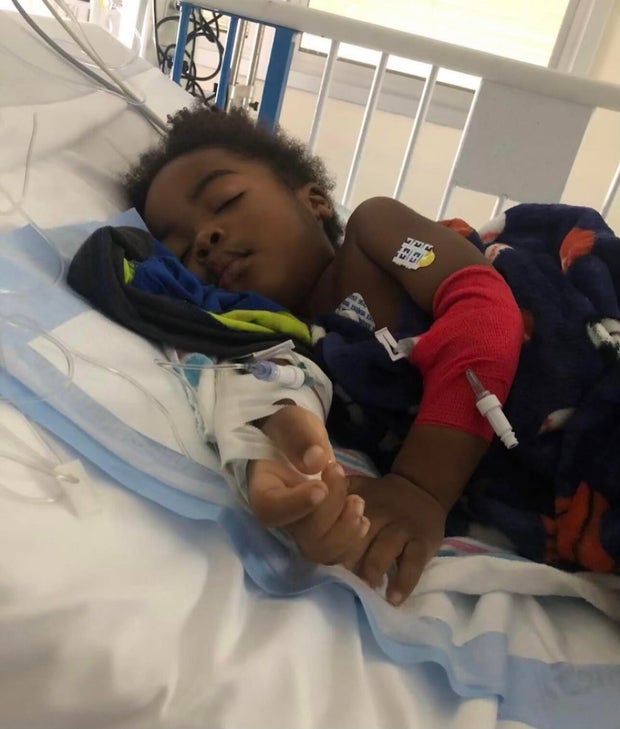
img-6456.jpg
Meghan Jenkins’ son Malachi in the hospital.

Meghan Jenkins

What is acute lymphoblastic leukemia? 

Acute lymphoblastic leukemia, or ALL, is a rare cancer that starts in the bone marrow, according to the American Cancer Society’s website. Only about 6,100 new cases of ALL are diagnosed a year, according to the American Cancer Society, with children under the age of 5 having the highest risk of developing the disease. 

ALL is a fast-growing cancer that results in the body producing immature white blood cells. Malachi’s white blood cell count was more than 10 times higher than it should be. The white blood cells were crowding out healthy cells, weakening his immune system and making it impossible for his body to fight off infections. 

ALL can quickly spread throughout the body and affect the lymph nodes, liver, spleen and other organs, as well as the central nervous system. Because the cancer grows so quickly, immediate treatment is key. 

Malachi was already “quite sick” when he was diagnosed, said Dr. Julio Barredo, the director of pediatric cancer programs at Sylvester Comprehensive Cancer Center. She started Malachi on chemotherapy immediately. 

Treating acute lymphoblastic leukemia  

For the first month of treatment, Malachi was hospitalized. The first weeks of chemotherapy are intense, so staying in the hospital is often safer, said pediatric hematologist Dr. Aditi Dhir. Malachi had side effects including nausea and fatigue. He regressed in his potty training. Jenkins needed to wear gloves to hold him because of his compromised immune system. The toddler milestones she’d expected to celebrate were nowhere to be seen. 

“There were days I didn’t even think I was going to go on, but I had to,” Jenkins said. “It was stressful. It was depressing, constantly being in there.” 
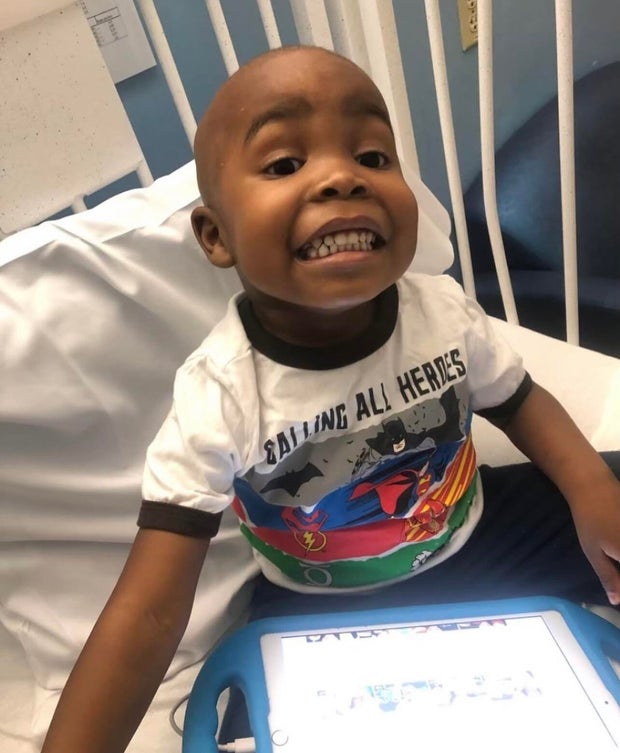
img-6457.jpg
Meghan Jenkins’ son Malachi in the hospital.

Meghan Jenkins

Still, the chemotherapy was clearly helping Malachi, Dhir said. She recalled seeing him run around the PICU within a week of starting treatment. Barredo said that Malachi handled the chemotherapy “as well as anybody could have handled it given the circumstances.” 

After the first month, Malachi continued chemotherapy at home. He took eight medications a day, Jenkins said, and spent several days a week in the hospital. Next came the “maintenance” phase, Barredo said. During this time, Malachi remained on oral medication and only needed to go to the hospital every few weeks, Dhir explained. The maintenance phase lasted for two years. 

Finally, in August 2023, “the storm blew over,” Jenkins said. Malachi was able to ring the bell that signified the completion of cancer treatment. 

“You can’t tell he ever had leukemia” 

Today, Malachi is a “very loving” 7-year-old who excels in school, takes gifted classes and regularly appears on the honor roll, Jenkins said. He still cheers for the Dolphins and plays with dinosaurs and trucks. He’s become a big reader and loves to share fun facts. 

Most importantly, he is in remission. With acute lymphoblastic leukemia, the highest risk of relapse is within the first year of completing therapy, Barredo said. Malachi passed that milestone with flying colors. There’s “some risk” of relapse in the second year, Barredo said, but Malachi and Jenkins marked that in August without incident. After two years, it “is quite unusual” for an ALL patient to relapse, Barredo said. Malachi has outperformed his initial prognosis, and the success of his treatment means “his life expectancy is like that of any other kid his age.” 

img-6455.jpg
Meghan Jenkins’ son Malachi after completing cancer treatment.

Meghan Jenkins

“You look at him, you can’t tell he ever had leukemia,” Barredo said. “For all practical purposes, he is pretty much cured at this point in time. … He’ll be able to do whatever he wants to do.” 

Malachi’s immune system remains compromised, Jenkins said, but she hopes to build it up so can have a normal childhood going forward. The family is looking forward to “finally blossoming” after the years of treatment and trauma. 

“This whole process was very hard. It’s still hard. I have moments sometimes where I’m in shock, like I don’t believe we went through this or this even happened,” Jenkins said. “But there is a brighter situation. Every situation doesn’t have this outcome. But there are brighter outcomes. There are happier days than just being in the hospital and being sad.” 

Democrats intensify scrutiny of David Ellison amid Paramount–WBD legal battle

(CNN) — As Paramount pushes to settle the state antitrust lawsuit that has stymied its deal to buy Warner Bros. Discovery, Democratic lawmakers continue to rally opposition to the deal.On Wednesday, Rep. Jamie Raskin, the top Democrat on the House Judiciary Committee, sent a new letter to Paramount CEO David Ellison accusing him of “colluding” with President Trump and urging him to answer questions.A Paramount spokesperson did not immediately respond to a request for comment.The letter highlights Democrats’ concerns about Paramount taking control of Warner-owned CNN. It comes the same week that Paramount chief legal officer Makan Delrahim said of CNN that Ellison “wants to bring it back to news,” a comment that raised eyebrows given that the network has been a global news brand for 46 years.The letter, which was obtained first by CNN, also suggests that Paramount’s dealings with the Trump administration — a relationship Raskin has called “corrupt” — will be a priority for the Judiciary Committee if Democrats regain the House majority in the midterm elections.Raskin opened the missive by acknowledging that Paramount has not responded to his four previous inquiries in the past 12 months.But “now that you have vowed to break your long silence,” he wrote, citing Ellison’s op-ed in The New York Times last week, “I invite you to a transcribed interview to tell Congress and America your story and answer the Committee’s questions about your Donald Trump-enabled shopping spree to consolidate news organizations, movie studios, cable channels, and streaming services.”With Republicans in control of the House, Democrats like Raskin can’t compel Ellison to testify, so the interview demand is a way to amplify his concerns about the deal.The new letter cites reports of “political interference” at Paramount-owned CBS News, which the news division has disputed.“CBS’s own reporters have shared how, under your leadership, the newsroom has catered to President Trump’s political whims and dictates under the watchful eye of a MAGA minder,” Raskin wrote, apparently referring to the accounts of fired “60 Minutes” correspondents.Ellison wrote in the Times op-ed, “Great news organizations like CNN and CBS News are here to tell it straight down the middle. That requires newsrooms that reflect the whole world, not one side of it. And it requires independence. Our journalists will continue to answer to the facts and to all the people they serve — not to any party or cause.”Ellison’s op-ed made no mention of Trump, who has been a pivotal figure throughout the nearly year-long battle for control of Warner Bros. Discovery.Paramount sought a close relationship with Trump and his administration while seeking federal approval of the WBD merger.Ellison’s father Larry, the billionaire Oracle co-founder, has been a close ally of Trump’s for years. Trump has praised both father and son, calling them his “supporters” and expressing confidence in their plans for CBS. Trump has also been outspoken about his desire for CNN to come under new ownership, calling it “imperative.”Raskin’s letter cites an anonymously sourced report from the Wall Street Journal that “David Ellison offered assurances to Trump administration officials that if he bought Warner, he’d make sweeping changes to CNN.”Raskin wrote to Ellison, “You have eagerly shown the president that you are going to deliver on both counts as if you are controlling organs of state media.”The letter also indicated that a Democrat-led Judiciary Committee would probe the Justice Department’s mid-June approval of the Paramount merger, which many critics linked to Trump’s personal interest in the deal.Raskin said the committee would scrutinize whether federal agencies “are successfully promoting free competition and innovation—or whether they are using their governmental powers to distort the market and undermine freedom of speech and freedom of the press, in violation of the First Amendment.”Other Democratic lawmakers have also foreshadowed public hearings and probes about the matter and have supported the state attorneys general lawsuit seeking to stop Paramount’s expansion plan.Sen. Elizabeth Warren wrote in a social media post on Tuesday, “The Paramount–WBD merger isn’t about creating better entertainment. It’s about cutting costs & squeezing workers. Writers, actors, and crew will have fewer employers to work for, which means less bargaining power & lower wages. State AGs are stepping in to fight back.”Paramount has consistently said the deal is pro-competitive, pointing to the regulatory approvals from the Justice Department and other authorities around the world.But the deal is frozen in place due to the state antitrust lawsuit and a parallel lawsuit from the Writers Guild of America.Facing an uphill battle in court, Paramount agreed not to complete the merger until a trial is held or until June 1, 2027. A trial is slated to be held in March, though a settlement is possible before then.Speaking at a Politico conference on Tuesday, Delrahim said “we would be delighted to engage” in settlement talks “in order to repair the industry, create more jobs, bring more jobs and production back.”California Attorney General Rob Bonta said at the same conference that “we will be open to any proposals,” but “right now, we’re focused on litigation and going to trial.”Both men also addressed a report by Puck’s Matt Belloni that Ellison told Paramount’s leadership team that he intends to move the company out of California if the antitrust case isn’t settled by October 1. Ellison has notably not made this threat in public, and Paramount has declined to comment on the report.Delrahim said Paramount doesn’t want to leave the state, but the company has to ”look at the business environment” and “ultimately, you know, go to a place where you’re wanted.”Bonta, speaking earlier in the day, said the leave-California threat “is an attempt to blackmail the regulators who are daring to enforce the law fairly and firmly.”Delrahim said it is not a blackmail attempt, and argued that “this merger is actually going to be good — not only for California — it’ll be good for America.”The-CNN-Wire™ & © 2026 Cable News Network, Inc., a Warner Bros. Discovery Company. All rights reserved.
Read Next Story