Small Texas law firm without immigration expertise set to receive $150M contract to represent unaccompanied migrant children

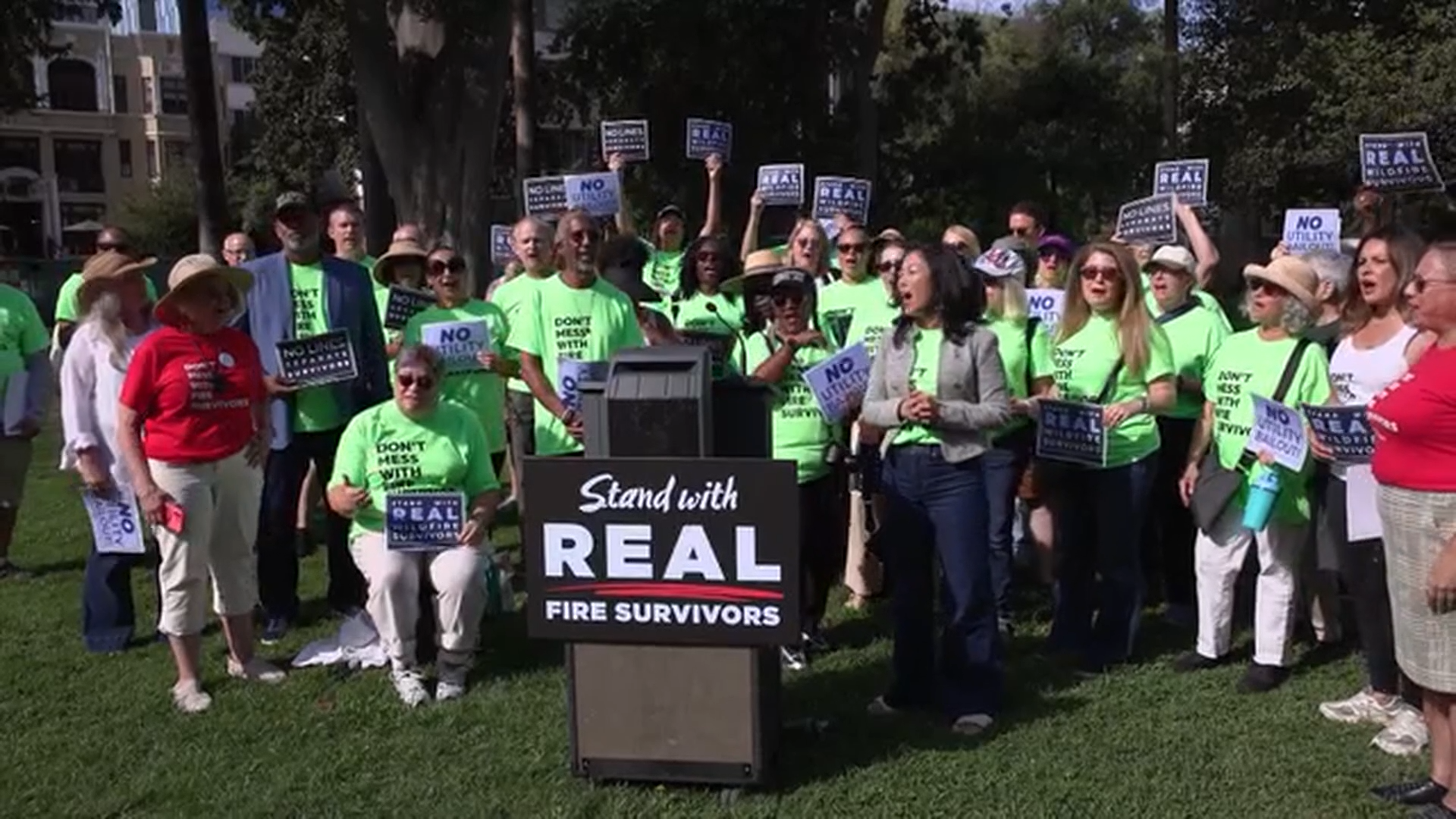
A logo is displayed on the doors to the U.S. Department of Health and Human Services (HHS) headquarters at the Hubert H. Humphrey Building on May 30, 2026 in Washington, DC. (Photo by Kevin Carter/Getty Images)

(NEW YORK) — The Trump administration is set to award a multimillion-dollar contract to a small Texas law firm without immigration expertise to provide legal representation for thousands of unaccompanied migrant children in government custody during immigration proceedings.

In a notice published in the Federal Register, the Department of Health and Human Services (HHS) announced its intent to award the $150 million contract to Burke Law Group, a law firm headquartered in Houston, Texas.

The notice states the contract would “provide legal orientation, legal consultation, and attorney-of-record representation services for eligible unaccompanied alien children” during immigration proceedings and hearings before U.S. Citizenship and Immigration Services while the children remain in government custody.

The proposed award comes after legal service providers across the country have said that the administration has withheld $65 million in overdue fees from the previous contract, alleging it is an attempt to force them to turn over confidential information about the migrant children they represent.

Burke Law Group has 26 employees across eight offices, according to its website. None of the firm’s attorneys list immigration law as a practice area. Instead, their practices include administrative law, white-collar defense, commercial litigation, securities litigation and other areas.

ABC News reached out to the law firm for comment and did not immediately get a response.

In December 2023, the Acacia Center for Justice, an immigrant advocacy group, became the prime contract holder with HHS for the Unaccompanied Children Program, overseeing subcontracts with more than 100 service providers that provide legal representation to more than 20,000 unaccompanied migrant children.

A spokesperson with HHS previously told ABC News that its sub-agency, the Office of Refugee Resettlement (ORR), “offered Acacia the opportunity” to receive a new federal contract “based on requirements that include they provide the data on who they represent and that they bill [HHS] when they submit applications for immigration relief.” The HHS spokesperson said Acacia refused.

Legal services providers including Acacia have said that ORR was demanding “client-level data that is confidential and legally privileged.”

During the Trump administration, Acacia and many of its subcontracted groups have alleged that unaccompanied children and their sponsors are among those being targeted under the administration’s immigration crackdown.

In June, DHS agents visited the offices of several Washington-area nonprofit organizations that provide legal services to unaccompanied migrant children. Last year, ABC News reported that the administration was directing immigration agents to track down unaccompanied migrant children in the United States.

Copyright © 2026, ABC Audio. All rights reserved.
Netanyahu calculates upsetting Trump is his least-bad option

(CNN) — On tricky issues, Netanyahu’s preference is to kick the can down the road. If he must take a position, he likes to include a twist of ambiguity, some wiggle room, just in case things get hairy later. Not this time, though, on the subject of US President Donald Trump’s roadmap for progressing the Gaza ceasefire agreement.“I wish to be precise: Israel does not accept the 15-point document,” Netanyahu said during opening remarks at Sunday’s weekly Israeli Cabinet meeting.In fact, he went on to say it twice.“I have heard people saying: ‘You didn’t say it.’ So here I am saying it again: Israel does not accept the 15-point document.”Clunk.Potentially a risky move because it could draw the ire of Trump.The US president – more desperate than ever for a win, as his Iran folly looks increasingly like handing him an L – reinvested in Gaza 10 days ago, declaring that his Board of Peace had reached a “historic agreement” with Hamas for its complete disarmament. The board’s top envoy, Nickolay Mladenov, went on to explain carefully on X that decommissioning would need to take place “in lockstep” with Israeli troop withdrawal, suggesting a phased process by which the Israel Defense Forces (IDF) would pull back in stages from positions inside Gaza, as Hamas turned in its arms.Any lingering hope that Netanyahu could be convinced to take part in such an endeavor now looks for the birds.“The IDF will not carry out any withdrawal until Hamas is disarmed. And when I say the disarming of Hamas, it means heavy weaponry, lighter weaponry, all weaponry. And we are talking about genuine disarmament, not fictitious disarmament,” the Israeli leader said Sunday.As of Sunday afternoon, Trump was still keeping his own counsel, beyond a Truth Social post quoting former US Secretary of State Hillary Clinton saying she supported his Gaza plan. Mladenov meanwhile went on Israel’s Channel 12 Sunday evening, appearing to suggest that some sort of phased process might still be the plan, but also seeming to make clear Hamas would need to make the first move.“Nobody is required to do anything, least of all Israel, before we actually have verified steps on the ground. If there is verified decommissioning of weapons, that they are taken away from the factions and stored and ultimately rendered unusable, Israel then withdraws from Gaza,” Mladenov said.Speaking to votersOf course, there are skeptics everywhere in this arena, not least concerning the two main protagonists. Both Israel and Hamas have a shared interest in making sure the other side gets the blame for any failure.So, Hamas’s response to Netanyahu’s remarks was quite sober and measured. It said it remained committed to the roadmap, adding that it expected the Board of Peace to “exert pressure” on Netanyahu to abide by it.In truth, there are plenty who doubt Hamas ever intends to give up all its weapons, which serve as the plainest manifestation of its leadership position in the Palestinian resistance and act as a guarantee of its own survival in the face of any internal instability inside Gaza. The group has made plenty of enemies during its almost 20 years in charge of the enclave.But regardless of any lack of confidence in Hamas’ true intentions, in Mladenov’s faith in the ability to verify weapons decommissioning, or indeed Netanyahu’s own willingness to order any troop withdrawals, why poke Trump so publicly in the eye? Surely, Netanyahu, the master strategist, as his many acolytes regard him, could have done it with a bit more finesse?The reason – unsurprisingly perhaps – is Israel’s general election. It is less than 12 weeks away, and the polls suggest he remains in trouble. It was time – unequivocally – to speak to the voters.All Israeli prime ministers must build a governing coalition made up of several parties. Netanyahu, as others have remarked, likes to build his next coalition ahead of the election rather than after it.When the counting is over, he will need his far-right allies to join him if he has any chance of remaining in charge, so he was stung by their very public criticism of the roadmap, as well as calls to reverse a previous Israeli Cabinet decision to approve the deployment of an International Stabilization Force for Gaza, which was meant to oversee security in a small pilot project in the territory. Netanyahu had quietly approved reconstruction work could begin in the pilot area, Army radio reported Sunday, which just looked like further weakness.And yet, it would be a mistake to see this only as pandering to the far-right. The vast majority of Israeli voters, while still favorable toward Trump, believe the US president is profoundly mistaken if he believes Israel should have its freedom to do what it likes in Gaza curtailed in any way.None of Netanyahu’s main challengers, for instance, is likely to pick up Mladenov’s attempt to appeal to Israel’s self-interest during his Sunday TV interview, when he said that only full implementation of the Board of Peace’s plan could guarantee there would never be another mass attack like the one in 2023 on Israeli communities living next to Gaza.“If we end up with arguments about this and that, and delaying tactics, I can assure you that the only alternative then is another process of rearming of Hamas and increasing the risk of another October 7th,” the senior envoy said.Truly, it would be a surprise if Gadi Eisenkott, Naftali Bennett, or many other would-be Israeli prime ministers believed there were many votes on that platform.A US Board of Peace official meanwhile sought to play up Israel’s military restraint in recent days in Gaza, as well as a change in targeting policy.“We are seeing co-operation behind the scenes,” the official offered.Cold comfort for Gaza’s two million residents, who remain shut out of the conversation and all but powerless to determine their fate.Eugenia Yosef and Jennifer Hansler contributed to this report.The-CNN-Wire™ & © 2026 Cable News Network, Inc., a Warner Bros. Discovery Company. All rights reserved.
Read Next Story