
(WASHINGTON) — The Senate Judiciary Committee on Tuesday voted to advance acting Attorney General Todd Blanche’s nomination to permanently lead the Department of Justice.
Blanche advanced in a 12-10 party line vote. All Republicans voted in favor of him, while all Democrats voted against.
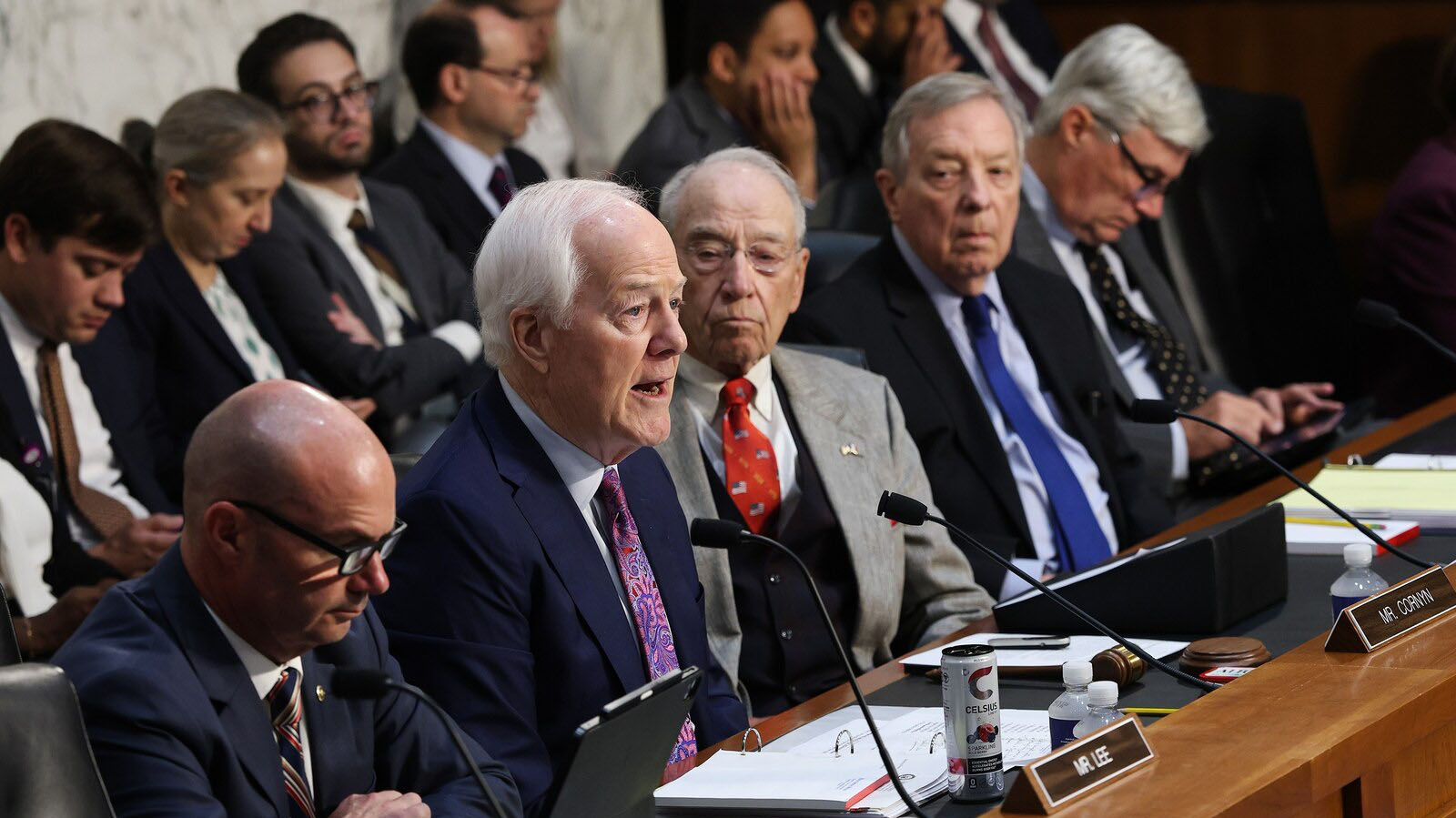
Republican Sens. John Cornyn and Thom Tillis ultimately supported Blanche after securing an agreement that clarified the scope of President Donald Trump’s IRS immunity deal and formally rescinded the administration’s so-called $1.8 billion “Anti-Weaponization Fund.”
Despite the fact that the agreement reached has no language preventing the resurrection of the controversial fund under a different name or method, Cornyn said the DOJ has been “consistent” about their assertions that the fund is dead.
“And of course, I expect them to live up to that in any future litigation,” Cornyn said in remarks on the Senate panel ahead of the vote.
Tillis also said the agreement reached with Blanche satisfies his concerns.
“I believe that we have addressed the concerns that I have. The first one I called the ‘payout pot for punks.’ I’ve never liked this 1776 fund. It made no sense to me, and I thought it was an insult to the police officers and the people that defended us on January the 6th. It’s done. It’s been rescinded, and I am satisfied,” Tillis said.
Tillis said that both sides on the aisle “have a problem” when it comes to malicious prosecution. He said he hopes to see a “bending of the curve of this absurdity” when Blanche is confirmed.
Ahead of the vote, Senate Judiciary Committee Chairman Chuck Grassley thanked Cornyn and Tillis for their work securing the agreement. He said many senators shared their concerns.
“Formally rescinding the fund and clarifying the scope of release of claims has put this issue to bed once and for all,” Grassley said.
Democratic Sen. Chris Coons took a different view on the so-called “Anti-Weaponization Fund” than his Republican colleagues, arguing that Blanche’s willingness to go along with its creation in the first place should disqualify him from the attorney general job.
“In my view, we never should have gotten to this place. As acting attorney general, when asked by the president to do something plainly unethical and corrupt, Mr. Blanche should have simply said no. He did not do that, and I pressed him in his confirmation hearing whether he even tried to talk President Trump out of this widely rejected plan, and he refused to answer,” Coons said.
During the hearing, Blanche responded to Coons’ questions, saying he was not simply a “yes-man” in giving Trump counsel.
“I will say that President Trump trusts me to give him counsel. Counsel does not mean I’m a ‘yes-man.’ And that’s true in my case, like it should be in any attorneys general case,” Blanche said during his confirmation hearing.
Several Democrats on the panel raised a number of concerns about Blanche.
“Today I think is a sad and embarrassing day for this committee, as it looks like, on a party line vote, we are going to advance out of this committee probably the most discreditable person ever to seek the office of attorney general of the United States,” Democratic Sen. Sheldon Whitehouse said.
Democratic Sen. Cory Booker, in a lengthy speech, warned that the country was in “dangerous waters” with Blanche.
“This man is not our lawyer. He is not America’s lawyer. He is about to become Trump’s sword against his adversaries and shield against any scrutiny,” Booker said.
What’s next for Blanche’s nomination?
Blanche’s nomination is now ready for consideration on the Senate floor.
Unless there is an agreement to speed things along, the soonest the Senate can take a procedural vote on Blanche’s nomination is Friday. That would set up a final confirmation vote sometime on Saturday.
Though Tillis and Cornyn were the most closely watched Republican votes on the Senate Judiciary Committee, there remains other GOP senators who have raised concerns about Blanche.
With Republican Sen. Mitch McConnell still absent from Congress, Blanche will ultimately only be able to lose the support of two Republicans when his nomination comes up for a vote on the Senate floor.
Copyright © 2026, ABC Audio. All rights reserved.