
Former Virginia Gov. Youngkin launches new conservative policy group

Former Virginia Gov. Glenn Youngkin is launching a new conservative policy group, marking the first major move since Youngkin, a potential 2028 Republican presidential contender, left office in January. 

The group, called Empowering America’s Parents, will focus on expanding awareness about the Education Freedom Tax Credit, a federal scholarship tax credit that has been adopted in 30 states. 

Youngkin’s group plans to target the 20 remaining states that have not adopted the program with a multimillion-dollar advertising campaign, according to a source familiar with internal planning. 

Among the targets are Michigan, Arizona, Wisconsin and Pennsylvania — all key battleground states that went for President Trump in the 2024 presidential election. 
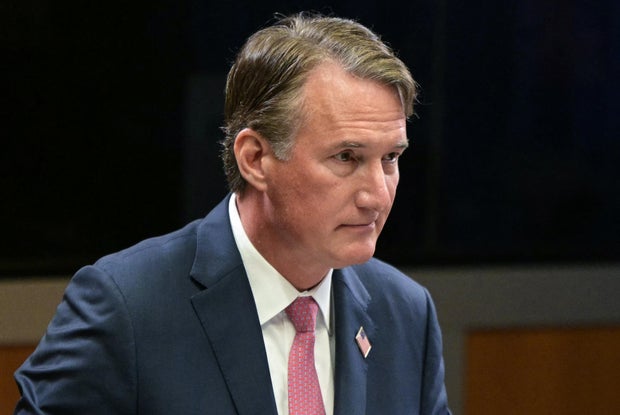
Glenn Youngkin
Former Virginia Gov. Glenn Youngkin

Oliver Contreras /AFP via Getty Images

The tax credit program, which officially launches in January 2027, allows taxpayers to donate up to $1,700 to scholarship-granting organizations in participating states and receive a federal income tax credit. Proponents say it supports scholarships for K–12 education tuition expenses. 

A source familiar with the program said internal polling showed a lack of awareness around the tax credits, and they saw an opportunity to educate voters on its benefits. 

Youngkin’s group plans to “aggressively target persuadable voters, primarily in the suburbs, who support school choice,” according to a source familiar with internal plans. 

The announcement comes amid speculation about potential 2028 presidential contenders on the Republican side. Youngkin, who has a significant donor network and has not explicitly laid out his future political plans, told Fox News’ Sean Hannity in April that he has “more to give” when it comes to his political future. 

An agreement on the Strait of Hormuz is taking shape – but not one Trump wants

(CNN) — Like shifting winds, plans for the future of the Strait of Hormuz – and their chance of success – change almost daily.US President Donald Trump said an agreement could be reached this week.“It could happen. Tomorrow or the next day,” Trump said Tuesday. “A lot of progress has been made. And they called me and they said, ‘Please let’s talk.’”But he again threatened to attack Iran should no deal be reached.Even so, there’s no consensus even on who is talking to who. Iran has persistently said it is talking solely with Oman on a temporary arrangement for the vital waterway.And others are less confident that a deal is imminent and are skeptical about its longevity.A senior Gulf official familiar with the talks suggested there is about a 50:50 chance of a deal by Friday. One issue is that the Iranian delegation does not include the voice of the hardline Islamic Revolutionary Guard Corps (IRGC), which would have to sign off on the details, the source said.Iran blames Washington for delaysTrump’s optimism may have surprised Tehran.“The main reason for the delay in reaching an agreement with Oman regarding the Strait of Hormuz is US interference and Trump’s threats,” the semi-official Iranian news agency Tasnim cited “an informed source” as saying on Wednesday.Another semi-official outlet, Fars, struck a similar tone. It said some US officials had “sent mixed signals and, either directly or through regional partners, have disrupted the course of the negotiations. There remains concern that obstruction by the United States or certain regional parties could prolong the negotiations or otherwise interfere with the process.”Fars reiterated that Iran is negotiating only with Oman and those talks “are focused on a middle corridor that would safeguard Iran’s rights while taking Oman’s concerns into account.”“Iran’s rights” is the term that raises many questions.There are competing routes through the strait and what’s on the table appears to involve merging them – with Iran retaining a level of control that would be at odds with US wishes.The negotiations should “establish Iranian arrangements because security, de-mining, and maritime services are handled by Iran,” according to Saeed Ajorlu, a member of Iran’s negotiating committee.Tehran’s goal “is to set temporary arrangements” between one and three months “where Iran is dominant,” Ajorlu told Iranian state broadcaster IRIB this week.“Where Iran is dominant” may not fly in Washington or Gulf capitals.“The negotiations have focused on transforming the southern route, which passes through Omani waters, and the northern route, which passes through Iran’s territorial waters, into an intermediate route that serves the considerations and interests of both coastal states,” said Foreign Ministry spokesman Esmaeil Baghaei Monday.“We are now talking about a corridor that will have a two-way route, not two or three separate routes,” he said.Baghaei, Ajorlu and every other Iranian official insist the legal regime at the strait will not return to its pre-war state, when no country controlled shipping through the critical waterway.Control or supervision over the chokepoint has become just as much a red line for Tehran as the right to nuclear enrichment.How the US sees the straitThe prospect of such leverage is unacceptable in Washington, Abu Dhabi and Riyadh. US Secretary of State Marco Rubio has repeatedly said any form of state control over international waters is against international law.“If we create a precedent in the Middle East where a nation state can decide that they are going to control an international waterway,” he said recently, “charge a toll and if you don’t pay them blow up your ships, we have created a very dangerous precedent, which will repeat itself in other parts of the world,” he said last month.Qatar suggested Tuesday that negotiations were moving forward, but it’s hard to square the circle when the goals and demands of the two adversaries are so far apart.Key questions remain: Will the Revolutionary Guards accept reduced control over the Strait of Hormuz, and under what conditions would it intercept vessels? Would reopening extend to foreign – including American – naval ships? How much information would Iran demand about ships’ cargoes and destinations?It is also unclear whether the arrangement would lift the US blockade on Iranian ports, restore waivers to permit Iranian oil exports, and revive or replace parts of the US-Iran memorandum signed in June and declared dead a month later.The June agreement left key provisions deliberately vague. Article 5 committed Iran to using its “best efforts” to ensure safe commercial passage for 60 days, while also saying Iran and Oman will “define the future administration and maritime services” in the strait.It also said that any future arrangement must be “in line with applicable international law.”But that qualification resolved little. “Given the well-known disagreement between Iran and most of the world over what international law requires in the Strait of Hormuz, this formulation does little more than kick the can down the road,” noted the Lawfare blog.Preserving ‘durable’ influenceUltimately, Tehran “is seeking to convert the leverage it gained during the war into a durable political and institutional role in governing one of the world’s most strategically important waterways,” says Trita Parsi at the Quincy Institute for Responsible Statecraft.“By embedding a lasting role in the governance of Hormuz, Iran could preserve much of the influence it gained during the war without relying on continual military coercion,” Parsi posted on X Wednesday.That is a much greater gain than any fees or tolls it may want to collect at the chokepoint.“From day one, it was clear that restoring the Strait of Hormuz to its pre-crisis status would have required either regime change in Iran or a sustained military effort to impose control over the waterway,” said Israeli security expert Danny Citrinowicz.“Neither option was politically or strategically acceptable to Washington, given the enormous costs and long-term commitments they would require. Sometimes, the least desirable option is the only realistic one.”While agreement remains elusive, the world’s oil markets must confront draining crude reserves.If the Strait of Hormuz were opened today, it could still take up to 18 months to replenish depleted inventories, Amin Nasser, the chief executive of the world’s largest oil producer Saudi Aramco, said Tuesday.For every day there is no agreement, some 15 million barrels of crude oil are not travelling through the narrow waterway to world markets.The-CNN-Wire™ & © 2026 Cable News Network, Inc., a Warner Bros. Discovery Company. All rights reserved.
Read Next Story