
This story originally aired on May 17, 2025.
Minnesota crime scene investigators captured footage when they got their first look inside a high-rise apartment in Minneapolis. According to police reports, at around 5:30 p.m. on June 13, 1993, a tenant reported water seeping into their apartment. A building caretaker and a security guard were called to check it out, and discovered the water was coming from apartment 2104.
Bart Epstein | Retired forensic scientist: They went into the apartment and they found that the shower was still running and causing all this flooding next door.

WCCO
After the shower was turned off, they came upon a gruesome scene in the bedroom. The body of 35-year-old Jeanie Childs was discovered partially under the bed. That’s when police were called to investigate.
Bart Epstein: This was a violent, bloody crime scene … this is … one of the bloodiest that I’d been to.
Bloody evidence leads to a pivotal clue
Retired forensic scientist Bart Epstein says carefully documenting that scene was crucial.
Erin Moriarty: Blood stains and blood spatter tell a story.
Bart Epstein: Yes … they sure can … in this case we could establish that Jeanie Childs was hit … in front of the bathroom door.
Epstein says Jeanie then moved into the bathroom. She was stabbed and slashed dozens of times.
Bart Epstein: She was down on the floor smearing blood along that area.
While the shower had been turned off earlier, investigators noticed water was still running from the sink faucet.

Hennepin County District Court
Bart Epstein:There was a lot of activity going on there. … Why was the sink faucet still dripping? Was he trying to clean up?
Jeanie apparently made it back to her bedroom where her body was found.
Julie Rendelman: The blood wasn’t … confined to just the area where she was. … the blood was on the walls, the blood was on the comforter, the blood was on the floor.
Julie Rendelman is a defense attorney and a legal consultant for “48 Hours.”
Julie Rendelman: It leads one to believe … that a struggle happened, that she was fighting to save her own life.
The living room appeared untouched. A sitcom was still playing on the TV. There was no evidence of forced entry. If Jeanie knew her killer, what could have prompted so much violence?
Julie Rendelman: This to me seems like more rage … someone who got upset … at the time the crime … was committed.
Jeanie’s mother, Betty Eakman, was watching television news when she saw a report about a woman that had been murdered.
Betty Eakman: I called my husband at work … I said, I just seen them on the news taking a stretcher out of that building that she lives in.
Eakman soon got the news no mother wants to hear; the victim was her eldest child.
Betty Eakman: I just wanted to hold her. (sobbing) … I couldn’t believe it. (sobbing)
Erin Moriarty: What were her plans that weekend?
Betty Eakman: She went to the emergency room … she was in so much pain … Jeanie always had problems with her teeth, and I don’t know why, so I said “let me come and get you.” … No mom, stop worrying about me.
Jeanie was dead by Sunday afternoon. As the crime investigation continued, authorities focused on gathering evidence: a blue washcloth, a red T-shirt, a bath towel, blood scrapings from the sink, along with a comforter were collected and taken for DNA testing. Investigators observed dishes in the kitchen sink and a knife in the drying rack.
Erin Moriarty: Did you take that knife in?
Bart Epstein: I did not take that knife in. I looked at it and there was no apparent blood on it. … we never found any, uh, actual weapon there … that, uh, was … a murder weapon.
Investigators were able to identify some blood stains found in the stairwell near Jeanie’s 21st floor apartment.
Erin Moriarty: Did any of the blood … belong to the victim?
Bart Epstein: Yes.
Erin Moriarty: Jeanie Childs? … Do you think it’s possible that the person who stabbed her was also cut?
Bart Epstein: Well, it — it could be. That’s why we took samples.
Epstein says whoever murdered Childs unknowingly left behind something investigators rarely encounter: bloody bare footprints under the bedroom window.
Bart Epstein: That drew my attention right away … and right next to it I see the socked foot of … Jeanie Childs.

Hennepin County District Court
The footprints were dusted with black powder at the crime scene.
Erin Moriarty: When you first saw these, you said, because she’s wearing socks, this — these belong to the killer.
Bart Epstein: Yeah, that would be my feeling … that’s most likely the perpetrator’s footprint. … If there’s friction ridge on the feet … like the friction ridge on your fingers, there’s potential to identify the person’s foot that made that … that was very, very significant.
Betty Eakman: I knew that God was gonna make sure that I was gonna know what happened.
Who was Jeanie Childs?
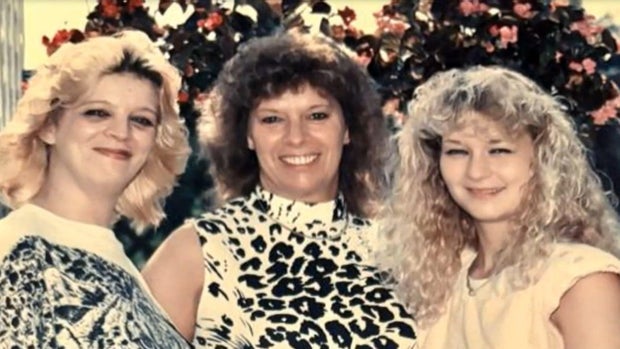
Cindy Blumer remembers the deep loss she felt after the murder of her big sister Jeanie.
Cindy Blumer: A lot of sadness when you wanted to pick up the phone and call your sister … I needed my sister. I wanted to talk to her … wondering what actually took place. … who did this?
Although her sister was 12 years older, Jeanie’s playful spirit made an impression on Cindy growing up.
Cindy Blumer: Lionel Richie was one of her favorites and as soon as she would hear him play, I mean, her fingers would start snapping and … she would dance around.
Cindy Blumer
But those good times were few and far between. Betty Eakman says she first noticed a change in her eldest daughter when she was a preteen.
Betty Eakman: She kind of lost her way when she was probably around 12, 13.
Eakman says it wasn’t until decades later that Jeanie claimed she had been abused by a male relative. Jeanie started running away from home.
Betty Eakman: I took my life in my own hands many a times to track her down … I could have been killed … but I had my Great Dane and a gun.
Erin Moriarty: Would you sometimes find her?
Betty Eakman: Oh, yeah … when she would come home, she was like a cat on a hot tin roof. She was so antsy. She couldn’t stay very long.
As the time passed, she feared her daughter was using drugs and soon learned how Jeanie was making ends meet.
Erin Moriarty: And what did your daughter do?
Betty Eakman: Prostitution … I just hoped and prayed that she would stop.
At one point, it seemed she settled down long enough to get married, but her family says it didn’t last long. Soon after, she married again to a man with children and Jeanie became a stepmom.
Betty Eakman: And they depended on her. She was the only mother they really knew.
Even when Jeanie split with their father, she remained in the children’s lives.
Cindy Blumer: If they needed anything, they knew how to get ahold of her. … She was really good that way.
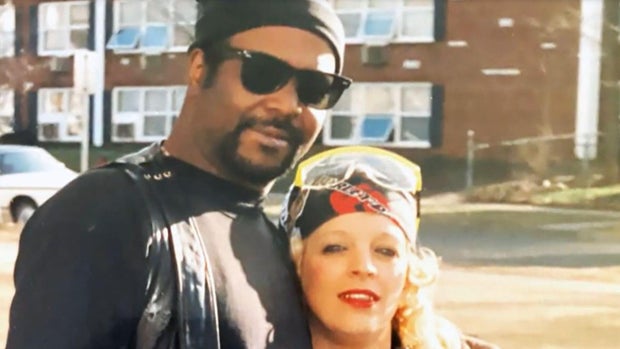
At the time of her murder, she was living with a man named Arthur Gray at that apartment complex. After Jeanie’s murder, he became a person of interest.
Cindy Blumer
Retired FBI agent Chris Boeckers would later join the investigation.
Chris Boeckers: Investigators immediately looked at whether Arthur Gray was involved in the murder.
According to police reports, Jeanie—who was a sex worker—claimed she worked for Gray, and there was a history of violence between them. At the crime scene, authorities found hairs stuck to Jeanie’s left hand and one of those hairs matched Gray. But Boeckers says the case against Gray started to fall apart pretty quickly.
Chris Boeckers: Arthur Gray as a resident of that apartment, it makes sense that his hairs would be throughout the bedroom.
And Arthur Gray said he wasn’t even in town — but on a motorcycle trip in Milwaukee, Wisconsin, the weekend Jeanie was murdered.
Chris Boeckers: He had a really solid alibi that he was out of town that weekend that was corroborated by others.
Authorities compared the unknown bloody footprints in the apartment to Gray’s footprints and determined they weren’t his.
Erin Moriarty: Do you know how many other possible suspects, persons of interest whose footprints were compared to those left in Jeanie’s apartment?
Chris Boeckers: There were multiple people whose footprints were compared to the footprints that were left in Jeanie’s apartment. … You could see that in the case file that a lot of effort was put in, attempting to solve Jeanie’s case.
According to the case file, on the day of the murder, a witness in the apartment building told police she saw Jeanie with a tall blond man wearing a trench coat.
Chris Boeckers: We had no way to track down who that may or may not have been.
Investigators never found the man. Despite efforts to find Jeanie’s killer, the case slowed to a crawl. Months turned into years and then decades.
Erin Moriarty: How often would you call the police trying to get an update to find out if they had anything new on this case?
Betty Eakman: Many times as I could, but I never let a year go by without reminding them.
In 2015, the Minneapolis Police Department began digging deeper into unsolved cases and Jeanie Childs’ murder was one of them. Jeanie’s family had no idea, but investigators were hoping science would help them solve the case.
Chris Boeckers: Technology is so much more refined and rigorous than it was in 1993.
Boeckers says they discovered that a blood sample, found near Jeanie’s blood in the stairwell of her apartment building, had matched to a man named John Esswein. In 2015, investigators interviewed Esswein who was in prison for violating probation on a drunk driving offense.
SGT. CHRIS KARAKOSTAS: Do you have any idea why your DNA would be in that building, your blood would be in that building?
JOHN ESSWEIN: No.
SGT. CHRIS KARAKOSTAS: OK.
JOHN ESSWEIN: My blood was in that building?
SGT. CHRIS KARAKOSTAS: Yeah.
JOHN ESSWEIN: If you found my blood somewhere, all I can think of is that I – I must have fallen down somewhere …
Esswein told investigators he was in the building once in 1991, two years before Jeanie’s murder.
Chris Boeckers: He … easily volunteered his DNA. He also, uh, allowed himself his footprints to be taken … then his footprints were compared to the foot — bloody footprints in Jeanie’s bedroom.
According to a lab report, the footprints were inconclusive, and Esswein’s DNA was not found inside Jeanie’s apartment. The mystery only deepened. Investigators knew from the case file that there were DNA profiles discovered at the crime scene that had never matched to anyone.

CBS News
Andrea Feia, a forensic scientist with the Minnesota Bureau of Criminal Apprehension, performed additional testing on the evidence that was collected back in 1993 and she noticed something unusual about one of the unknown DNA profiles.
Andrea Feia: … that DNA profile … repeated itself throughout the crime scene …
Erin Moriarty: It was on the comforter. It was on the blue towel. It was found on the blue washcloth and the red T-shirt.
Andrea Feia: Correct.
Erin Moriarty: And on the sink.
Andrea Feia: Yes … Those were the only areas that we tested … that ended up matching each other, essentially.
Investigators then turned to investigative genetic genealogy for answers. The unknown DNA profile was submitted to genealogy websites, including MyHeritage.com.
Chris Boeckers: The forensic genealogist … had indicated that … she had a … match … to potentially two brothers here in Minnesota.
And one of the brothers was a man named Jerry Westrom.
Hockey dad becomes prime suspect
More than 25 years after Jeanie Childs was murdered, unknown DNA at the crime scene was matched to 52-year-old Jerry Westrom.
Erin Moriarty: What did you know about him?
Chris Boeckers: He was living north of Minneapolis-St. Paul … that he was … working for a company up in the St. Cloud, Minnesota, area … he’d been a businessman.
Retired FBI agent Chris Boeckers says the married father of three wasn’t hard to find.
Chris Boeckers: … had a Facebook account that we could follow, he was leading a seemingly… normal family life.
Westrom had grown up in rural Minnesota.
Wayne Triplett: He and I were on a 4-H trip when we were 14 to Washington D.C.
Wayne Triplett and Jerry Westrom were farm kids. They later became college buddies and when Wayne got married.
Wayne Triplett: He was one of the groomsmen in our wedding.
Erin Moriarty: That means he was a good friend of yours.
Wayne Triplett: Yes, that’s true … He got along well with a lot of people, very low-key gentleman … easily can make friends with people.

Liz Westrom
Westrom and his family were well respected in Isanti, Minnesota, about 40 miles away from Minneapolis. They owned a Sears store, and in the year 2000, Westrom built his own field of dreams – a convenience store and gas station known as Westrom’s Corner. But in 2008, the turbulent economy took it all away.
Erin Moriarty: Was that tough on him to lose Westrom’s Corner —
Wayne Triplett: I think it was tough on him. It’d be tough on anybody.
Westrom returned to his roots. He began raising organic corn and soybeans and cultivating a business selling crop insurance.
Wayne Triplett: He’s a very good salesperson … he understands the need to fill the need. He understands how to communicate … and people have to be comfortable with you to close on business.
Triplett never imagined that the even-tempered friend he’s known since their teenage years would become the prime suspect in a violent murder case.
Erin Moriarty: Did he have history of violent crimes?
Chris Boeckers: No apparent criminal history involving violent crime.
Erin Moriarty: Jeanie was stabbed over 60 times and here’s this man … no history of violence, and this is the guy who might have killed her?
Chris Boeckers: Well, it … gave some pause that … that level of violence and that type of crime, we kind of expected it would be somebody that maybe had been arrested multiple times … so yes, that does give a little pause.
Investigators were anxious to confirm that the unknown crime scene DNA was indeed Jerry Westrom’s, but to do that they needed to track him down.
Chris Boeckers: We needed to obtain DNA from Jerry in order to compare it to the unknown DNA from the scene.
Forensic scientist Andrea Feia.
Erin Moriarty: And what did you tell them would be the best DNA if they could get it?
Andrea Feia: Best DNA is something that has been in a person’s mouth. Like if they drank out of a drinking container, a straw, if they spit out chewing gum, anything that could have saliva on it.
Erin Moriarty: Why is saliva the ideal? Why did you say get something that had touched his mouth?
Andrea Feia: There’s a lot of DNA in saliva.
Westrom, a devoted hockey dad, frequently attended his daughter’s college games. In January 2019, Westrom traveled to a game in Wisconsin. Agent Boeckers, along with his partner, surreptitiously followed him there.
Chris Boeckers: Westrom went out to the lobby concession stand and made a food order. We watched him sit at the table and eat his order. And when he finished, he took a napkin, and he wiped his mouth.
Westrom tossed that napkin and food container in the garbage can, and when he returned to the rink, Boeckers made his move.

CBS News
Chris Boeckers: I was gloved … I just reached down and got the container and … we bagged it up for evidence.
Andrea Feia: I tested and got a DNA profile from the napkin and compared it to the unidentified profile on the comforter and the blue towel.
Erin Moriarty: And what was the result?
Andrea Feia: They were consistent with each other.
A month later, in February 2019, Jerry Westrom was arrested and charged with the murder of Jeanie Childs.
Erin Moriarty: As you sit here right now Wayne, do you believe that Jerry Westrom is the one who killed Jeanie Childs?
Wayne Triplett: Definite no.
Erin Moriarty: Definite no?
Wayne Triplett: Definite no. Not a chance.
In a videotaped interview at the jail, Agent Boeckers and his partner questioned Westrom.
SGT. CHRIS KARAKOSTAS: Does this lady look familiar to you at all?
JERRY WESTROM (shaking head): Mm mm.
SGT. CHRIS KARAKOSTAS: OK. Her name is Jeanie Childs.
JERRY WESTROM: OK.
SGT. CHRIS KARAKOSTAS: And she was found in her building in her apartment deceased. Do you know anything about that at all?
JERRY WESTROM: No.
SGT. CHRIS KARAKOSTAS: Do you think you would’ve ever had sex with her?
JERRY WESTROM: I doubt it.
SGT. CHRIS KARAKOSTAS: In ’93 would you have been with a prostitute?
JERRY WESTROM: No. No.
WCCO-TV senior investigative reporter Jennifer Mayerle.
Jennifer Mayerle: …he doesn’t give much in the interview, but what he doesn’t say, almost says more.
Erin Moriarty: What do you mean?
Jennifer Mayerle: He doesn’t ask any questions about what happened, about why he’s there, about why they’re looking at him.
Jerry Westrom had no history of violent crime, but it seems he had been keeping a few secrets from his friends. Westrom had told Triplett about two DWI arrests, but never shared he’d been arrested twice for soliciting sex workers.
Erin Moriarty: You didn’t know anything?
Wayne Triplett: No.
Erin Moriarty: What was your reaction?
Wayne Triplett: It was hard to understand … That’s the … hard pill to swallow, meaning how does a person with a good family and a loving wife have the need for solicitation? What’s going on there?
Investigators questioned Westrom for 11 minutes until he asked for a lawyer. He was then handcuffed and spent the night in jail.
Chris Boeckers: And the following morning we went to the jail with Minneapolis Crime lab personnel, and they obtained … his footprints.
“48 Hours” legal consultant Julie Rendelman says the footprints were important because Westrom’s DNA was not the only DNA recovered there.
Julie Rendelman: DNA that was recovered was from multiple individuals … If you don’t have anything else, that in and of itself does not establish beyond a reasonable doubt that … Jerry Westrom is the person that committed this crime.
Were the footprints Jerry Westrom’s?
For more than 25 years, Betty Eakman had prayed for a break in her daughter’s unsolved murder case. In February 2019, her prayers were answered.
Betty Eakman: I got a phone call, and he said … “I’m the detective that worked on your daughter’s case” … and I said, “OK, what’s going on?” “We found him” … And I — I had —got goosebumps all over me and I said, “are you sure?” …He said “yes, we got him.”
But when Cindy Blumer learned the name of the suspect in her sister’s murder, she had trouble believing it.
Cindy Blumer: I said no way, no way.
Jerry Westrom was a familiar face who lived in their town of Isanti, Minnesota.
Cindy Blumer: I’d seen Jerry because our boys played hockey. … He’s tall. He kind of stands out … he also owned the business — the gas station.
Hennepin County Sheriff’s Office
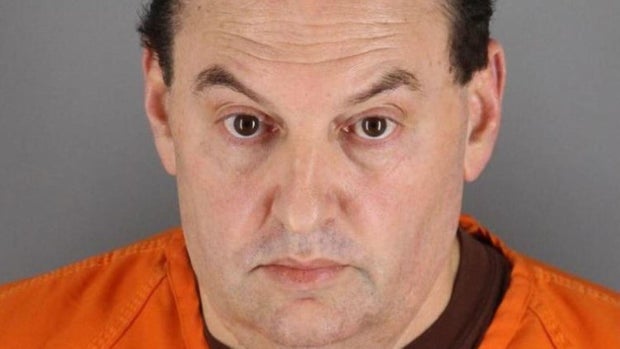
The hockey dad and local businessman was now charged with murder. Westrom was later indicted by a grand jury and pleaded not guilty.
Westrom’s DNA, according to forensic scientist Andrea Feia, found on the comforter and towel in the bathroom, was identified as semen. But she says her team couldn’t determine the type of DNA that she says Westrom left on the red T-shirt, the bathroom sink and the washcloth.
Erin Moriarty: You can’t say definitively that his blood or any other kind of DNA was found at the scene. You know it’s his DNA, but you don’t know what kind. Is that correct?
Andrea Feia: Correct. I don’t how it was deposited, essentially.
Wayne Triplett: You say DNA to the general Joe Q Public, well that’s a slam dunk.
Wayne Triplett, however, has questions about how and when the DNA was left there.
Wayne Triplett: There’s no timestamp on DNA.
Despite advances in DNA technology, there’s no way to know how long Westrom’s DNA had been there. And Triplett says the evidence only suggests one thing.
Wayne Triplett: … that just doesn’t mysteriously show up. He had to be there.
Erin Moriarty: So, you think he probably was in that apartment at some point?
Wayne Triplett: …you know, you can’t run from that evidence. He had to have been there. Don’t get there by accident.
Erin Moriarty: You don’t believe he was there the day that Jeanie Childs was murdered?
Wayne Triplett: I — I don’t.
“48 Hours” legal consultant Julie Rendelman says the evidence in this case does raise questions. According to lab reports, there was other DNA from semen discovered on Jeanie’s purple panties that does not match Westrom. Whose DNA it is remains, even today, a mystery. And that wasn’t all.
Julie Rendelman:There was DNA from other individuals … that did not belong to Jerry Westrom, but clearly belonged to a male source.
Rendelman points to that DNA found in the stairwell close to blood stains identified as belonging to Jeanie Childs.
Julie Rendelman: Jerry Westrom’s DNA is not in the stairwell, but we know that there’s at least one other person, whose DNA blood is found in that stairwell.
Remember, that stairwell DNA matched John Esswein. When investigators interviewed him, he couldn’t recall how his blood ended up in the stairwell not far from Jeanie Childs’ apartment on the 21st floor.
Julie Rendelman: …his answers were a bit peculiar I — I found … and the reason I say that I because he actually describes being there one time.
Erin Moriarty: And why does that bother you?
Julie Rendelman: So, it bothers me because how the heck … would he remember … when he is interviewed all these years later that he was there but only once. And the one time he says he was there was years before the murder? It just, it felt a bit convenient.
“48 Hours” reached out to Esswein for comment, but he didn’t respond. He has never been charged in this case.
Rendelman also points out that before Jerry Westrom’s DNA was identified at the crime scene, authorities had discovered a mixture of DNA types on the comforter. According to a 2012 lab report, a man named James Luther Carlton couldn’t be excluded as one of the contributors.
Julie Rendelman: …we know this is an individual that had committed multiple sex crimes in the past…
And what makes Carlton so significant?

Hennepin County District Court
A little more than a year after Jeanie Childs’ murder in July 1994, Jody Dover, a 26-year-old hospital worker, was stabbed to death in her Minneapolis apartment. Jody’s murder was eerily similar to Jeanie’s murder. Jody’s killer had also left behind bloody footprints.
Authorities arrested Carlton and determined a footprint found inside Jody Dover’s apartment belonged to him. He was convicted of her murder in 1995 and is serving a life sentence. “48 Hours” can’t confirm if he was ever questioned around the time of Jeanie Childs’ murder. We reached out to Carlton. He declined our interview request.
Carlton’s criminal history was a red flag for Westrom’s defense team. Attorney Steven Meshbesher told CBS station WCCO that it was a rush to judgment in this case.
Steven Meshbesher: You need to do the investigation first, find out what the facts are, find out what the evidence is, and then determine the charge. Now they are charging it first.
Were the footprints Jerry Westrom’s? As both sides prepared for trial it became clear that it would all come down to this unique evidence.
Mark Ulrick: In Minnesota here, people are not committing crimes a lot of times with the socks and shoes off.
Mark Ulrick, a supervisor with the Minneapolis Police Forensic Division, examined the footprints. He says he focused on the friction ridge skin — the arrangement of ridges and furrows — unique to every person.
Mark Ulrick: Friction ridge skin is found on … your fingers, your palms, and the soles of your feet.

Hennepin County District Court
Defense attorneys hired their own forensic scientist, Alicia McCarthy, a professor at Thomas College in Waterville, Maine to analyze the bloody footprints for them.
Erin Moriarty: You call this case a beast?
Alicia McCarthy: It was a beast. It was definitely very challenging.
What conclusions would the experts reach?
Was Jerry Westrom just a customer who had left his DNA in Jeanie Childs’ apartment previously, or was he the one who stabbed her to death more than 60 times? Investigators believed the bloody footprints found in her apartment would provide the answer.
Mark Ulrick, at the Minneapolis Police lab, was tasked with comparing the crime scene prints to Westrom. He determined that four of the seven prints were suitable for comparison.
One of them, he says, revealed the impression of a left foot; he labeled the heel E1 and an area below the big toe as E2. When Ulrick analyzed it, this was his conclusion.

Hennepin County District Court
Mark Ulrick: E1 and E2 were identified to Mr. Jerry Westrom.
And he says there was more.
Erin Moriarty (pointing to photo of marked footprints): This one, B?
Mark Ulrick: That one was identified. … to the right foot of Mr. Jerry Westrom.
Ulrick believed that all four prints — E1, E2, B and another left footprint he labeled D1 — belonged to Westrom.
As the trial date approached, forensic scientist Alicia McCarthy, who had been hired by the defense, was asked to verify Ulrick’s work.
Alicia McCarthy: They wanted me to come in and look and double check the work that was done by the Minneapolis lab.
McCarthy believed that only the print labeled E2 — the area below the left big toe — was suitable for comparison.
During her analysis she began comparing E2 to the footprints of alternate suspects and didn’t get anywhere.
Alicia McCarthy: I was sort of in limbo for about a year where I was comparing to other people. And then I said, I’m inconclusive. I can’t say it’s these people … I can’t say it’s not these people.
McCarthy showed us what unique characteristics she was looking for.

CBS News
Alicia McCarthy (looking at footprints on the computer) We have what we call a recurve.
Erin Moriarty (points to photo): This?
Alicia McCarthy: Yes, it comes down and recurves back up and … for a friction ridge examiner that’s pretty exciting.
When she compared E2 to Jerry’s Westrom’s footprints, she followed the curves and finally —
Erin Moriarty: And who do you believe left that footprint … at the crime scene.
Alicia McCarthy: That was Jerry Westrom’s left foot.
Erin Moriarty: And you’re sure of that?
Alicia McCarthy: Positive.
McCarthy agreed with Mark Ulrick — E2, the small area below the left big toe, had been placed there by Jerry Westrom. But she disagreed with Ulrick on the other three footprints.
Alicia McCarthy: I went through and did the comparisons, um, that Mark had made identifications with, I didn’t agree with him.
She believed those three prints didn’t have enough detail.
Alicia McCarthy: … there wasn’t enough for that very high threshold to say in identification and go to court in front of a jury and tell them that this impression belongs to Jerry Westrom …
Mark Ulrick: That’s her decision, I have no qualms about what she did. I just know the quality of my work and I know what I stand by.
When McCarthy determined E2 belonged to Westrom, she was immediately released by his defense team. Both experts would then testify for the prosecution.
In August 2022, Jerry Westrom went on trial for Jeanie Childs’ murder. He had been out on bond. The judge ruled there would be no cameras in the courtroom. “48 Hours” asked Westrom and his family for on camera interviews, but they declined.
Jennifer Mayerle covered the trial for WCCO.
Jennifer Mayerle: Jerry’s wife and three kids were there for most of the trial. … Jerry and his wife would walk into the Hennepin County Government Center holding hands
In the courtroom, prosecutors painted a different picture. They said the evidence points to Jerry Westrom as the killer. The bloody footprints, combined with his DNA is proof, they said, that he was in her apartment when she was murdered.
Jennifer Mayerle: The bloody footprint put a timestamp of when the killer was there.
But the defense tried to poke holes in the footprint evidence. They also called that witness who had told police she saw Jeanie Childs with a blond man wearing a trench coat the day she was murdered. And, she said she saw the same man later running down the stairwell without a coat.
Julie Rendelman: Jerry Westrom has dark hair. There’s no evidence he ever had blonde hair or anything like that.
The defense also named Arthur Gray, who died in 2012, as an alternate suspect. Jeanie had accused him of domestic abuse.
Julie Rendelman: And then when you put the hair … of Arthur Gray in her hand … it starts to become more significant.
The defense, who declined “48 Hours”‘ request for an interview, was dealt a blow when they couldn’t introduce James Luther Carlton and John Esswein as alternate suspects. The judge ruled there wasn’t enough evidence against either man and prosecutors cleared them both. So, the jury never heard that expert analysis of their footprints had been inconclusive.
Julie Rendelman: I think it was incredibly damaging to the defense’s case.
Prosecutors declined our request for an interview. Jerry Westrom did not testify and after eight days the jury quickly reached a verdict: guilty.
Julie Rendelman: The jury came back quite quickly … and convicted Jerry Westrom of the top count which was murder in the first degree. They also found him guilty of murder in the second degree.
Prosecutors didn’t present a motive. Wayne Triplett says he still believes his lifelong friend is innocent and says that both families have paid a terrible price.
Wayne Triplett: The victim … didn’t deserve what they got … it’s terrible … and here Jerry’s paying for that … but it’s not Jerry.

Cindy Blumer
On Sept. 9, 2022, Westrom was sentenced to life in prison for the murder of Jeanie Childs.
STEVEN MESHBESHER (in court): As we’ve said in the beginning and we’re saying now, you’ve got the wrong guy. We are sorry for the loss of Jeanie Childs’ life.
Jeanie’s mother Betty, believes justice has been served and that the right man is behind bars, but her grief will always be there. She poured her heart out in a letter — a love letter she never got to send.
Betty Eakman (reading letter): My emptiness will never go away since you were taken that fatal day. … it wasn’t fair you had to die. I never got to say goodbye. I love you and miss you so much. Love and peace, Mom
The Minnesota Supreme Court reversed Jerry Westrom’s second-degree murder conviction but upheld the conviction for first-degree murder.
Westrom filed a petition with the U.S. Supreme Court. It was denied.
Produced by Marcelena Spencer and Jordan Kinsey. Rebecca Laflam is the associate producer. Stephen A. McCain is the development producer. Marlon Disla, Phil Tangel and Greg Kaplan are the editors. Lourdes Aguiar is the senior producer. Nancy Kramer is the executive story editor. Judy Tygard is the executive producer.