
The National Weather Service is hiring to fill hundreds of predominantly entry-level positions, more than a year after losing about 15% of its staff due to sweeping job cuts and buyouts ordered by the Trump administration.
Veteran meteorologists are cautiously optimistic about how an influx of workers could benefit the agency as storm season gets underway — and as people in the industry say vacancies may be impeding the collection of data that many see as vital for predicting extreme weather.
But the weather service’s focus on recruiting early career scientists, as its job postings advertise, raises concerns for some former employees who believe their relative lack of experience could be reflected in the nation’s forecasts, especially without more knowledgeable staff around to help train them.
“Obviously, people retiring and new people coming up is a natural part of any business or agency,” said Alan Gerard, a meteorologist who worked for 35 years at the weather service and its parent agency, the National Oceanic and Atmospheric Administration, before retiring early last year. “But it’s meant to be done in an organized process, where the new people coming in have the benefit of working for a period with people who are experienced and can help train them and build up their expertise.”
Hurricane season started on June 1, overlapping with spring and summer months when tornadoes, flash flooding and wildfire outbreaks typically peak in the United States. For forecasters, it’s one of the busiest and most critical periods of the year.
Impact of last year’s staffing cuts
Last year’s federal downsize shrunk the weather service by about 600 employees, most of them experienced workers who accepted early retirement packages, said Tom Fahy, the legislative director of the National Weather Service Employees Organization, a labor union representing weather service and other NOAA staff. About 100 probationary employees, in their first year of federal service, were fired.
Federal employment data reviewed by CBS News showed staffing gaps have persisted since then. NOAA had nearly 300 fewer meteorologists and hydrologists in its workforce at the end of May, compared with January 2025. While the data doesn’t specify which NOAA employees are part of the weather service, meteorologists and hydrologists working in other subagencies contribute heavily to the research that informs forecasting operations.
Rick Thoman, a climate specialist in Alaska who worked for three decades as a weather service meteorologist before his retirement in 2018, said the loss of specialized forecast experience in his state due to last year’s job cuts “has been a really bad thing.”
“Alaska is not like forecasting for Nebraska, and there are no schools of meteorology in Alaska. Everyone has to come here and learn it,” Thoman told CBS News. “So, even though there’s some effort to increase staffing now, because there are no old-timers left, and folks come in here without any experience in high-latitude weather forecasting, it just makes it that much harder.”
Honing meteorological skills requires hands-on experience and practice even in more accessible locations, said Gerard. He said a number of senior-level scientists who left their roles at forecast offices “had real knowledge of local weather patterns” and noted how complex weather conditions, like storm surge, call for a degree of finesse and familiarity as they can be “intricate” phenomena to forecast.
“Growing pains” as “gloomy days” over
The weather service had already faced declining employment before the Trump administration’s firing spree. In its aftermath, forecast offices in at least six locations entered last year’s hurricane season with critical staff shortages. Several offices stopped operating full-time, and almost a dozen suspended or limited weather balloon launches.
Current and former weather service employees told CBS News that progress is now being made to address those issues, in part by hiring new people. Fahy, with the National Weather Service Employees Organization union, said that while some forecast offices remain understaffed, there have also been “significant hires.” The agency has said it will place new staff at locations based on their vacancy rates.
Fahy emphasized that “those gloomy days of 2025 are far away in the rear-view mirror.”
“I think the National Weather Service is going through some growing pains at the current time, with the loss of late-career experience,” said Brian LaMarre, a former weather service meteorologist who retired early from the agency last year after three decades. “But things are gaining on the front end with the new generation of ideas, the new generation of skills, especially in this extremely advanced technology era that we have right now.”
Chris Greenberg / AP
Some former weather service employees told CBS News they’re hopeful newcomers raised in the digital age will bring value to the agency as it upgrades its technology. Others said additional workers could help restore the flow of key atmospheric data that has been missing or interrupted since staffing levels at the weather service abruptly dropped.
LaMarre, who mentors students, recent graduates and young professionals aspiring to work for the weather service, views the future as “extremely exciting.”
Erica Cei, a weather service spokesperson, told CBS News that forecast offices currently experiencing “temporary staffing changes” receive “mutual aid” from neighboring offices, which allow their forecasting operations to run without interruption.
Cei said the agency “remains ready to meet its mission by maintaining 24/7 operations and ensuring critical forecasts, warnings, and decision support are delivered to partners and the American people.”
Hiring “will continue as needed,” says weather service
New hiring comes after deadly Texas floods last July raised questions about whether the region could have been more prepared had regional forecast offices been adequately staffed. Mr. Trump granted an emergency authorization to the weather service last August that allowed it to hire 450 meteorologists, hydrologists and radar technicians over the course of a year, ending this September.
More than 300 new weather service employees were onboarded as of late June, according to Cei, who said they’re predominantly field workers, including meteorologists, hydrologists and electronics technicians, as well as other physical scientists.
Cei told CBS News that around 50 people were onboarded in the last two months alone – after the weather service announced in May that it would recruit another 150 entry-level meteorologists to work at forecast offices across the country.
“Our hiring actions and plans are robust, and will continue as needed,” said Cei. “The agency is well postured to recruit entry-level candidates to fortify our front lines and build talent pipelines for the future.”
Missing weather data
Everyone who spoke with CBS News pointed out ways that new hires may be able to improve weather service operations, regardless of their experience level. Among the most urgent is the restoration of what’s called “upper air” data, which Thoman and Gerard said has noticeably declined or degraded since January 2025.
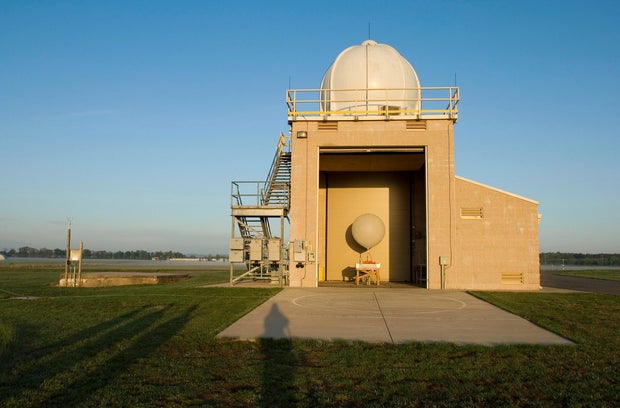
The data is considered by many to be fundamental to forecasting models, particularly in scenarios where weather is changing rapidly. It has historically been collected by weather balloons, synced to launch twice daily from sites nationwide, and in other parts of the world, too.
Several U.S. weather stations no longer launch balloons twice daily, or at consistent morning and evening times, records show, which Cei said is “due to temporary resource and equipment constraints.”
It’s an unprecedented change, Gerard said.
“There’s concern about the quality of the models because of the lack of upper air data,” he said. “There’s a lot of expression of just being less confident, and having less confidence in your data tends to undermine a lot of your operational decisions, right?”
Thoman told CBS News that two remote weather service outposts in Alaska have not launched weather balloons since February and August of last year, respectively, and several others are launched much less frequently than they used to be.
While the extent of the impact on forecasts is unclear, Thoman said weather models last October incorrectly predicted the track of a storm that displaced about 1,000 people along the Bering Sea. More than half of the area’s scheduled balloon launches failed to take place in the days leading up to its landfall.
Thoman said “it’s inconceivable to me, as a meteorologist,” that lack of data due to the diminished balloon launches “had no impact on the weather model forecast.”