US Mint to begin striking commemorative coin featuring Trump

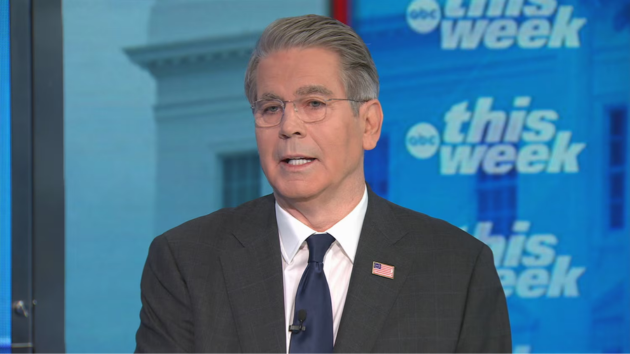
Treasury Secretary Scott Bessent appears on ABC News’ ‘This Week’ on Jan. 25, 2026. (ABC News)

(WASHINGTON) — Treasury Secretary Scott Bessent on Wednesday released a rendering of a commemorative coin featuring President Donald Trump, saying that the U.S. Mint will begin striking the $1 piece to commemorate the 250th anniversary of the signing of the Declaration of Independence. 

“As America commemorates 250 years of independence, the [U.S. Mint] will begin striking this new $1 gold coin to honor the enduring legacy of liberty and a lasting symbol of patriotism,” Bessent wrote in a social media post. “Featuring President Trump, it celebrates the strength of American values, and the promise of a nation dedicated to preserving freedom for all.”

The coins — which are not real gold but will feature a gold-like finish — will be available in the fall, a Treasury Department spokesperson said.

The last and only time a living president was featured on hard currency struck by the U.S. Mint was a century ago for the U.S. Sesquicentennial. The half-dollar coin featured then-President Calvin Coolidge silhouetted behind the bust of President George Washington. At the time, the Mint produced a million of the coins with 860,000 of them ultimately returned and melted due to low demand.

While living presidents are generally barred from appearing on U.S. currency, the Trump administration has argued that the Circulating Collectible Coin Redesign Act of 2020 permits the design because it authorizes the Treasury secretary to oversee the minting of special commemorative coins for the nation’s Semiquincentennial. And while the same law bars any person from appearing on the tail side of a commemorative coin, the restriction doesn’t apply to its face. 

Federal law also stipulates that coin designs be selected by the Treasury secretary after consultation with the Commission of Fine Arts, which approved the design last March, and review from the bipartisan Citizens Coinage Advisory Committee, an 11-person body established by Congress in 2003 to advise on designs of hard currency.

But the Treasury Department appears to have skipped the latter committee, raising questions about the legality of the coin’s production.

Donald Scarinci, a numismatist and Democrat who’s spent over two decades on the committee, said aside from a last-minute attempt by the Mint to present the proposed coin to the committee in December, the body never had a chance to review the design as required by law.

“We’ve never seen any design with the portrait of Donald Trump on it,” Scarinci told ABC News on Wednesday. 

Scarinci said the proposed December meeting ultimately didn’t occur because it was impossible to reach a quorum of members on such short notice. 

During the committee’s February meeting, another member of the board, Kellen Hoard, a coin collector who represents the general public, also said that the board received no opportunity to weigh in on the coin, nor did they review the designs ultimately selected for the Semiquincentennial series of quarters. 

“I have never reviewed the Semiquincentennial $1 coin portfolio, much less been given an opportunity to review it. Is it legal now for the Mint to move forward with creating the Semiquincentennial $1 coin despite me never having the opportunity to review the piece?” Hoard asked acting Mint Chief Counsel Greg Weinman at the meeting. 

Weinman replied that he did not agree with Hoard’s characterization and said that the Mint’s position is the board made the decision to not review the design.

“I think the Mint made a significant effort to request the CCAC to review the portfolio. There was clearly a conscious decision not to do so. The Mint has moved forward accordingly. I am not prepared to discuss more than that at this meeting,” Weinman said. 

“I believe the CCAC was given — at least the chair of the CCAC was given a full opportunity to review this portfolio,” Weinman added later. “The Mint, in my opinion, attempted multiple times to find an opportunity for the CCAC to review the portfolio. The CCAC made a decision not to. At least the chair of the CCAC made the decision not to.”

“The concept that the secretary of the Treasury can create his own coin — it’s illegal,” Scarinci said of the move, adding that Congress would have the authority to confiscate and demonetize the coins and that concern about the coin crosses partisan boundaries on the committee.

“This is not a Democrat-Republican issue as far as the coin is concerned,” he said.

A Treasury spokesperson told ABC News, “During the January meeting, Megan Sullivan, the acting chief of the U.S. Mint’s office of design management, assured board members that ‘legal research from both the Mint and the Department of the Treasury determined that the proposed coin would not violate any laws and is legal under the law authorizing the minting of coins for the Sesquicentennial.'”

The coin is not the only piece of currency that the Treasury Department is putting Trump’s imprint on. Paper currency printed this year will also feature Trump’s signature above that of Bessent’s — a first for an American president. Bessent told Fox News earlier this week that, too, would go into circulation this fall.

In May, Trump administration officials pushed the Bureau of Engraving and Printing to move forward with designing a commemorative $250 bill with Trump’s portrait and signature, should legislation to create the new currency pass, according to two people with knowledge of the discussions.

That bill has been stuck in the House Financial Services Committee for more than a year.

Copyright © 2026, ABC Audio. All rights reserved.

Julián Álvarez fue silbado y se fue sin saludar a la afición: ¿qué sigue en la novela del argentino?

No fue un domingo cualquiera para Julián Álvarez. En realidad, no lo ha sido ningún día desde aquella frase que pronunció durante la Copa del Mundo: “lo mejor para todos es una transferencia”, cuando se hablaba de un fuerte interés del FC Barcelona por contratarlo. El fichaje no se hizo —porque el Atlético de Madrid no quiso negociar— y aquellas siete palabras, pronunciadas a un océano de distancia de España, le ganaron la enemistad de toda la afición del Atlético de Madrid, el club que pagó por él más de US$ 87 millones hace dos temporadas.La afición le hizo pagar esas palabras este domingo, en la primera vez que el delantero argentino pisó el estadio Metropolitano, cuando ingresó en el segundo tiempo de un partido que el Colchonero empataba 1-1. Pero ni la urgencia del resultado ni la necesidad por los goles de Álvarez —acaso su mejor centroatacante— para revertirlo le hicieron olvidar a las gradas rojiblancas las palabras del número 9, que recibió una silbatina generalizada al momento de ingresar al campo (ya había sido reprobado por el estadio durante el calentamiento).Álvarez no tuvo un buen ingreso y, aunque su equipo acabó rescatando un empate con 10 jugadores cerca del final, el goleador argentino se llevó la imagen final, sin participar del tradicional saludo que hace el Atlético, dando la vuelta al campo para agradecer a la afición. El delantero se fue a los vestuarios en soledad. Un gesto que, como dice el dicho, vale más que mil palabras.“Me comentaba la gente del club, que el club decidió que él no se acerque a saludar con sus compañeros a la gente. La decisión no fue de Julián Alvarez, fue del club, que tomó la decisión de alejarlo y separarlo para que se vaya hacia el vestuario”, dijo su director técnico, Diego Simeone, tras el juego.Queda exactamente una semana del mercado de fichajes en Europa, por lo que la presencia de Julián Álvarez en el Atlético de Madrid sigue estando en el aire para el resto de la temporada. El problema es que la reacción de la afición este domingo parece mostrar un punto de no retorno en la relación con el futbolista, que tampoco ha salido a expresar una disculpa o una explicación a sus dichos durante el Mundial.Un problema aún mayor es que, pese al deseo de ser transferido que tiene el jugador, el club no tiene ninguna intención de desprenderse de él y, conforme van pasando los días, el mercado se va achicando, porque al conocer las altas demandas de la directiva del Colchonero, los interesados salen a buscar alternativas, apurados por la fecha límite del 1 de septiembre.Por supuesto, el Atleti, a medida que pasan las horas, tiene cada vez menos deseos de abrirle la puerta de salida, porque se quedaría con muy poco tiempo para salir a buscarle un reemplazo al futbolista estrella que tiene la plantilla. Hallar un sustituto para el jugador que marcó 49 goles y dio 17 asistencias en 107 partidos con el club supondría muchos millones arriba de la mesa, posiblemente teniendo que pagar un valor más alto que de lo que dicta el mercado.Los destinos para Julián Álvarez son muy pocos. El Atleti ya dejó claro que no va a negociar con clubes españoles, porque no quiere reforzar a la competencia. Fuera de España, solo se conoció el interés del Arsenal y uno más pequeño del PSG. Ninguno prosperó, en parte por el deseo del jugador de vestirse de blaugrana.Los Gunners, campeones de la Premier League y subcampeones de la Champions League, podrían hacer el intento, a pesar de que en el ataque ya tienen muchas alternativas. Por eso se había barajado la idea de que los londinenses pusieran dinero y algún futbolista —como Viktor Gyökeres, por ejemplo— en la mesa de negociación, algo que le cerraría a la directiva española, ya que el jugador se iría a otra liga y tendría garantizado un nombre de reemplazo. Sin embargo, si la idea no prosperó es porque o no hubo acuerdo por el monto de dinero, o porque el futbolista no tiene grandes deseos de volver a una liga de la cual ya se fue —jugó en el Manchester City de 2022 a 2024—.La posibilidad de los parisinos se mencionó mucho al comienzo del mercado de fichajes, pero fue perdiendo fuerza con el correr de los días. Mucho más desde que los bicampeones de Europa se hicieron con los servicios de Ferran Torres, el héroe de la final del Mundial 2026, que ya empezó a pagar la confianza de Luis Enrique con goles, marcando un doblete en su presentación, también este domingo.Entonces, el futuro de Julián Álvarez parece estar entre tres destinos: quedarse en el Atlético, ya sea para revertir la situación o para esperar la ventana de transferencias de enero; reflotar la idea de volver a la Premier League, pero con la camiseta del Arsenal —un equipo que quizás tampoco seduce tanto por el estilo de juego que tienen los dirigidos por Arteta—; o que el FC Barcelona finalmente abra la chequera y ponga muchísimos millones arriba de la mesa, 500 millones de euros, para ser exactos, que es su cláusula de recisión. Una cifra jamás pagada por un futbolista, y por mucha diferencia.“Primero, juntos siempre somos más fuertes. Eso siempre nos caracterizó siendo el Atlético de Madrid distinto al resto. Julián es un jugador nuestro”, dijo Giuliano Simeone —autor del empate 2-2— a la prensa tras el partido.“Tenemos que estar todos juntos tirando para el mismo lado, porque, si no, nos vamos a dividir y eso no es bueno. Julián es jugador nuestro y vamos a apoyarlo siempre”, agregó el mediocampista.Su padre, el entrenador del equipo, también defendió a Julián Álvarez, pero con un poco más de cautela.“No estoy para dar consejos. Tengo que centrarme en mi trabajo, que es deportivamente hacer lo mejor para el Atlético de Madrid. Si el Atlético de Madrid quiere ganar algún título necesitamos estar juntos, tener delanteros importantes y para eso necesitamos trabajar en consecuencia todos de lo que necesitamos”, dijo en la rueda de prensa.“Creo que fui bastante claro. Necesitamos estar juntos. Cuando estuvimos juntos siempre hemos podido hacer cosas importantes”.The-CNN-Wire™ & © 2026 Cable News Network, Inc., a Warner Bros. Discovery Company. All rights reserved.
Read Next Story