▶ Watch Video: “Take Me Home, Country Roads” and the universal pull towards home
The first line of John Denver’s song “Take Me Home, Country Roads” calls West Virginia “Almost Heaven,” and when you’re up in the mountains, that description can feel pretty accurate.
Almost Heaven, West Virginia
Blue Ridge Mountains, Shenandoah River
Life is old there, older than the trees
Younger than the mountains, growing like a breeze
Country roads, take me home
To the place I belong
West Virginia, mountain mama
Take me home, country roads
But these winding country roads were immortalized by someone who had never driven them.
Correspondent Conor Knighton asked, “Had you ever been to West Virginia before you wrote the song?”
“No,” said Bill Danoff. “Well, in my dreams!”
Danoff, along with his then-girlfriend and bandmate Taffy Nivert, played a rough draft of “Country Roads” for their pal John Denver after a gig one night in Washington, D.C.
“John’s biggest contribution to anything at that point was just his enthusiasm: ‘Well, let’s finish it!'” Danoff laughed. “You know, at 1:00 in the morning, 1:30, you know? ‘Let’s get it!'”
The three stayed up late collaborating on the version that hit the airwaves 55 years ago.
Danoff said, “When it came out in ’71, you know, the Vietnam War was really rockin’. And we had, oh, hundreds of thousands of troops over there. So, coming home was a big, big deal.”
It was a song about home, just not Danoff’s home. Knighton asked, “You’re from Massachusetts. Could it just as easily have been, ‘Almost heaven, Massachusetts’?”
“Yeah, except I didn’t like that word!” Danoff replied. “West Virginia” sounded good. And as it turned out, a lot of other people thought so, too.
The song was John Denver’s first hit, and, despite some questionable geographic accuracy (the Blue Ridge Mountains and Shenandoah River in the lyrics are barely within the state’s borders), West Virginians embraced it in a big way.
Students at West Virginia University sing the song after victories.
It’s also a staple at wedding receptions. But the enduring appeal outside of the state has been more surprising. From television’s “The Office” to Germany’s Octoberfest, the song is known throughout the world.
Throughout this year’s World Cup, it was the anthem of the U.S. team.
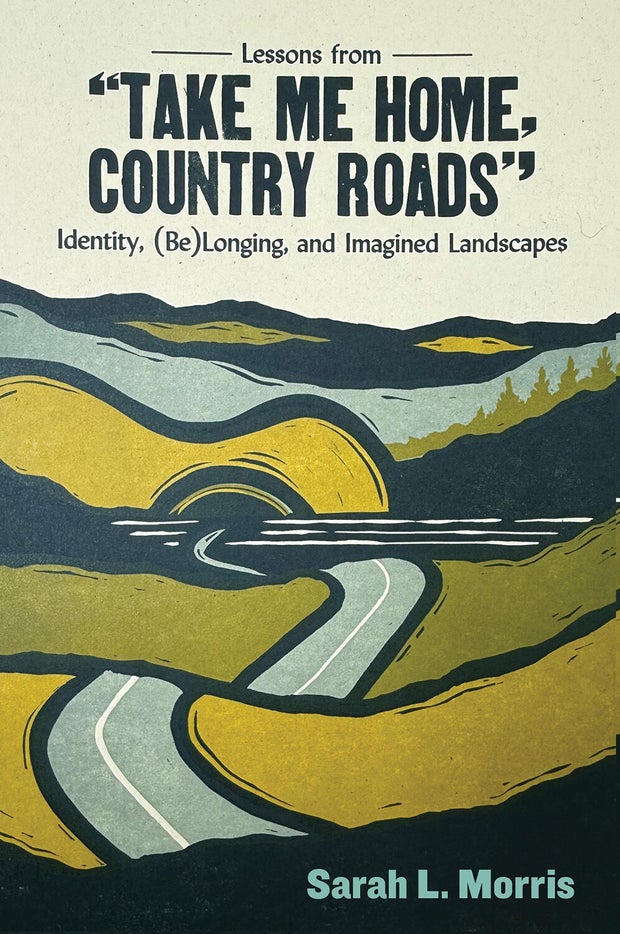
“We can think about the song as being about any place – it names West Virginia, but it doesn’t have to,” said West Virginia University assistant professor Sarah Morris. She has written about the global impact of “Take Me Home, Country Roads.”
“People take the song and re-appropriate it so that it’s about the place that’s home to them,” Morris said.
“So, they just swap in their own geographic references?” Knighton asked.
“Change the geographic references, change the lyrics, change the location. But it doesn’t really change the song, and it doesn’t change the meaning of the song.”
This Toots and the Maytals version was a hit in Jamaica:
In Hawaii, it’s “West Makaha.”
From France to Brazil, there are countless reinterpretations. The song is hugely popular in Japan. The plot of the anime film “Whisper of the Heart” centers around a teenage girl who translates “Country Roads.”
The feeling of longing, of homesickness, is universal. “It’s the rare song that isn’t just singing about something, it’s causing it,” said country star Brad Paisley. He grew up in Glen Dale, West Virginia. He’s been playing “Country Roads” ever since he learned to play guitar, but the song gained new meaning for him when he left for Nashville.
“I think once you move away, the song takes on way more just character and depth,” Paisley said. “You hear that on the radio and you’re not in West Virginia, like, you hear that in your car and it comes on, and when you hear that iconic acoustic guitar part – ‘driving down the road I get a feeling that I should have been home yesterday.'”
West Virginia University Press
Morris said, “Leaving and homecoming has always been something that West Virginians have experienced. But we’ve been at a loss in our population since 1950. So, I think it’s a perennial mood for West Virginians.”
Including Knighton.
“I grew up in the capital city of Charleston,” he said. “I learned to ride my bike on country roads. I left the state after high school, but I’m still nostalgic for it. It’s like the song says – ‘All my memories gather round her.'”
Morris said, “One of the things that I’ve been thinking about is a Welsh concept called hiraeth – this deep longing for someplace that you can’t quite name, that’s home but maybe more. It’s maybe a place that you’ve never been, or the home that you’ve only dreamed of. It’s this deep pull toward place.”
Those thousands of fans in stadiums thousands of miles away from the Mountain State, aren’t necessarily singing about West Virginia. They were singing about home. Danoff said, “The place really is immaterial. It’s ‘the place I belong.’ I think that’s the key line. That’s what people are looking for in their lives.”
An earlier version of this story was originally broadcast on December 26, 2021.
For more info:
- Brad Paisley
- Bill Danoff
- “Take Me Home, Country Roads: Identity, (Be)Longing, and Imagined Landscapes” by Sarah L. Morris (West Virginia University Press), in Trade Paperback and eBook formats, available via Amazon, Barnes & Noble and Bookshop.org
- Sarah Morris, Department of English, West Virginia University
- Special thanks to West Virginia University
- Special thanks to West Virginia Department of Tourism
Story produced by Aria Shavelson. Editors: Remington Korper and George Pozderec.