Record number of West Nile virus cases since 2004, CDC warns ahead of holiday weekend

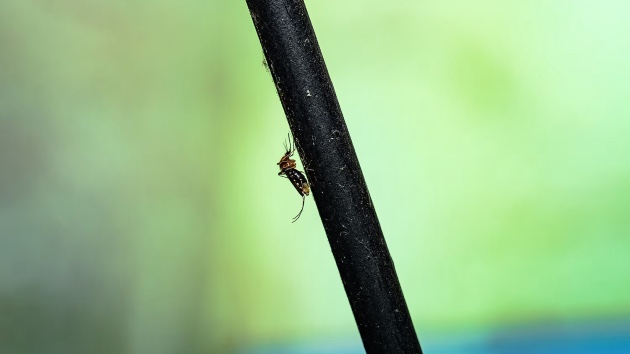
A Culex mosquito, primary vectors for several viral and parasitic diseases inside a house in Tehatta, West Bengal, India, March 3, 2026. (Soumyabrata Roy/NurPhoto via Getty Images)

(NEW YORK) — A record number of West Nile virus cases have been recorded for this time of year, the Centers for Disease Control and Prevention (CDC) warned on Wednesday ahead of the upcoming holiday weekend.

At least 48 cases of West Nile have been reported so far this year compared to an average of 10 typically by the end of June. This is the highest number of infections reported at this point in year since 2004, according to the federal health agency.

Additionally, at least 23 states are reporting West Nile activity, which is the highest number recorded over the last 10 years, CDC data shows.

The illness is the leading cause of mosquito-borne disease in the contagious U.S., with several thousand cases and over 100 deaths reported on average each year.

With millions gathering outside for Fourth of July, the CDC is urging Americans to take precautions and reduce their risk of mosquito bites.

Since 1999, the disease has killed more than 3,300 Americans. Cases have historically peaked in August and are mostly reported from June through October.

While many people infected do not develop symptoms, about one in five do. Symptoms include fever, headache, body aches, vomiting, diarrhea or rash, according to the CDC.  Most symptoms soon disappear, though weakness and fatigue may last for weeks or months.

Fewer than 1% of people infected develop severe illness that affects the central nervous system, including inflammation of the brain (encephalitis) and the membranes around the brain and spinal cord (meningitis), the CDC says.

Risk of severe disease, hospitalization and death increase with older age; certain medical conditions including cancer, high blood pressure and kidney disease; and a weakened immune system.

There are currently no vaccines for West Nile virus, nor disease-specific treatments. The CDC recommends rest, fluids and over-the-counter medications to treat the infection. Those with severe illness may need to be hospitalized and receive additional support treatments, such as intravenous fluids.

Copyright © 2026, ABC Audio. All rights reserved.
Taylor Swift’s music quietly removed from social media posts from Trump campaign, White House accounts

(CNN) — Olivia Rodrigo, Katy Perry, Noah Kahan and Sabrina Carpenter all have well-documented histories of speaking out against President Donald Trump. But when it comes to use of their music by the White House, not everyone is so vocal.In recent days, Taylor Swift’s music quietly disappeared from TikTok posts from the White House and “Team Trump” campaign accounts — without public condemnation, clapback or commenting from the singer, who is very protective of her brand.One post, which featured the president and first lady viewing fireworks over Swift’s song “August,” had its music changed to a country-inspired song with the lyrics, “I love Trump, I love Trump, Make America Great Again.” Others — including one that quotes lyrics from Swift’s “Father Figure” over images of Trump — say simply, “This sound isn’t available.”It’s unclear whether the threat of legal action loomed in the background or whether the pop star’s team communicated anger to the White House. A spokesperson for Swift did not respond to CNN’s request for comment.Swift has often been calculating about her activism and endorsements, mindful that weighing in on politics can upset her huge fan base.Others have taken a louder approach.When Perry’s “Firework” played “boom, boom, boom” over declassified images of military strikes on an eight-second TikTok video, the pop star said she was “deeply appalled” by its use, which she called “a complete violation of everything my song stands for.” The song has been removed from the post.Kahan weighed in when his hit “American Cars” was used alongside images of the president at a General Motors facility in Michigan.“Would never approve of my music being used in support of you or this administration,” he wrote in the comments section for the Instagram post, which subsequently had its music removed.Carpenter called the use of her hit “Juno” in a White House video depicting law enforcement apprehending individuals in apparent immigration actions “evil and disgusting.” That video was deleted from X.In a similar video posted by the Department of Homeland Security, media for one of Olivia Rodrigo’s songs, “All-American Bitch,” was disabled on Instagram, though it still appears on X. The singer-songwriter slammed the use of her song in a since-removed reply, writing, “Don’t ever use my songs to promote your racist, hateful propaganda.”This is not the first time Trump’s team has been under fire for using music without permission in its social media and at rallies, including by artists such as Beyoncé, Bruce Springsteen and ABBA. A license generally is required to play music in a public setting like a political rally or on an official social media account.But pushing the envelope might be part of a broader strategy for the president’s social media team, which appears to be in on its own joke — directly tagging the pop superstar in one caption: “I’m sure @Taylor Swift is going to be super excited we used her song! #taylorswift #maga #august.”Social media posts that include music get increased engagement — likes, comments, shares and follows. And using the music of artists with active fan bases is likely to amplify that engagement.The Trump White House has reimagined its role on social media during the president’s second term, launching accounts that often push limits and troll Democrats. Unlike previous administrations, including Trump’s first, there are fewer layers of bureaucracy and approval chains before a post gets published, a White House official previously told CNN.That has prompted blowback, but it’s also allowed those accounts to be more nimble.Content on White House accounts, that official said, “looks like stuff people are used to consuming — but it’s refreshing coming from the government.”“It’s the government’s responsibility to meet people where they are, be as many places as they possibly can be, and communicate in the language that people understand,” the official said.The White House did not respond to CNN’s request for comment on Swift’s music removal and whether the counsel’s office has any concerns about legal recourse.For Swift, this is not a battle she wants to wage publicly right now.And she’s not the only major artist having her music taken down through a more subtle process. Bad Bunny’s music was recently removed from a pair of sizzle reel White House posts. Ardent Trump critic Jack White, who sued the president and his campaign for using “Seven Nation Army” on social media during the 2024 campaign, appeared to have the hit anthem removed once again from a hype video ahead of a recent Cabinet meeting. It remains to be seen whether Gloria Estefan’s “Conga” will remain the soundtrack to a military highlight reel posted Sunday.Trump has had a complicated relationship with Swift, unable to shake it off over the years. Last month, he compared his popularity on TikTok to Swift’s, claiming he was No. 1 on the site to her No. 11 (though he has roughly half her following). And though he’s repeatedly said he’s “not a fan,” he offered rare congratulations during a Cabinet meeting to Swift and now-husband Travis Kelce, calling her “a terrific person” upon their engagement.When Swift announced an endorsement for Kamala Harris in the 2024 presidential campaign, Trump offered this all-caps response: “I HATE TAYLOR SWIFT!”But an old Facebook post from first lady Melania Trump may show that not even the president can resist Swift’s music. Long before any presidential run, and even before TikTok, Donald Trump was behind the wheel of a car with son Barron in the front seat. “Blank Space” was blaring on the speakers.The-CNN-Wire™ & © 2026 Cable News Network, Inc., a Warner Bros. Discovery Company. All rights reserved.
Read Next Story