
Prosecutors argue judge should order a trial for Charlie Kirk’s alleged killer

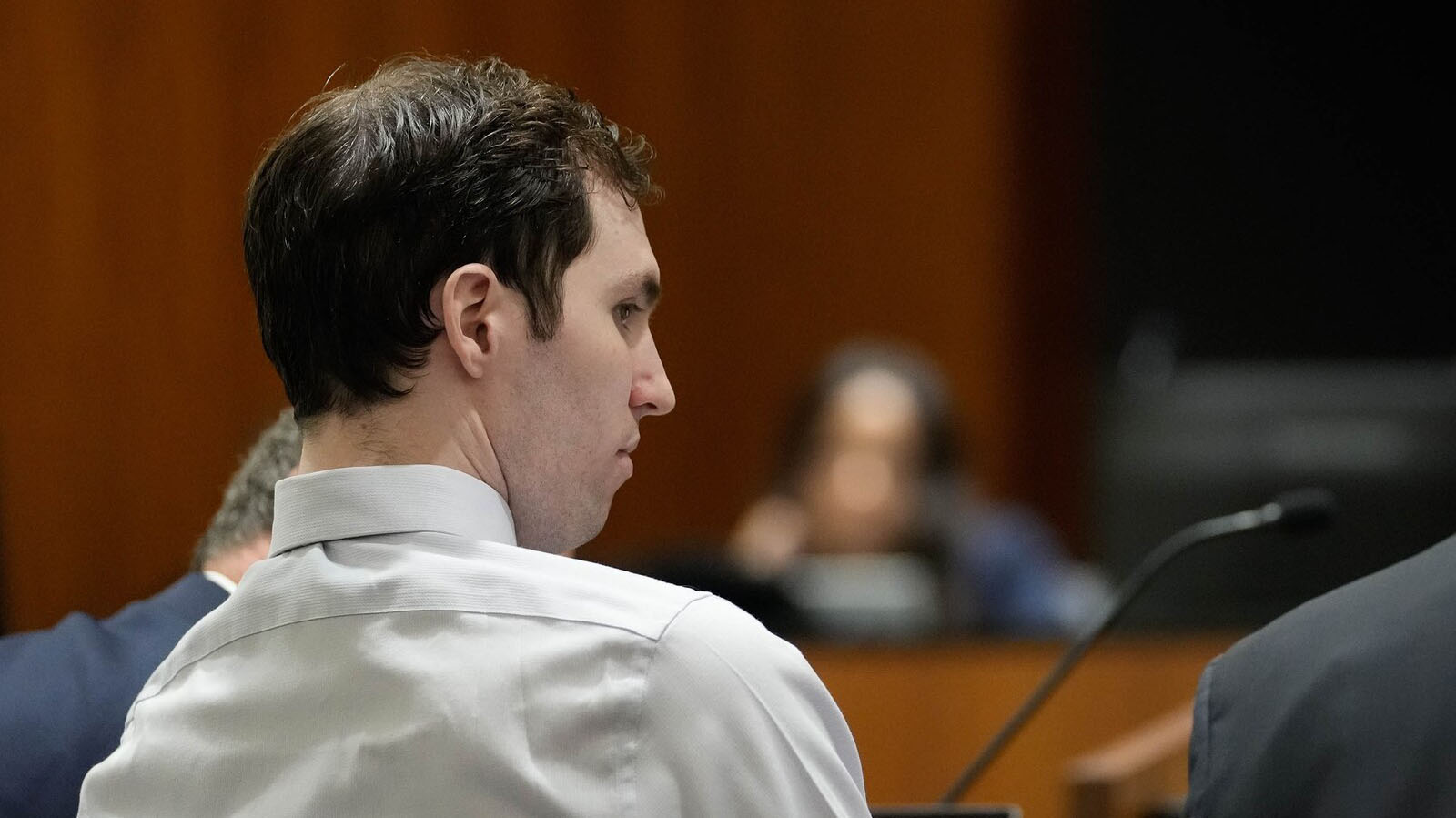
Tyler Robinson, accused in the fatal shooting of Charlie Kirk, appears during a hearing in 4th District Court on June 12, 2026, in Provo, Utah. (Photo by Francisco Kjolseth-Pool/Getty Images)

(NEW YORK) — As Tyler Robinson waits to hear whether he’ll stand trial on capital murder charges stemming from the fatal shooting of conservative activist Charlie Kirk, prosecutors told the presiding judge his decision to move the case to trial is “straightforward.”

“This isn’t a close case,” prosecutors said in a written argument to Judge Tony Graf.

The Utah County Attorney’s Office, which is prosecuting the high-profile case, filed its written argument in the 4th District Court in Provo, saying prosecutors have shown that there is enough probable cause to warrant a trial.

“This is likely as straightforward a bind-over decision as this Court will ever see,” prosecutors said in their written argument filed with the court on Tuesday and reviewed by ABC News.

The written argument from the prosecution came weeks before a Sept. 1 hearing, where both sides are scheduled to present final oral arguments before Graf makes his decision on whether to hold a trial.

Defense attorneys have until Aug. 11 to file their written argument in the case.

Robinson is accused of killing Kirk with a rifle shot fired from a building’s rooftop 200 feet from where the co‑founder of the conservative student organization Turning Point USA was speaking on Sept. 10, 2025, at an outdoor rally at Utah Valley University.

The 23-year-old Robinson is charged with aggravated murder, felony discharge of a firearm causing serious bodily injury, obstruction of justice, two counts of witness tampering and commission of a violent offense in the presence of a child.

Robinson has yet to enter a plea to the charges, and his attorneys have not issued any statements on his guilt or innocence.

Prosecutors have said they plan to seek the death penalty in the case.

During a weeklong preliminary hearing earlier this month, prosecutors called several law enforcement witnesses and presented a series of security videos allegedly placing Robinson at the scene of the shooting. One of the videos showed Robinson on the roof of the building where the fatal shot that killed Kirk was fired from, prosecutors allege.

Prosecutors also presented a video statement from Robinson’s roommate and romantic partner, Lance Twiggs, who claimed Robinson confessed to killing Kirk in a letter, text messages and in person.

“He didn’t go into detail. I just asked him in person what he said was true the night before, and he said it was,” Twiggs said in the video filmed in April 2026 at the Utah County Attorney’s Office. “He started crying a little bit, and he said he wishes he hadn’t done it, and kept going around just doing stuff, I think to keep himself busy or distracted, or something.”

In their filing on Tuesday, prosecutors alleged Robinson committed the homicide “in front of approximately 3,000 eyewitnesses” who attended the Kirk rally, and noted that Robinson surrendered to law enforcement after a massive manhunt for the shooter was launched.

“These admissions, along with others, establish probable cause to support most of the elements of the charges,” prosecutors said in their written argument. “DNA testing, surveillance video, and eyewitness testimony buttress those elements and demonstrate probable cause to support the remaining elements.”

Kirk’s widow, Erika Kirk, and his parents, Robert and Kathryn, attended the preliminary hearing, sometimes leaving the courtroom to avoid seeing graphic evidence of the shooting. President Donald Trump’s son Donald Trump Jr., a friend of Charlie Kirk, was also in the courtroom for the preliminary hearing.

During the hearing, the Kirk family issued a joint statement, saying, “Every court proceeding serves as a painful reminder of his death and the loss that has irrevocably impacted our lives and the lives of his children. We remain deeply grateful for the support, prayers, and kindness we have received. This outpouring has sustained us during the darkest days of our lives.”

Copyright © 2026, ABC Audio. All rights reserved.
Lo que el informe de empleo no revela sobre la economía de EE.UU.

Una lectura rápida de las principales cifras del informe de empleo de este mes deja dos impresiones completamente distintas.La primera —que la economía perdió 23.000 empleos en julio— es una mala noticia. Se esperaba una ganancia de 95.000 puestos de trabajo, pero el resultado terminó en terreno negativo.Luego está la segunda cifra: una tasa de desempleo del 4,1 %, frente al 4,2 % de junio. Históricamente, sigue siendo bastante baja y refleja un mercado estable para la mayoría de las personas que buscan empleo o ya tienen uno.¿Qué está pasando? Mi bandeja de entrada se llenó rápidamente de respuestas: el informe de empleo era “desolador”, “impactante” o una señal de que el mercado laboral estaba “en terapia intensiva”. Otros fueron más optimistas y resumieron la situación así: “pocas contrataciones, pocos despidos”.Entonces, ¿cuál de esas dos versiones describe este momento económico?Una combinación de ambas, con todas las frustraciones e incógnitas que eso implica.El informe de julio no borró la fortaleza subyacente de la economía. El gasto de los consumidores sigue siendo un factor favorable. Las guerras, los aranceles y años de incertidumbre no han llevado a una economía de US$ 31 billones a una recesión. Incluso las revisiones realmente preocupantes —la economía creó 103.000 empleos menos de lo calculado inicialmente en mayo y junio— no apuntan a despidos masivos.Al examinar los datos en detalle, los riesgos quedan claros. La tasa de desempleo bajó porque decenas de miles de personas dejaron de buscar trabajo. La inflación sigue reduciendo el poder adquisitivo de los salarios. Y el empleo en los sectores de recreación y hotelería cayó, inexplicablemente, durante la Copa del Mundo.Y hay algo más.La economía parece estar sumida en una incertidumbre permanente y ser tan frágil y contradictoria que cualquier cambio de dirección parece tener enormes consecuencias. Necesitamos urgentemente un diagnóstico claro de lo que ocurre para tomar las mejores decisiones sobre nuestro futuro. Los responsables de las políticas públicas y los bancos centrales también necesitan esa claridad para tomar decisiones que afectan a todo el país.No sabemos si este informe reveló grietas más profundas en el mercado laboral que podrían poner en riesgo el sustento de muchas personas. La inteligencia artificial podría ser uno de los factores, al impulsar a la gente a buscar empleos que considera protegidos de su rápido avance. Al mismo tiempo, la IA podría estar amenazando puestos de trabajo de maneras que todavía no comprendemos.No sabemos si estas cifras cambiarán la evaluación de la Reserva Federal sobre la posibilidad de subir las tasas de interés ni sobre cuándo hacerlo. Tampoco sabemos si volverán a revisarse sustancialmente dentro de un mes.Lo que sí sabemos es que la confusión resulta agotadora. Y probablemente te resulte familiar si has solicitado decenas de empleos sin recibir respuesta; si el sector en el que pensabas que podías confiar —hotelería, seguros o gobierno local— se está contrayendo justo cuando intentas desarrollarte en él; o si temes dejar un mal empleo porque quizá no encuentres otro.En todo caso, el informe de hoy reflejó lo que tantas personas viven a diario: las dificultades para formular políticas acertadas y nuestra necesidad de entender lo que está ocurriendo.La fortaleza fundamental de la economía sigue ahí. También persisten los grandes problemas estructurales —el costo de vida, la vivienda, el cuidado infantil y las brechas salariales— que determinan cómo se vive este momento. Tal vez los datos comiencen, mes a mes, a marcar una dirección clara.Mientras tanto, seguimos estancados en esta incertidumbre.The-CNN-Wire™ & © 2026 Cable News Network, Inc., a Warner Bros. Discovery Company. All rights reserved.
Read Next Story