
Prosecutors argue judge should order a trial for Charlie Kirk’s alleged killer

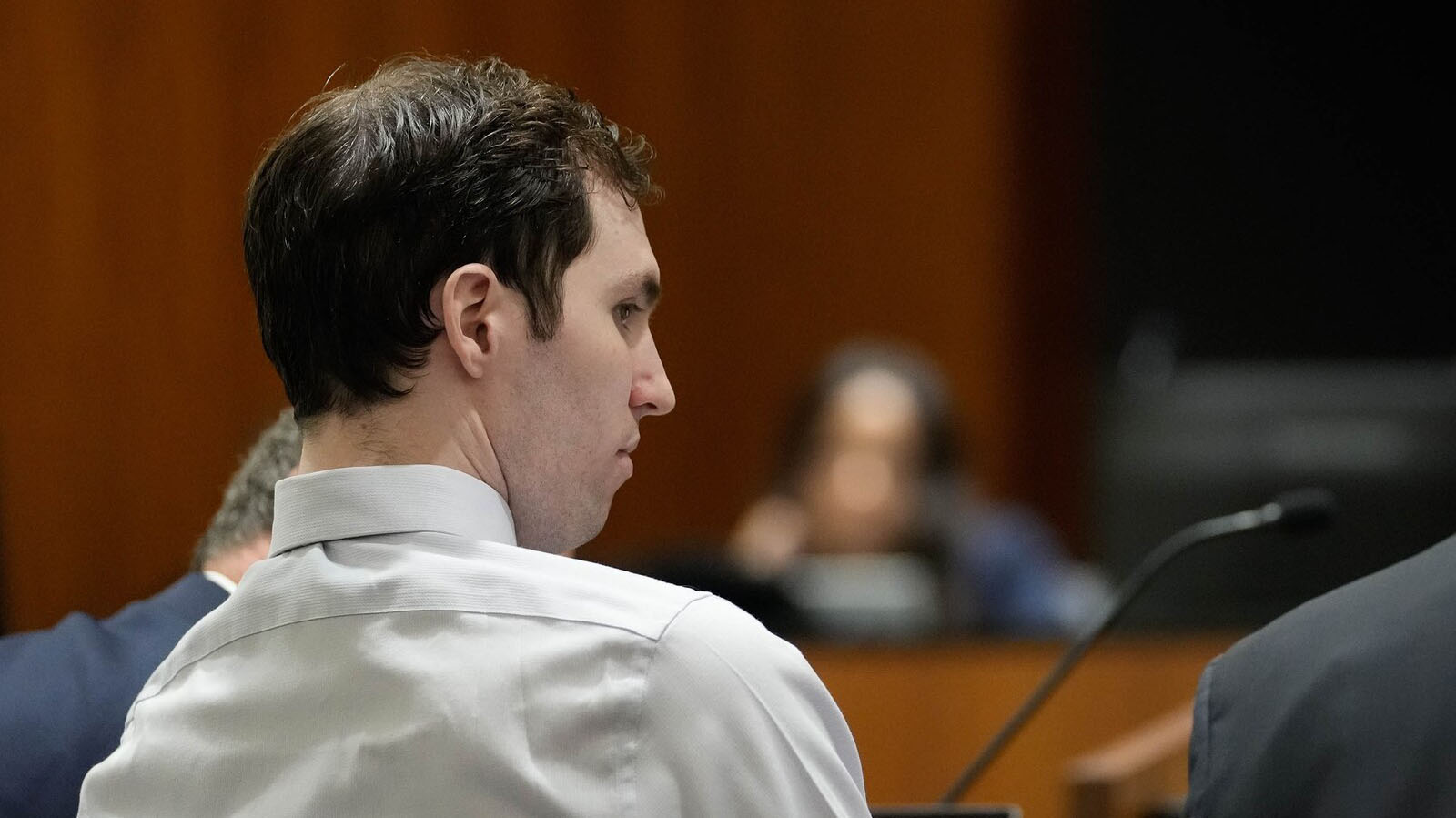
Tyler Robinson, accused in the fatal shooting of Charlie Kirk, appears during a hearing in 4th District Court on June 12, 2026, in Provo, Utah. (Photo by Francisco Kjolseth-Pool/Getty Images)

(NEW YORK) — As Tyler Robinson waits to hear whether he’ll stand trial on capital murder charges stemming from the fatal shooting of conservative activist Charlie Kirk, prosecutors told the presiding judge his decision to move the case to trial is “straightforward.”

“This isn’t a close case,” prosecutors said in a written argument to Judge Tony Graf.

The Utah County Attorney’s Office, which is prosecuting the high-profile case, filed its written argument in the 4th District Court in Provo, saying prosecutors have shown that there is enough probable cause to warrant a trial.

“This is likely as straightforward a bind-over decision as this Court will ever see,” prosecutors said in their written argument filed with the court on Tuesday and reviewed by ABC News.

The written argument from the prosecution came weeks before a Sept. 1 hearing, where both sides are scheduled to present final oral arguments before Graf makes his decision on whether to hold a trial.

Defense attorneys have until Aug. 11 to file their written argument in the case.

Robinson is accused of killing Kirk with a rifle shot fired from a building’s rooftop 200 feet from where the co‑founder of the conservative student organization Turning Point USA was speaking on Sept. 10, 2025, at an outdoor rally at Utah Valley University.

The 23-year-old Robinson is charged with aggravated murder, felony discharge of a firearm causing serious bodily injury, obstruction of justice, two counts of witness tampering and commission of a violent offense in the presence of a child.

Robinson has yet to enter a plea to the charges, and his attorneys have not issued any statements on his guilt or innocence.

Prosecutors have said they plan to seek the death penalty in the case.

During a weeklong preliminary hearing earlier this month, prosecutors called several law enforcement witnesses and presented a series of security videos allegedly placing Robinson at the scene of the shooting. One of the videos showed Robinson on the roof of the building where the fatal shot that killed Kirk was fired from, prosecutors allege.

Prosecutors also presented a video statement from Robinson’s roommate and romantic partner, Lance Twiggs, who claimed Robinson confessed to killing Kirk in a letter, text messages and in person.

“He didn’t go into detail. I just asked him in person what he said was true the night before, and he said it was,” Twiggs said in the video filmed in April 2026 at the Utah County Attorney’s Office. “He started crying a little bit, and he said he wishes he hadn’t done it, and kept going around just doing stuff, I think to keep himself busy or distracted, or something.”

In their filing on Tuesday, prosecutors alleged Robinson committed the homicide “in front of approximately 3,000 eyewitnesses” who attended the Kirk rally, and noted that Robinson surrendered to law enforcement after a massive manhunt for the shooter was launched.

“These admissions, along with others, establish probable cause to support most of the elements of the charges,” prosecutors said in their written argument. “DNA testing, surveillance video, and eyewitness testimony buttress those elements and demonstrate probable cause to support the remaining elements.”

Kirk’s widow, Erika Kirk, and his parents, Robert and Kathryn, attended the preliminary hearing, sometimes leaving the courtroom to avoid seeing graphic evidence of the shooting. President Donald Trump’s son Donald Trump Jr., a friend of Charlie Kirk, was also in the courtroom for the preliminary hearing.

During the hearing, the Kirk family issued a joint statement, saying, “Every court proceeding serves as a painful reminder of his death and the loss that has irrevocably impacted our lives and the lives of his children. We remain deeply grateful for the support, prayers, and kindness we have received. This outpouring has sustained us during the darkest days of our lives.”

Copyright © 2026, ABC Audio. All rights reserved.

La IA crea 16 virus desde cero, lo que combatiría la resistencia a antibióticos, pero alerta sobre su posible uso indebido

Científicos utilizaron un programa de inteligencia artificial para crear genomas virales diferentes de los de cualquier virus conocido en la naturaleza y capaces de atacar huéspedes específicos, según un nuevo estudio. El avance resulta prometedor para la medicina, pero también suscita preocupación por su posible uso indebido.El estudio, publicado el jueves en la revista Science, señala que las secuencias genéticas procedentes de millones de fuentes “de todos los dominios de la vida” sirvieron como corpus de entrenamiento para Evo, una herramienta de IA. El proceso es similar al entrenamiento de ChatGPT y otros modelos de lenguaje con grandes cantidades de textos existentes.Los científicos de Stanford University y el Arc Institute utilizaron después la IA para generar miles de combinaciones genómicas dentro de un marco específico: debían ser compatibles con células de la bacteria E. coli. De los miles de genomas generados por la IA, los investigadores sintetizaron y probaron unos 300 en el laboratorio y determinaron que 16 correspondían a virus viables.Los nuevos virus son bacteriófagos, es decir, virus que infectan bacterias, pero no a los seres humanos.De acuerdo con la investigación, el corpus genético ayudó a la IA a “aprender las restricciones evolutivas” de los genomas naturales. Sin embargo, los científicos descubrieron que uno de los nuevos virus contenía un elemento “evolutivamente distante”. Esto indica que la IA produjo cambios cuya viabilidad podría haber tardado millones de años en manifestarse mediante la evolución natural.Las pruebas mostraron que una combinación de los nuevos virus podía vencer la resistencia a los antibióticos en algunas cepas de E. coli, algo que no consiguió una “combinación comparable de fagos obtenidos de fuentes naturales”.Esto “abre una vía para generar terapias adaptables y robustas con fagos contra patógenos que evolucionan rápidamente”, escribieron los autores.Se trata de un hito científico importante, en momentos en que los investigadores buscan combatir la creciente resistencia a los medicamentos en microorganismos como E. coli.“El avance logrado es significativo”, dijo Jordi García Ojalvo, profesor de biología de sistemas de la Universidad Pompeu Fabra de Barcelona, en declaraciones al Science Media Centre.No obstante, el avance también suscita reservas.“Aunque esto resulta prometedor para las aplicaciones en las ciencias de la vida, también plantea interrogantes urgentes sobre seguridad y protección biológicas”, escribieron especialistas del Johns Hopkins Center for Health Security en un artículo complementario publicado en Science.“Ya existe la capacidad de crear genomas virales mediante IA generativa; lo que no existe es la gobernanza necesaria para utilizarla de manera segura”, escribieron.Los investigadores abordaron directamente las consideraciones de seguridad y protección biológicas en su trabajo. Los especialistas de Johns Hopkins señalaron que lo hicieron “de manera más deliberada que la mayoría de los desarrolladores de potentes modelos biológicos de IA”.La nueva investigación se centró en la bacteria E. coli y en un tipo de virus que no puede infectar a los seres humanos. No está claro hasta qué punto el método podría aplicarse a otros virus.Los autores del artículo complementario señalaron un campo particularmente peligroso que, a su juicio, no debe explorarse: los patógenos capaces de infectar células u organismos eucariotas. Estos pueden causar diversas enfermedades en los seres humanos, entre ellas la malaria y ciertas infecciones por levaduras.“Esos genomas podrían codificar nuevos patógenos capaces de infectar a seres humanos, animales o plantas de formas que las medidas existentes quizá no puedan contener”, escribieron.García Ojalvo dijo que el riesgo de bioseguridad que plantea la nueva investigación es menor que el de otras herramientas de IA. Esto se debe principalmente a que cada genoma debe probarse por separado después de su diseño y a que la tasa de éxito es baja: solo 16 virus resultaron viables entre los cientos de miles generados.“Es difícil imaginar que estos modelos generen automáticamente genomas viables de manera inmediata”, dijo.The-CNN-Wire™ & © 2026 Cable News Network, Inc., a Warner Bros. Discovery Company. All rights reserved.
Read Next Story