
More than 1,000 cases under review after Broadview Six misconduct revelations

▶ Watch Video: More than 1,000 cases under review after Broadview Six misconduct allegations

More than 1,000 grand jury presentations are under review after federal prosecutors in Chicago were forced to dismiss charges in the “Broadview Six” case due to grand jury abuses and prosecutorial misconduct, the top federal prosecutor in the district said Wednesday.

Speaking to the media in Washington, D.C., at an unrelated press conference, U.S. Attorney Andrew Boutros for the Northern District of Illinois said his office is scrutinizing prosecutorial conduct in cases that date back as far as 2007, as part of an effort to shore up confidence in the grand jury process.

“When this is all said and done, I will tell you that well over 1,000 grand jury presentations will be reviewed in the Northern District of Illinois,” Boutros said. 

“They will both be retroactive, looking at what happened in some cases going all the way back almost 20 years. It will cover everything that is happening now that’s pending in court.”

Many of the federal cases now under review ended with decadeslong prison sentences, which could open the door to possible exonerations.

He said the review of current cases is designed to instill confidence in the system and ensure those cases are not suffering from the same issues as seen with the Broadview Six — a case involving a group of protesters who were arrested outside the U.S. Immigration and Customs Enforcement facility in Broadview, Illinois, last fall.

Boutros has faced mounting scrutiny after revelations of prosecutorial misconduct came to light in recent months.

The case fell apart after U.S. District Judge April Perry took the rare step of unsealing usually secret grand jury transcripts which revealed prosecutors had engaged in inappropriate conduct when securing the indictment against the protesters.
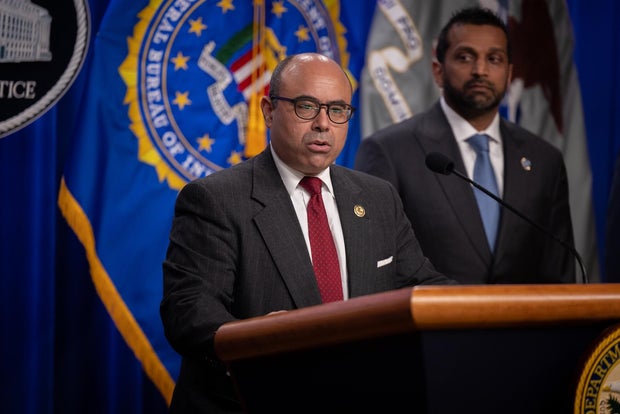
Andrew Boutros, U.S. Attorney for the Northern District of Illinois
Andrew Boutros, U.S. Attorney for the Northern District of Illinois, at a press conference at the Justice Department in Washington, D.C., on July 1, 2026.

Nathan Posner/Anadolu via Getty Images

At the center of the scandal is former Assistant U.S. Attorney Sheri Mecklenburg, who left to take a job working for Sen. Dick Durbin, an Illinois Democrat. The grand jury transcripts showed that she improperly “vouched” for the strength of the evidence against the defendants, dismissed grand jurors who disagreed with the allegations, and improperly contacted one grand juror outside of official proceedings.

Durbin has since fired her from her post.

Boutros, in response to the revelations, announced he has instituted a remediation plan. Part of that plan entails new reforms that Boutros said create “very bright lines” about when prosecutors need to turn over grand jury material and under what circumstances.

The second part of the plan entails the extensive review of prior cases, including those handled by Mecklenburg as well as by other prosecutors in the office, he said.

“It’s going to be a massive review, a comprehensive review, and it is underway.”

In a filing last week by Boutros moving to dismiss charges against four men in a 2018 arson case, the prosecutor said Mecklenburg told grand jurors in a case in 2025, “we can prove this case,” “we don’t catch the smart ones,” and “most of them aren’t as smart as they think.”

CBS News Chicago legal analyst Irv Miller, who has represented clients in cases involving Mecklenburg and also worked with her on outside projects, said reestablishing trust with judges is the U.S. Attorney’s Office’s top job now.

“I’ve never seen it happen before and the U.S. Attorney knows it was a major, major mistake, and is trying to correct it right now,” Miller said. “The question is, can it be corrected?”

Ten defendants in three cases have seen their cases dropped so far because of this, and it’s unclear how many more cases could be dropped moving forward.

CBS News Chicago reached out to Mecklenburg through her attorney and was told she has no comment.

La batalla global por los derechos de ciudadanía italiana recibe un posible respiro

Italia causó gran conmoción en su diáspora global en marzo de 2025 al promulgar una nueva ley que imponía un estricto límite de dos generaciones para la ciudadanía por descendencia.De la noche a la mañana, millones de descendientes en todo el mundo —muchos de los cuales ya habían gastado miles de dólares en investigación genealógica y honorarios legales— vieron bloqueado su camino hacia un pasaporte europeo.Pero tras un aparente giro judicial esta semana, la crucial batalla para revocar la controvertida legislación se reanudó oficialmente.Inicialmente, el Tribunal Constitucional de Italia confirmó la estricta ley, conocida como L74/2025 y dejó devastados a los solicitantes al desestimar cientos de demandas que impugnaban la prohibición.Sin embargo, tras volver a examinar la legislación, el tribunal dio un giro radical.Ahora suspendió las últimas impugnaciones a la ley presentadas por jueces regionales italianos y remitió oficialmente el caso al Tribunal de Justicia de la Unión Europea para determinar si Italia infringió las normas jurídicas europeas.“Es un giro de 180 grados”, declaró a CNN Marco Mellone, uno de los cuatro abogados que impugnaron la ley en la última audiencia de junio. “Es una confesión de que cometieron un error en marzo”.“No me lo esperaba porque solicitamos una remisión en la audiencia anterior pero el tribunal la denegó”, dijo Corrado Caruso, profesor de Derecho en la Universidad de Bolonia, quien también alegó ante el tribunal. “Así que es un paso positivo porque significa que el tribunal tiene algunas dudas. Creo que hubo un cambio de opinión”.La abogada Monica Restanio, quien también defendió el caso, lo calificó como “la mejor noticia que podíamos recibir, y mucho mejor de lo que esperaba… volvieron a poner todo en juego”.Aunque el tribunal italiano afirma que todavía cree que la ley cumple las normas de la UE, Mellone interpreta esta medida como una admisión discreta de un error pasado. Fallos europeos anteriores han establecido firmemente que la ciudadanía no puede ser retirada sin previo aviso, de manera desproporcionada o de golpe.“Tuvieron la oportunidad de remitir el caso hace tres meses y no lo hicieron; es evidente que cambiaron de opinión”, afirmó. “Han sido valientes. La ley contradecía por completo 30 años de jurisprudencia del Tribunal de Justicia de la Unión Europea”.Restanio señaló que la jurisprudencia europea suele favorecer a los descendientes, “establece la necesidad de una notificación adecuada y una evaluación individual” antes de restringir la ciudadanía por descendencia. En cambio, Italia aprobó la Ley 74/2025 sin previo aviso, lo que dejó fuera a miles de personas que estaban a mitad del proceso de solicitud.Desde entonces, cientos de descendientes de italianos han perdido sus batallas legales impugnando la nueva ley, que prohíbe a los ciudadanos con doble nacionalidad en el extranjero transmitir su nacionalidad y aplica el límite de dos generaciones.La impugnación depende de si los demandantes nacieron italianos con una ciudadanía no reconocida, tal como había dictaminado la jurisprudencia previa.Si el Tribunal de Justicia de la UE falla en contra de la ley, esta quedará completamente anulada y obligará al Gobierno italiano a redactar una nueva legislación que cumpla con las normas de la UE.Caruso no pudo explicar por completo el giro repentino del tribunal. “Tal vez el tribunal fue demasiado rápido al desestimar nuestra solicitud en marzo; tal vez reflexionaron un poco más a fondo”, dijo y añadió que sentencias recientes no relacionados han sido notablemente “favorables a la UE”.Este no es el único desafío que se está tramitando en el sistema judicial. En abril, el Tribunal Supremo italiano examinó la denominada “cuestión menor”, una medida de 2024 que restringe la ciudadanía por descendencia. Restanio dijo que espera la sentencia definitiva “con gran serenidad”.Mientras tanto, Mellone calificó la remisión del Tribunal Constitucional como un momento histórico: la primera vez que un tribunal italiano admite que la nueva ley podría tener algún fallo.“Esto es una buena señal”, dijo. “Estábamos prácticamente derrotados. Ahora retomamos la lucha”.The-CNN-Wire™ & © 2026 Cable News Network, Inc., a Warner Bros. Discovery Company. All rights reserved.
Read Next Story