
▶ Watch Video: Meteorite crash landing captured on Ring doorbell
A meteorite that crashed into a New Jersey home held prebiotic molecules and other “building blocks of life,” astronomers said in a newly published paper.
The meteorite struck the home in July 2024. The homeowner preserved the fragments in glass jars using disposable gloves and aluminum foil, allowing an international team of experts to study them in detail, the researchers said in a paper published Wednesday in the journal ScienceAdvances.
When scientists examined the preserved fragments, they were able to determine the meteorite was made of a rare, primitive material called CM1/2 carbonaceous chondrite. This is only the second observed fall of such a meteorite, making it “one of the most scientifically valuable meteorites ever recovered,” according to a news release from the SETI Institute, a nonprofit research organization based in California.
A forensic study of the fragments found that before the meteorite broke off from its parent asteroid, it had been covered in “concentrated salty fluids,” or a brine. That had never been seen before on this kind of object, study author and meteor astronomer Peter Jenniskens said in a statement, indicating that the parent asteroid had liquid water that evaporated.
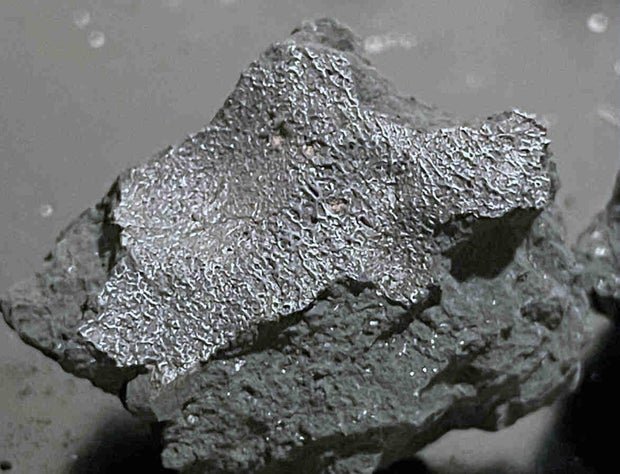
SETI Institute
The high concentration of salt in brines can “create molecules crucial to life on Earth,” the researchers noted. Brines allow phosphate to remain suspended in a solution and can even spark chemical reactions between some materials. It’s possible that other asteroids made of carbonaceous chondrite “delivered organic matter to the early Earth,” cosmochemist Queenie Chan said in a statement.
The meteorite also held a number of soluble organic compounds, which one expert said may have been made by the brine or created by earlier strikes on the parent asteroid. Some were magnesium organic compounds, which are found in blood and used in photosynthesis in living organisms, according to the researchers. Other compounds were amino acids.
The collection of “alien world chemistry” inside the meteorite suggests that CM-type carbonaceous chondrite meteorites may have brought organic materials to Earth that later resulted in organic life, the researchers said.
Now that the meteorite has been forensically studied, some of its fragments will enter the care of the American Museum of Natural History in New York City. The meteorite passed over New York City before making its landing in New Jersey.
“We are thrilled that nature delivered such a precious asteroid sample on our doorstep,” said museum curator Denton Ebel.