
Legionnaires’ disease cluster in New York City grows to 36 cases

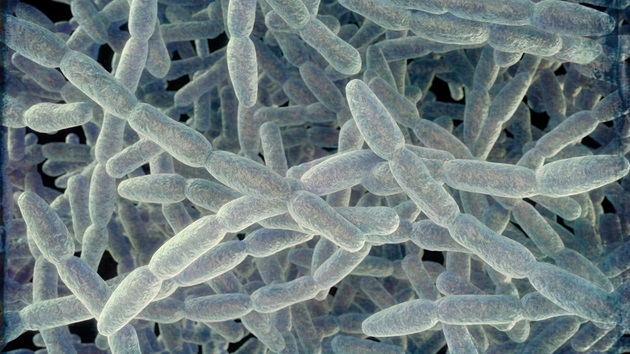
Illustration of Legionella pneumophila bacteria, the cause of Legionnaires’ disease. ( ROGER HARRIS/SCIENCE PHOTO LIBRARY/Getty Images)

(NEW YORK) — A Legionnaires’ disease cluster in New York City is growing, with 36 cases now confirmed, according to health officials.

As of Wednesday, there have been at least 22 hospitalizations and no deaths, according to the New York City Department of Health (NYC Health).

The cluster has affected the Upper East Side neighborhoods of Carnegie Hill and Yorkville, the department said.

In an earlier notice to the two neighborhoods, NYC Health said it believes the likely source of the bacteria is a cooling tower in the area, which sprays a mist that contains the bacteria. All area cooling towers were being tested for the bacteria, NYC Health said then.

There is no issue with any building’s plumbing system and residents in the affected areas can continue to drink tap water, bathe, shower, cook and use their air conditioners, NYC Health further said in the notice.

On Tuesday, New York Mayor Zohran Mamdani said his administration was implementing measures to publicly identify the specific buildings suspected as being sources of Legionella bacteria and require owners to clean cooling towers quickly.

Legionnaires’ disease is a severe form of pneumonia caused by inhaling the Legionella bacteria in small droplets of water mixed in the air or by contaminated water otherwise entering the lungs.

The bacteria are found naturally in fresh water but in amounts that generally don’t lead to disease. The bacteria typically grow best in warm water and in warm to hot temperatures, according to the Centers for Disease Control and Prevention (CDC).

The disease does not generally spread from person to person but infections can occur if the bacteria get into a building’s water supply, including in shower heads, sink faucets, hot water tanks, heaters, cooling towers and other plumbing systems.

Legionnaires’ disease has increased in prevalence over the last decade, reaching a peak in the U.S. of 2.71 cases per 100,000 in 2018, the CDC said. Cases declined during the first year of the COVID-19 pandemic and then rebounded in 2021.

Although most people recover from Legionnaires’ disease with antibiotics, certain patients – including those who are immunocompromised or who suffer from chronic lung diseases – can develop complications that can be fatal.

About one out of every 10 people who develop Legionnaires’ disease will die due to complications, according to the CDC. Among those who develop Legionnaires’ disease at a healthcare facility, about one of every four people will die, the CDC says.

Copyright © 2026, ABC Audio. All rights reserved.
He spied for the U.S. in the war on terror. Now ICE wants to deport him.

The Trump administration is trying to deport a self-described CIA spy who infiltrated al Qaeda after 9/11 and won his permission to live in the U.S. by helping convict terrorists.Immigration and Customs Enforcement agents arrested Blerim Skoro, a Kosovo-born father of three, outside an immigration office in New Jersey where he was renewing his paperwork earlier this month.His lawyers have filed in federal court to halt his deportation, saying Skoro, 55, was promised residency after years of significant work as a "CIA agent."Skoro, a Staten Island, New York, cab driver who has an American wife and children, was granted a deferral of removal in 2022 due to the risk of his capture and torture by terrorists if he were deported.The ruling was due in part to Skoro's help securing the arrests of al Qaeda, al Shabaab and Hezbollah members, his lawyers claim.Now he fears that the government, for which he claims to have put his life on the line, is going to send him back to Kosovo — he says into the hands of those who want him dead.Blerim Skoro, in a recent video call from ICE detention. Susan Skoro "I never thought they were going to betray me like this," he told CBS News in a phone interview from Elizabeth Detention Center, in New Jersey. "Please, if I die, I should die in this country so my kids can bury me."Skoro's relationship with U.S. intelligence officials began when he was jailed for trafficking drugs in 2000, FBI documents show.He says he was struggling to make ends meet supporting his children and refugee parents after the family fled the Kosovo conflict in the 1990s. He got caught transporting heroin overseas for an Albanian criminal gang.Raised a Muslim, he was welcomed by a group of Islamic radicals in a Manhattan prison where he began serving his drug trafficking sentence, FBI files that list him as a confidential informant show. After 9/11, he says the CIA approached him to exploit the connection.While incarcerated at FCI Allenwood, a federal prison in Pennsylvania, between 2002 and 2006, Skoro says he gleaned intelligence for the FBI on terrorists including Faysal Galab of the Lackawanna Six, which federal agents described as America's first homegrown terrorist sleeper cell; Randall "Ismail" Royer of the Virginia jihad network, convicted of organizing violence against U.S. troops overseas; and Hezbollah member Junuz Fuaz.Blerim Skoro, center, with fellow inmates in prison in the early 2000s. He says he gleaned intelligence for the FBI on several who were later convicted in terrorism-related cases.
Read Next Story