FDA approves breakthrough drug to treat advanced pancreatic cancer

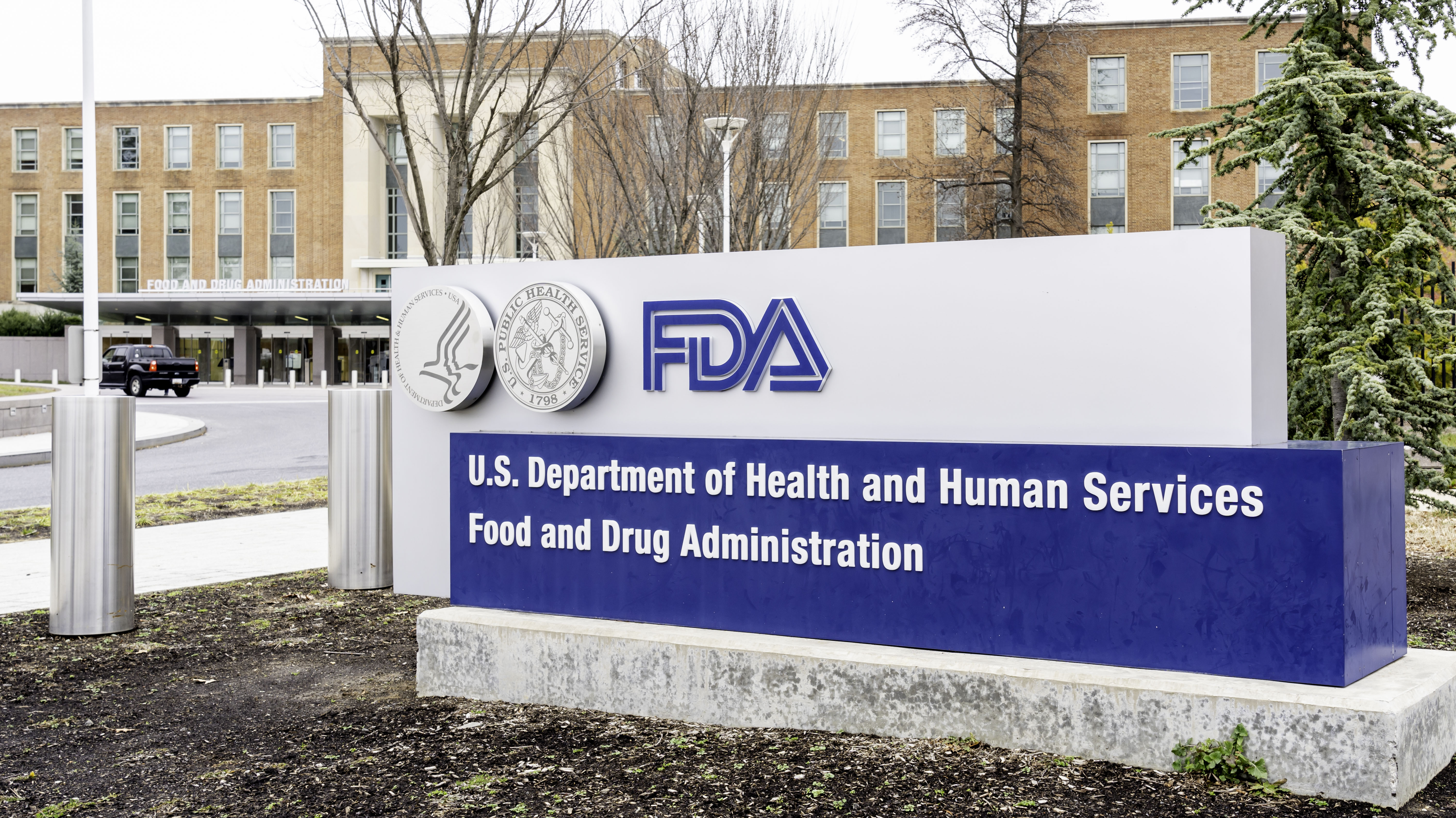
FDA sign at its headquarters in Washington, D.C.  (Getty Images stock photo/JHVEPhoto)

(WASHINGTON) — The Food and Drug Administration (FDA) approved on Wednesday a drug that could extend the survival of those with metastatic pancreatic cancer.

The drug, called daraxonrasib, will be sold under the brand name Rasonque from Revolution Medicines. The daily pill targets multiple forms of a protein called RAS, which is a main driver of tumor growth.

A late-stage clinical trial with 500 patients showed that the median overall survival nearly doubled to more than 13 months versus a median survival of about 6.7 months for those being treated with standard chemotherapy.

“FDA approval of daraxonrasib is an exceptional moment for patients with pancreatic cancer and the culmination of many years of research to find a way to target KRAS,” Dr. Brian Wolpin, director of the Hale Family Center for Pancreatic Cancer Research at the Dana-Farber Cancer Institute, told ABC News in a statement.

“It brings a new treatment option and new hope to patients with metastatic pancreatic cancer, while giving us a foundation to make many more advances against this difficult disease,” the statement continued.

About 95% of exocrine pancreatic cancers in the U.S. are pancreatic adenocarcinoma, according to the American Cancer Society.

Although pancreatic adenocarcinoma represents only about 3.2% of all cancer diagnoses, it accounts for a disproportionately high share of cancer deaths, according to the FDA.

This is due to several factors including late detection, aggressive disease course and historically limited treatment options, the federal health agency said.

In June 2025, the FDA granted the drug a “Breakthrough Therapy” designation. This allows for expedited development and review of drugs that treat serious conditions and have preliminary evidence showing substantial improvement over available treatments.

The application was reviewed under the Commissioner’s National Priority Voucher Program, initiated by former FDA Commissioner Dr. Marty Makary. The review time was accelerated from 12 months to 10 months.

There is hope that this new type of targeted treatment will show benefits for other hard-to-treat cancers.

“This drug showed unprecedented results in an area of high unmet need,” Dr. Angelo de Claro, director of the FDA’s Oncology Center of Excellence, said in a press release. “The approval was granted 6.5 months before the user fee deadline, demonstrating the FDA’s commitment to accelerating the approval of new cancer treatments for patients with serious and life-threatening conditions.”

The FDA approval was granted for adults with metastatic pancreatic adenocarcinoma who have received at least one prior systemic therapy, or cancer treatments that target the entire body. Other drug candidates also include those getting multiagent systemic therapy, meaning two or more treatments.

Patients who participated in the clinical trial told “Good Morning America” in June that the drug renewed optimism about their prognoses.

One patient named Jim said that after beginning treatment with daraxonrasib, a tumor in his liver that had spread from his pancreas shrank significantly.

“The tumor that I had in my liver, which had spread from the pancreas, got reduced by 50%, which was incredible news,” he told “GMA.”

Copyright © 2026, ABC Audio. All rights reserved.

How worried should the GOP be about two Dan Sullivans on the ballot in Alaska?

(CNN) — The situation that Republicans strove to avoid in Alaska has come to pass: Two Dan Sullivans will appear on the general election ballot for US Senate.One is an incumbent GOP senator, and the other is a political unknown that the party fears will siphon votes from the senator in a key race for the Senate majority.But how worried should the GOP be?In short, history suggests this could hurt the party at least somewhat — but likely only in a very close race.And Alaska’s unusual ranked-choice system should mitigate some of the potential impact.The ranked-choice effectNewly reported results in last week’s all-party primary show Dan J. Sullivan, a former school teacher, taking 2.5% of the vote and resting firmly inside the top four alongside GOP Sen. Dan Sullivan (42.6%) and Democratic former Rep. Mary Peltola (48.2%). The last spot is to be determined, with two other candidates at 1.1%.Republicans would have plenty to fear if this were a normal general election and the other Dan Sullivan appeared on the ballot as an independent or third-party candidate. In that case, it’s easy to see a fair number of voters inadvertently voting for the wrong Dan Sullivan.But Alaska’s ranked-choice system allows voters to rank multiple candidates. So as long as Dan J. Sullivan’s voters also rank Sen. Dan Sullivan — and rank him ahead of Peltola — the other Dan Sullivan’s votes would filter down to the senator.Scott Kendall, an Alaska lawyer who spearheaded the state’s adoption of ranked-choice voting in 2020, wrote an op-ed this month making a compelling case that ranked-choice voting will blunt the impact of the other Dan Sullivan.But it might only blunt the impact so muchThat’s mainly because while Alaska’s system allows voters to rank multiple candidates, many voters don’t do that.Many voters will “exhaust” their ballots by not listing backup options — either deliberately or because they are unfamiliar with the process — meaning if their chosen candidate is eliminated, their ballot doesn’t count toward the final matchup.The state’s limited history with ranked-choice voting suggests a fair number of these voters do exhaust their ballots. And many others don’t rank the backup options that might be logically expected.Perhaps the best example is the state’s 2024 US House race.Initially, 1.1% of voters picked Democrat Eric Hafner. When he was eliminated, you might have expected his votes to filter down to the only other Democrat on the ballot, Peltola.But that’s not what happened with most of them. About one-third of Hafner’s supporters didn’t rank another candidate and exhausted their ballots. A similar proportion ranked Peltola next, and the rest ranked either Republican Nick Begich or a third-party candidate next.So while 1.1% voted for Hafner, just 0.4% worth of that filtered down to the other Democrat, Peltola.The state also held two US House races in 2022 — a special election and then the general election. Both featured Peltola and a pair of high-profile Republicans: Begich and former Gov. Sarah Palin, the GOP’s 2008 vice presidential nominee.In both races, around one-quarter of voters initially backed Begich before he was eliminated. And each time, more than 20% of Begich’s voters exhausted their ballots rather than pick an alternative. That amounted to 5-6% of voters overall in both races.In the special election, only about half of Begich’s voters filtered down to the other Republican, Palin. In November, two-thirds did.Part of the reason for that, of course, could be how polarizing Palin was. Perhaps Begich’s voters just didn’t want to vote for her or Peltola.But all told, in the state’s 2022 and 2024 elections for US House and Senate, an average of 28% of a candidate’s voters didn’t rank a backup when that candidate was eliminated.And only about half of them ranked the candidate you’d most logically expect as a backup — i.e. someone from the same party or someone ideologically closer to their initial choice.So if Dan J. Sullivan got 2.5% of the vote in November and was eliminated, you might wager about half of that would filter down to Sen. Dan Sullivan.The unusual dynamics of the two Dan SullivansBut it’s not quite so simple.Just because 2.5% voted for the other Dan Sullivan in the primary doesn’t mean many or even most of them were Republicans who did so mistakenly.After all, minor candidates do tend to get 1% or 2% of the vote here and there. Some people just don’t want to vote for the major candidates.There is also a real question from last week’s primary about whether many of the other Dan Sullivan’s votes actually came from Democrats.He tended to do better in areas where Peltola also did well. So it seems possible that much of his 2.5% vote share was not Republicans, but rather Democrats voting strategically — i.e. trying to get the other Dan Sullivan into the general election to potentially help Peltola.The confusion factor is also likely reduced by the fact that the other Dan Sullivan, despite being a registered Republican, didn’t appear on the primary ballot as a Republican. Assuming that’s also the case in November, for voters to mix this up, they’d not just have to pick Dan J. Sullivan, but skip over the only Dan Sullivan who is listed as a Republican.At the same time, the November general election could feature more casual voters who are more likely to get confused.In other words, it’s difficult to say how this will shake out in November.It seems quite possible that the other Dan Sullivan’s vote share will drop, after Republicans spend more time educating voters about the differences between him and the senator, and perhaps as Peltola supporters who strategically voted for the other Dan Sullivan in the primary back her in November.But it’s also possible that a small but significant handful of voters will see “Daniel J. Sullivan Jr.” on their ballot, vote for him thinking he’s the senator, and be done with it — in a way that could matter in a very close (read: decided by considerably less than 1%) race.And that would be very bad for the national GOP, given Alaska could be the pivotal race for the Senate majority.In the meantime, also keep an eye on whoever becomes the fourth candidate to emerge from the all-party primary. Republican Gerald Heikes passed Democrat David Leslie overnight for the No. 4 slot.If it’s the other Dan Sullivan and another Republican on the ballot, this variable looms larger in a close race.The-CNN-Wire™ & © 2026 Cable News Network, Inc., a Warner Bros. Discovery Company. All rights reserved.
Read Next Story