
Howard president defends university’s unenrollment decisions, says more than 200 students have been re-enrolled

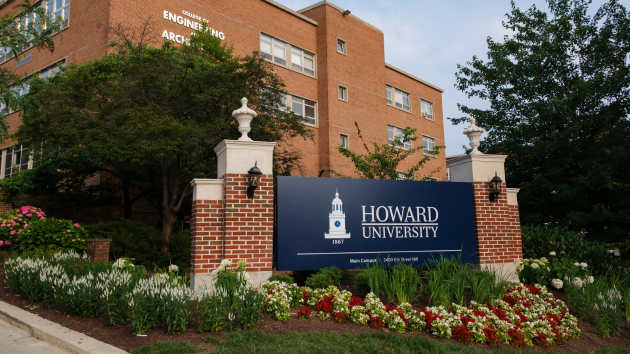
A sign greets people at the entrance to Howard University on June 5, 2025 in Washington, DC. (Photo by Kevin Carter/Getty Images)

(WASHINGTON) — After gaining national attention for unenrolling more than 500 incoming first-year students over missed tuition and financial-aid deadlines, Howard University has reinstated over 200 incoming students, according to the university’s interim president.

In an interview with Stephanie Ramos on ABC News Live on Wednesday, interim President Wayne A.I. Frederick offered new insight into the university’s perspective amid intense backlash from students.

“We looked at students who were able to give us the documentation we were asking for in the first place, such as evidence of an external scholarship, and also students were able to remit payment, and so we took that into consideration despite the fact that it was late,” Frederick said of the decision to re-enroll students.

“Having said that, we have now reviewed all 502 students, and so most of the decisions, if not all of them, have been made,” he continued.

Asked if overenrollment was a contributing factor in the university’s decision-making, Frederick told ABC News that all students who were unenrolled previously had housing assigned to them and that this was not a matter of “bed capacity.”

He said the reason for holding students to the payment deadline is that the university wants to avoid putting students in financial situations that would prevent them from finishing their degree, citing Howard’s four-year graduation rate at under 70%.

“We really are trying to do our best to make sure that when students start, they can finish. And this is part of what we must do on the front end because I think having them leave without a degree and with debt is not the right thing as well,” Frederick explained.

Multiple students who said they were unenrolled spoke with ABC News, saying they do not believe the university communicated with them effectively.

Dwayne Irvin, a 19-year-old from Missouri, told ABC News that he was blindsided by Howard’s decision to unenroll him. He said he had been communicating with the university’s financial aid office about pending outside scholarships and plans to enroll in a payment plan.

“They told me to wait to enroll into that payment plan until that scholarship has been deposited into my account, so my monthly payments could be cheaper. I said, OK, that makes sense. So I went with that route…A week later, I get the email saying I was out,” Irvin said.

Frederick expressed a willingness to improve the university’s communications but defended Howard’s actions.

“Over 2,200 students, families did exactly what we expected them to do and followed the policies and procedures and met the deadline, which means that I feel that our communication was pretty comprehensive,” Frederick said, adding, “We certainly need to recognize that we have to enhance our communications and really support our students even more.”

Nikiyah Clark, a 17-year-old from Ohio who was set to enroll at Howard as a first-year this fall, said she was told by the university that she was not permitted to re-enroll this year. She said she had missed a tuition payment deadline, but told ABC News that she had only received notice of the deadline the day it was due.

“I tried to hold back tears as I walked out of the building. I tried to compose myself, but I couldn’t. I was so sad. I was very hurt,” Clark said, adding “It was a very disheartening situation, considering the fact that I worked so incredibly hard to get to earn my place at the university.”

Frederick told ABC News that the university will hold enrollment space in next year’s class, and transfer and deferral opportunities for unenrolled students.

“We will still make every attempt to keep those students within the Howard family,” he said.

Those new enrollment processes have not yet been publicly detailed by Howard.

Irvin said he had been told about these options, but will not be re-enrolling. However, the family of Mason Farmer, another student who was unenrolled, told ABC News that the university had told them there was no more space for him to enroll this fall.

Copyright © 2026, ABC Audio. All rights reserved.

England is notoriously rainy — yet an ‘exceptionally serious’ drought has hit half the nation

London (CNN) — England is notoriously rainy — yet an “exceptionally serious” drought has hit half the nation after successive heat waves have parched the land, shrivelled rivers and put huge pressure on water supplies.A large stretch of central, eastern and southern England are enduring a “flash drought” brought on by a mix of high temperatures and low rainfall, the Environment Agency announced Wednesday.In addition to rolling heat waves, the country has been grappling with a dearth of rain — just 7% of the average for this time of year, falling to 1% in some parts of the south. And there is no substantial rain forecast.“The hot and dry weather means we are currently using water faster than nature can replenish it,” said Helen Wakeham, director of water at the Environment Agency. It’s “an exceptionally serious situation and one that will have long-lasting impacts on our environment, wildlife, and the economy,” she added.Millions are under hosepipe bans, parched yellow grass has replaced lush green fields and wildfire risk is increasing.Rivers are running alarmingly low — with 78% below normal levels. Parts of the River Thames are tracking at record lows, while other waterways have seen an increase in algae growth as water temperatures rise.Farmers and experts are warning of a detrimental impact on food production. “The drought could have a direct knock-on effect on food supplies,” said Pauline Scheelbeek, associate professor at the London School of Hygiene and Tropical Medicine.“Repeated disruption to vegetable production could make healthy food less affordable for households and have lasting effects on public health,” Scheelbeek added.England has now experienced three droughts in the past five years, with 2026 joining 2022 and 2025.But the country, famed for its gloomy skies and persistent rain, is also having to deal with very wet weather. Last winter was England’s eighth wettest on record, with rainfall 42% higher than the long-term average for the season.Then came a dramatic shift, when exceptional heat arrived. Last month was England’s hottest June on record, as it sweltered under a heat wave that would have been virtually impossible without climate change, scientists found.On Wednesday, the Met Office confirmed a new England June daily temperature record of 38 degrees Celsius (100.4 Fahrenheit) had been verified, higher than the 37.7 degrees Celsius (99.86 Fahrenheit) previously recorded.Scientists say the swing between wet and dry extremes — often called “weather whiplash” — is becoming more frequent and intense. It’s “indicative of what we expect in a warming world,” said Jamie Hannaford, head of water resources and drought at the UK Centre for Ecology and Hydrology.It can also ramp up wildfire risk as the vegetation growth that surges during wet winters is then turned tinder-dry when the rain stops and the heat arrives.As human-driven climate change fuels more frequent extreme weather, experts say more must be done by governments to protect people, communities and the environment from disaster.“We need long-term planning for water resourcing in the UK,” said Chloe Brimicombe, a climate scientist at the University of Oxford. This means “investment in water infrastructure to maintain as much water as possible,” she added.England is currently in the throes of its fourth heat wave of the year. And, as in other nations, the extreme weather is taking a deathly toll.There were 2,877 heat-associated deaths in the UK this year during two notable periods of hot weather in May and June, the UK Health Security Agency (UKHSA) said Thursday — almost double the number reported for the whole of 2025.Meanwhile, a major incident has been declared on the Suffolk coast, in the country’s southeast, after a large wildfire broke out on Wednesday evening local time.Dozens of firefighters have been deployed to tackle the blaze, which is less than five miles from Sizewell B nuclear power station.There are few signs of relief, at least in the short term. “There is currently little sign of the widespread, sustained rainfall that would be needed to make a significant difference to the areas most affected by the dry weather,” said Will Lang, the Met Office’s chief meteorologist.The-CNN-Wire™ & © 2026 Cable News Network, Inc., a Warner Bros. Discovery Company. All rights reserved.
Read Next Story