
Howard president defends university’s unenrollment decisions, says more than 200 students have been re-enrolled

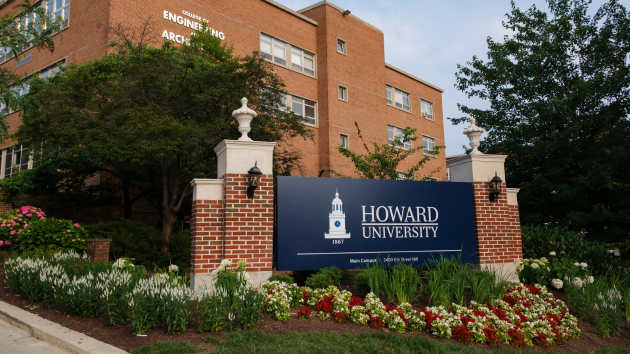
A sign greets people at the entrance to Howard University on June 5, 2025 in Washington, DC. (Photo by Kevin Carter/Getty Images)

(WASHINGTON) — After gaining national attention for unenrolling more than 500 incoming first-year students over missed tuition and financial-aid deadlines, Howard University has reinstated over 200 incoming students, according to the university’s interim president.

In an interview with Stephanie Ramos on ABC News Live on Wednesday, interim President Wayne A.I. Frederick offered new insight into the university’s perspective amid intense backlash from students.

“We looked at students who were able to give us the documentation we were asking for in the first place, such as evidence of an external scholarship, and also students were able to remit payment, and so we took that into consideration despite the fact that it was late,” Frederick said of the decision to re-enroll students.

“Having said that, we have now reviewed all 502 students, and so most of the decisions, if not all of them, have been made,” he continued.

Asked if overenrollment was a contributing factor in the university’s decision-making, Frederick told ABC News that all students who were unenrolled previously had housing assigned to them and that this was not a matter of “bed capacity.”

He said the reason for holding students to the payment deadline is that the university wants to avoid putting students in financial situations that would prevent them from finishing their degree, citing Howard’s four-year graduation rate at under 70%.

“We really are trying to do our best to make sure that when students start, they can finish. And this is part of what we must do on the front end because I think having them leave without a degree and with debt is not the right thing as well,” Frederick explained.

Multiple students who said they were unenrolled spoke with ABC News, saying they do not believe the university communicated with them effectively.

Dwayne Irvin, a 19-year-old from Missouri, told ABC News that he was blindsided by Howard’s decision to unenroll him. He said he had been communicating with the university’s financial aid office about pending outside scholarships and plans to enroll in a payment plan.

“They told me to wait to enroll into that payment plan until that scholarship has been deposited into my account, so my monthly payments could be cheaper. I said, OK, that makes sense. So I went with that route…A week later, I get the email saying I was out,” Irvin said.

Frederick expressed a willingness to improve the university’s communications but defended Howard’s actions.

“Over 2,200 students, families did exactly what we expected them to do and followed the policies and procedures and met the deadline, which means that I feel that our communication was pretty comprehensive,” Frederick said, adding, “We certainly need to recognize that we have to enhance our communications and really support our students even more.”

Nikiyah Clark, a 17-year-old from Ohio who was set to enroll at Howard as a first-year this fall, said she was told by the university that she was not permitted to re-enroll this year. She said she had missed a tuition payment deadline, but told ABC News that she had only received notice of the deadline the day it was due.

“I tried to hold back tears as I walked out of the building. I tried to compose myself, but I couldn’t. I was so sad. I was very hurt,” Clark said, adding “It was a very disheartening situation, considering the fact that I worked so incredibly hard to get to earn my place at the university.”

Frederick told ABC News that the university will hold enrollment space in next year’s class, and transfer and deferral opportunities for unenrolled students.

“We will still make every attempt to keep those students within the Howard family,” he said.

Those new enrollment processes have not yet been publicly detailed by Howard.

Irvin said he had been told about these options, but will not be re-enrolling. However, the family of Mason Farmer, another student who was unenrolled, told ABC News that the university had told them there was no more space for him to enroll this fall.

Copyright © 2026, ABC Audio. All rights reserved.
Former US archivists warn that Trump’s effort to ignore records law jeopardizes national security and government continuity

(CNN) — Former leaders of the National Archives — which preserves and protects the nation’s most important documents — are urging a federal appeals court to reject the Trump administration’s effort to ignore the Presidential Records Act, a decades old law that requires presidents save all official records from their time in office.Six archivists, who served under both Republican and Democratic presidents, argue that the law is critical in maintaining “continuity of governance” and protecting national security.The archivists — a coalition covering every living person to have previously held the role before Marco Rubio’s brief appointment to the position at the beginning of Trump’s second term — filed an amicus brief Wednesday in support of a lawsuit from presidential scholars, historians and public transparency groups.The legal fight began after the Trump administration said it believed the president did not need to comply with decades-old record-keeping obligations set by Congress in the aftermath of the Watergate scandal. The law, which Trump’s Justice Department has claimed is unconstitutional, is intended to preserve documents so that future presidents, members of Congress, courts and the public can understand how an administration made critical decisions.“Preserving presidential records ensures that new leaders can have immediate and ongoing access to the data, strategy, and rationale behind past policy decisions,” the group said, noting that, in their experience, the most “frequent request for preserved presidential records comes from the incoming president’s national security advisors.”The archivists signed on to the brief are Trudy Huskamp Peterson, John W. Carlin, David S. Ferriero, Debra Steidel Wall, Colleen Shogan and William J. Bosanko — as well as Gary M. Stern, a former agency general counsel.The plea from the former archivists comes months after a federal judge in Washington said that White House staff must preserve their official records while the lawsuit plays out in court but declined to put any restrictions directly on the president, the vice president, the National Archives and archivist.In the May ruling, US District Judge John Bates concluded that the Presidential Records Act (PRA) was likely constitutional, rebuking the stance taken by the Justice Department earlier this year. The Justice Department has appealed the ruling to the US DC Circuit Court of Appeals. Oral arguments are slated for October 16.The PRA requires presidents and their staff to preserve White House records and turn those records over to the National Archives at the end of their administrations.It was instrumental in the chain of events that led to Trump’s prosecution for allegedly mishandling classified documents that he took from the White House at the end of his first term.The legal fight stems from a conclusion from Trump’s Office of Legal Counsel, a Justice Department office that gives advice to the executive branch, that the law was unconstitutional. The OLC memo was seen as an audacious move for a number of reasons, including for how it seemed to eschew Supreme Court precedent backing Congress’ power to regulate presidential record preservation. The guidance only addressed the preservation of email and text messages, rather than all electronic records, which the PRA covers.The American Historical Association and the left-leaning government transparency group American Oversight quickly filed a lawsuit, warning that presidential records they intend to use for their research “will be irretrievably lost” if the court didn’t intervene.The former archivists say the PRA “helps to bridge the gap between the outgoing and incoming administrations.”“Geopolitical tensions do not pause for an inauguration,” they wrote in the court filing. “Presidential records include the entire holdings of the National Security Council… such as sensitive intelligence assessments, treaty negotiations, and operational contingency plans. Ensuring that these files are preserved and seamlessly made available to new administration officials allows incoming national security advisors and cabinet officials to evaluate active threats, maintain diplomatic momentum, and make informed decisions during unexpected global crises.”The administration has rebuffed concerns, insisting that the “lion’s share” of presidential records are being preserved, because work being done by presidential staff on White House-issued phones is being kept.CNN’s Tierney Sneed contributed to this report.The-CNN-Wire™ & © 2026 Cable News Network, Inc., a Warner Bros. Discovery Company. All rights reserved.
Read Next Story