Federal health officials have investigated 5 different clusters of cyclosporiasis cases, FDA says

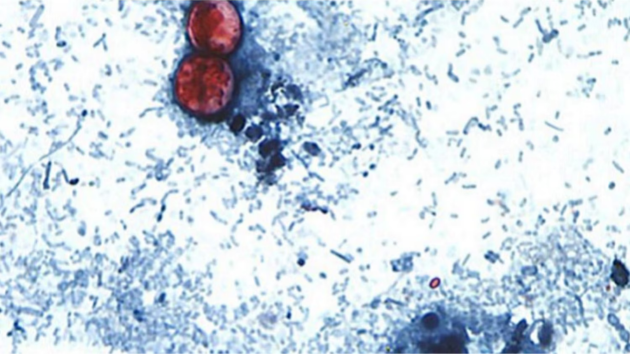
Cyclospora cayetanensis is a unicellular parasite that causes an intestinal infection called cyclosporiasis. (CDC)

(WASHINGTON) — Federal health officials have been investigating five different clusters of cyclosporiasis cases since the start of parasite season in May, the Food and Drug Administration (FDA) said during a press conference on Monday.

Three of those clusters are considered over, acting FDA Commissioner Kyle Diamantas said. Meanwhile, the largest cluster, linked to shredded iceberg lettuce served at Taco Bell locations in five states, has seen cases as recently as last week.

The majority of cases have been reported in Michigan, where there are now 6,148 cases, according to an update Monday morning from the Michigan Department of Health and Human Services (MDHHS). This is an increase of more than 1,000 cases since Friday.

“I want to stress that our investigation continues, including into other potential sources and commodities for other clusters of illnesses,” Diamantas said during Monday’s press conference. 

So far, the CDC has confirmed 1,644 infections linked to the outbreak in Indiana, Kentucky, Michigan, Ohio and West Virginia, and has advised the public not to eat shredded iceberg lettuce served at Taco Bell locations in those five states.

The agency said the true number of cases in the outbreak is “likely much higher than the number reported” because many people recover from the illness without medical care and are not tested for the Cyclospora parasite.

Diamantas also addressed a false positive test result over the weekend from a sample of iceberg lettuce from Taylor Farms de Mexico. 

Last week, Taylor Farms de Mexico issued a voluntary recall of all iceberg lettuce sourced from central Mexico, with the recall affecting 27 states. The recalled products were distributed from June 29 through July 16 and have a best-by dates up to Aug. 3.

Taco Bell said Friday that it is no longer using lettuce from Taylor Farms de Mexico at any of its restaurants.

Over the weekend, the FDA said a sample of shredded iceberg lettuce supplied by Taylor Farms, which was not part of the recall, tested positive.

However, the agency later clarified that during a re-review of the sample results, it determined the result was a false positive. Taylor Farms issued a statement on Sunday, saying “we were informed that FDA made a mistake.”

“To be clear, at this moment, FDA has not identified a single positive product test result for Cyclospora,” Taylor Farms wrote in its statement Sunday.

“Based on initial information provided by health officials, in an abundance of caution, we completed a voluntary recall of iceberg lettuce from central Mexico. Recalled product was limited to iceberg lettuce grown and processed in central Mexico,” the Taylor Farms statement continued. “All other Taylor Farms products, including all Taylor Farms brand products available for purchase, are not involved in the recall.”

Diamantas said Monday that the false positive did not change the FDA’s findings that linked cases to shredded lettuce from Taylor Farms. 

“I also want to be clear that our weakened communications around a false positive test result do not change the basis for FDA’s ongoing outbreak investigation or the epidemiological data supporting the current voluntary recall by Taylor Farms,” Diamantas said. 

The FDA similarly shared a post on X Monday afternoon, saying that the epidemiological data supporting the Taylor Farms lettuce recall was “overwhelming.”

“FDA’s traceback investigation and outbreak data continue to converge on shredded iceberg lettuce from Taylor Farms locations in central Mexico,” the FDA’s post read, in part. “FDA will continue to work with federal and state partners to investigate this multistate outbreak and ensure products implicated in this outbreak have been removed from the market.” 

The CDC said it’s also investigating other cyclosporiasis outbreaks and illnesses unrelated to the larger outbreak. At least 29 other states have confirmed domestically acquired cases since May 1, the CDC reports.

Additionally, 440 cases in 35 states have been confirmed among people who ate or drank food or water that made them sick while traveling outside the U.S. in the days before they came ill, according to the CDC.

Copyright © 2026, ABC Audio. All rights reserved.

Luigi Mangione in discussions about possible guilty plea, sources say

▶ Watch Video: Luigi Mangione could plead guilty in federal case Friday, sources say Luigi Mangione, accused in the 2024 killing of UnitedHealthcare CEO Brian Thompson, is in discussions about a possible plea deal on federal charges ahead of a court appearance Friday in New York City, sources familiar with the matter told CBS News.Mangione, 28, is set to appear at an 11 a.m. conference in U.S. District Court in Manhattan. That meeting is taking place after prosecutors and the defense team sent a letter to federal court Tuesday requesting Friday's conference. CBS News New York's Alice Gainer will be inside the courtroom Friday with the latest developments. Plea discussions between federal prosecutors and defense attorneys have been ongoing and it's unclear if an agreement has been reached, sources told CBS News."I expect plea negotiations to happen in every case, or certainly most cases," legal expert Richard Schoenstein said. Attorneys for Mangione have not responded to CBS News New York's request for comment. A spokesperson for the U.S. Attorney for the Southern District of New York also declined to comment. Mangione faces both federal and state charges in connection with Thompson's death. He has pleaded not guilty in both trials.The federal charges carry a potential maximum life sentence, which Mangione could still face even if a federal plea deal is reached. "In the federal system, you don't agree to a sentence as part of a plea deal. You agree to a plea and the crime, and then it has to go to a sentencing hearing in front of the judge," Schoenstein said."Maybe both parties try to, either by a binding agreement or by a suggestion to the court, say, 'We want some sort of reduced sentence, less than the life in federal prison that was the possibility here,'" CBS News legal contributor Jessica Levinson said.If a plea deal is reached, it could have an impact on his state trial, which is set to begin next month. That's because of potential double jeopardy concerns. Double jeopardy refers to a law which says "a person may not be twice prosecuted for the same offense," although a number of exceptions are listed. "I would expect the defense to make some sort of motion to preclude further prosecution of the state case on the grounds that it is double jeopardy," Schoenstein said. "I think the question of whether or not it would be double jeopardy is open and complicated and subject to debate."That's because the federal charges have to do with stalking and interstate charges, whereas the state charges are for second-degree murder, a weapons charge, and a forged instrument charge."So the weapons and forged instrument charges would not be resolved by the federal plea, and arguably the intentional killing charge would not be resolved. I do think there's a serious question as to whether this would be double jeopardy," Schoenstein said. "In New York state, there's more robust protections for defendants around the double jeopardy laws. And so that could be a real issue here, at least one that would merit litigation, if not dismissal," CBS News legal analyst Caroline Polisi said.Schoenstein said a federal plea deal would "put some pressure on state prosecutors to reach a deal of their own, or to become part of the deal that is being negotiated between the feds and the defendant, and therefore it could resolve the case on a negotiated level."Schoenstein said it could also impact the defense strategy if the state case does go forward, "because if it does go forward he no longer has to worry about a federal trial down the road."Legal experts say the case's national attention and the supporters Mangione has gained could be a factor in the feds wanting to make a deal."You have a raised possibility of what we call juror nullification, wherein a jury gets seated and there's someone in there that just, regardless of hearing any of the evidence, is never going to vote to convict Luigi Mangione," Polisi said.It was unclear what charges Mangione would plead guilty to on Friday, and he could reverse his decision at the last minute.The start of his federal trial, if it moves forward, is set for January.
Read Next Story