
Do heat waves damage the economy? Experts explain

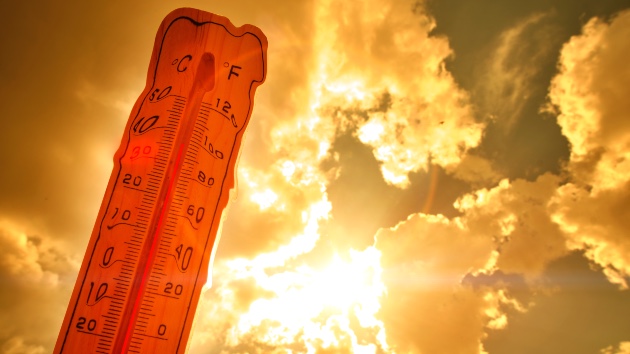
Melting street thermometer against bright summer sun.High temperature.Summer heat. (Dmitriy83/Getty Images)

(NEW YORK) — A heat wave blanketed a vast swathe of the United States over the 4th of July weekend, threatening the health of tens of millions of people and the power supply for thousands of homes.

A lesser-known risk of extreme heat, meanwhile, may hammer pocketbooks.

Heat waves threaten an array of costs for the economy, sapping the productivity of outdoor workers, shutting some shoppers inside their homes and driving up utility payments, some analysts told ABC News. All in all, they added, those effects could shrink output and hike some costs in areas impacted by heat waves.

“Extreme heat has economic consequences,” Justin Mankin, a professor of geography at Dartmouth University, told ABC News. “The consequences seem to be negative just about everywhere.”

Heat waves are becoming more frequent, more intense and longer lasting due to human-amplified climate change, according to the federal government’s Fifth National Climate Assessment. The average number of heat waves in major U.S. cities each year has doubled since the 1980s, that report said.

Extreme heat is considered the deadliest weather-related hazard in the U.S., according to the National Weather Service. About 2,000 Americans die each year on average from extreme heat, the Centers for Disease Control and Prevention noted.

A body of research indicates that heat waves also risk damage for the economy.

A study issued last year by researchers at the University of Florida, the European Stability Mechanism and the International Monetary Fund — which examined 203 countries over a 40-year period — found that an increased frequency of high temperatures and harsh droughts resulted in a 0.2% decline in gross domestic product (GDP).

Another report found total heat-related economic losses in the trillions of dollars. Taken together, economic damage from human-caused extreme heat likely cost as much as $50 trillion worldwide over a recent 30-year period, according to a 2022 study from Dartmouth University researchers.

“These things are costly and they’re getting worse because of climate change,” said Mankin, a co-author of the study.

The reasons for the economic impact range from diminished employee productivity to heightened utility costs to lost agricultural output, some analysts said.

Berkay Akyapi, a professor of business at the University of Florida and a co-author of the study on lost GDP, pointed to the crop damage caused by a heightened number of heat waves.

Nighttime temperature spikes are especially damaging, Akyapi said, since they deny crops a respite during a time period typically reserved for cooler temperatures. Fewer crops, in turn, threaten to elevate prices as the same number of dollars chase after a smaller supply of goods, he added.

A decline in domestic crop output can also force a given country to increase imports, putting further upward pressure on prices, Akyapi noted.

“If you can’t produce something, you have to import it and that of course raises prices,” he said.

Heat waves also cause higher prices for utilities as demand grows for air conditioning and other power-driven solutions, some analysts said.

The budget woes, in turn, cause a chain reaction, squeezing funds left over for other products and sapping consumer-driven economic activity. Steven Brown, a director of insights and evidence at the Aspen Institute Financial Security Program, told ABC News.

“It results in higher bills for households that are already financially tight or strained,” Brown said. “It causes a spillover in their ability to pay for other things like groceries or rent.”

In 2023, a report issued by a U.S. Senate committee found the negative economic effects from extreme heat are most pronounced in heat-exposed sectors such as agriculture, mining, construction, manufacturing and transportation. The risk owes primarily to lost productivity among workers in such industries, the report said.

“Together, the loss of productivity caused by heat is emerging as one of the biggest economic costs of climate change,” the report added.

To be sure, analysts noted that some cold-weather locations may benefit from heat waves, since higher-than-normal temperatures could improve agricultural output or allow for increased time spent outdoors.

“When you look around the world at places like Canada, Sweden or Norway — they can benefit. Heat waves are kind of good weather there,” Akyapi said.

Adaptive efforts, such as installation of air conditioning, can mitigate some of the negative economic effects, some analysts noted. Some governments are also exploring administrative solutions meant to help fight extreme heat.

Arizona appointed Eugene Livar as its first chief heat officer in 2024, tasking him with oversight of the state’s extreme heat preparedness plan. Democratic lawmakers in Arizona and Nevada introduced a bill in Congress last year that would add extreme heat to the Federal Emergency Management Agency’s list of major disaster qualifying events, unlocking access to federal support.

“Government interventions probably reduce some of the costs associated with these events, despite being costly interventions themselves,” Akyapi said.

Dartmouth’s Mankin said he expects heat waves to remain a feature of everyday life for the foreseeable future as human-caused climate change continues.

“These kinds of heat events are just going to be more commonplace. You’ll just have more days of the year that look like this, particularly when each subsequent year is hotter than the last,” Mankin said.

ABC News’ Kenton Gewecke and Emily Shapiro contributed to this report.

Copyright © 2026, ABC Audio. All rights reserved.

Judge in Don Lemon indictment asks to see grand jury records, adding to growing scrutiny of Justice Department cases

(CNN) — A federal judge in Minnesota will probe this week whether grounds exist to toss the Justice Department’s case against journalist Don Lemon. It’s the latest example of judges’ growing skepticism of whether the department is behaving ethically behind closed doors in grand jury proceedings.Judges across the country have signaled they are willing to give far less deference to federal prosecutors than in previous administrations and have raised concerns about DOJ’s apparent abandonment of regular practices.Federal judges in Wyoming, Illinois and Virginia have either thrown out charges or seriously admonished federal prosecutors for missteps in front of the grand jury. The botched grand jury presentments have prompted a historical review of cases in Chicago and, in some courts, new rules requiring defendants to be notified when a grand jury declines to indict.On August 18, Minnesota federal Judge Laura Provinzino issued a short but extraordinary order demanding the Justice Department provide her a wide swath of grand jury materials related to Lemon and his co-defendants, including presentations made by prosecutors and case agents, and the totality of communications prosecutors had with grand jurors resulting in their indictments.Provinzino set a Tuesday deadline to provide her with the presentation by federal prosecutors and case agents related to grand juries empaneled in January and February. Further, Provinzino told DOJ to provide any introduction, legal instructions, witness testimony, closing arguments, and answers to questions from grand jurors.Lemon’s team has aggressively pursued obtaining grand jury materials and had asked for either grand jury records to be provided to the defense or, at a minimum, reviewed by the judge privately, citing “irregularities” in the grand jury that resulted in his indictment.“There is substantial evidence of grand-jury irregularities in this case,” Lemon’s team wrote in a recent filing.“Multiple judges, including at the Eighth Circuit, found there was no probable cause to charge Lemon” and his co-defendant Georgia Fort, the filing said.Mark Wolf, a former Massachusetts District Court judge and federal prosecutor, said it is rare for defense attorneys to ask for grand jury transcripts in federal court. It is even more rare that judges grant the motions, he said.“There is a high bar to getting grand jury materials,” Wolf said. “You have to have some direct or circumstantial evidence that there has been some defect in the grand jury proceeding.”In her two-page order, Provinzino wrote that she weighed the necessity of maintaining grand jury secrecy against whether grounds may exist to dismiss the case due to a “matter that occurred before the grand jury.”She did not say she had already found evidence of any misconduct.The Justice Department’s initial attempt to charge Lemon in January for appearing alongside protestors who disrupted a church service in St. Paul, Minnesota, was rejected by a federal magistrate judge, which “enraged” then Attorney General Pam Bondi, according to a source who spoke to CNN at the time.Lemon, a former CNN anchor, was later indicted by a grand jury along with several other defendants, including independent journalist Georgia Fort. Lemon has been charged with conspiring to violate someone’s constitutional rights and violating the FACE Act, which prohibits the use of force or threats to intentionally interfere with someone expressing their First Amendment right to practice religion.Lemon has pleaded not guilty to both charges. His team has aggressively pursued obtaining grand jury materials throughout the case, and earlier this month filed a motion to dismiss the case altogether.Justice Department losing credibilityWolf told CNN he does not believe the Justice Department’s credibility remains intact.“For good reasons, the Department of Justice’s reputation with judges generally has been injured,” Wolf said.In Chicago, defense attorneys urged Judge April Perry to release grand jury transcripts in the highly publicized case against protestors at an ICE detention facility outside the city.After reviewing those transcripts, Perry found federal prosecutors engaged in inappropriate actions, such as interacting with grand jurors outside the proceeding, ordering some jurors to leave in another hearing, and “vouching” to the grand jurors.Vouching is a practice where prosecutors present their own reputation while delivering their case to a grand jury. It is forbidden in grand jury proceedings because the practice effectively asks jurors to trust the prosecutor personally rather than only on the merits of evidence.“I have never seen the types of prosecutorial behavior before a grand jury that I saw in those transcripts,” Judge Perry said during a May 21 hearing.US Attorney Andrew Boutros then dropped the case against the protestors. Later, after reviewing the prosecutor’s conduct, Boutros opted to drop at least two more criminal cases, ordered a historical review of more than 100 grand jury transcripts, and launched reforms such as more training on grand jury presentations.“If I was a federal public defender or a private defense attorney, every case I get that’s indicted, I’m going to file a motion that is asking the judge to review the transcripts,” said Mike Fox, a current Cato Institute fellow and former Colorado public defender.“In my view, at this point, it doesn’t matter in which court it is, doesn’t matter if I have binding case law,” Fox said. “Every single case, the defense attorney should be filing, and the judge should be inquiring.”In May, a panel of three federal judges in Wyoming dismissed felony drug and gun indictments against nine defendants after the judges found the acting Wyoming US Attorney referred to defendants as “bad guys,” and “murderers,” and handed out business cards to jurors outside of the proceeding.Prosecutors opted not to appeal the judges’ order. Later, Wyoming federal prosecutors empaneled a new grand jury which issued a new indictment. The case remains ongoing.Fox believes the remedy is a more engaged judiciary where judges routinely witness grand jury proceedings.The current law doesn’t require judges to listen to proceedings, but some courts are issuing new local rules to ensure greater oversight. This spring, the Northern District of Illinois, where Boutros is US Attorney, enacted a rule requiring grand juries to alert a magistrate judge when a grand jury fails to issue an indictment.A spokesperson for the Justice Department told CNN in an email the executive office of the US Attorney provides training for prosecutors which includes grand jury practice.“On rare occasions where there is an issue, as noted in our Chicago US Attorney’s office, we took immediate corrective action and provided renewed, in-depth instruction on ethics and grand jury practice,” the spokesperson wrote.“Our US Attorneys will always follow the law and prosecute cases without fear or favor. Nobody is above the law, regardless of political affiliation. Beyond that, we don’t comment on pending litigation.”Grand jury presentments in the spotlight last yearLast fall, in the most high-profile and politically charged example of a problematic grand jury presentment, then-interim US Attorney for the Eastern District of Virginia, Lindsey Halligan, took a proposed indictment against former FBI Director James Comey through a grand jury on her own. A magistrate judge in Alexandria, Virginia, reviewed the transcript and found Halligan may have incorrectly presented the law to the grand jury. The judge called the debacle “profound investigative missteps … to potentially undermine the integrity of the grand jury proceeding.”Halligan later admitted to a judge the grand jury hadn’t supported the initial version of the proposed indictment of Comey, and the full grand jury hadn’t signed off on the final charging document. That Comey case was dismissed for a separate reason, when a federal district judge determined Halligan wasn’t serving as a legitimate prosecutor. The Justice Department is appealing.But the grand jury handling in the Comey case and other cases continues to hover over prosecutors.Comey’s defense team, for instance, is attempting to pry into grand jury records in the separate, newer case against him, out of Eastern North Carolina. He is charged there with threatening the president by posting on social media a photo of the numbers “8647” written in seashells on a beach.The phrase 86 is sometimes used to say nix or get rid of something. Trump is the 47th president. Comey has denied wrongdoing in the case.“The highly irregular procedures that led to the indictment create a significant risk that the government misrepresented key issues of fact and law to the grand jury,” Comey’s lawyers wrote in a recent court filing, citing federal searches of Comey that they question.If Comey’s defense cannot gain access to the grand jury transcript, they at least want a judge to look at it to check the Justice Department’s work.Wolf said he is deeply troubled by the Justice Department’s recent actions and told CNN he believes it shows the American people that the department will use the law for partisan purposes.“It sends a message that a Department of Justice that should institutionalize our ideal of equal justice under law is not doing that,” Wolf said. “And that means anybody is vulnerable.”The-CNN-Wire™ & © 2026 Cable News Network, Inc., a Warner Bros. Discovery Company. All rights reserved.
Read Next Story