
Deadly attack on U.S. forces in Jordan part of evolving Iranian tactics

▶ Watch Video: U.S. hits Iran with strikes for 10th night amid reports of injured service members

Amman, Jordan — When an Iranian missile hits its intended target, it’s because U.S. air defenses either failed to intercept it, or failed to even see it coming in the first place.

“One leaked through,” is how Secretary of State Marco Rubio described the Iranian attack on an air base in Jordan that killed two U.S. soldiers and left one missing in action on Friday. “A missile got through. We shot down almost all the missiles. One leaked through … it’s heartbreaking.”

When that happens more than once, which it has over the past week in Jordan, that’s not a “leaker.” That’s a problem for the U.S.

The same base, the Muwaffaq Salti Air Base, had been hit twice in a 48-hour period prior to the deadly strike on Friday. Direct hits. As CBS News reported Monday, dozens of U.S. military personnel were wounded. 

Iranian, precision-guided munitions somehow managed to evade Jordanian and U.S. missile defense systems to reach their targets. Twice. And the attacks continue — more Iranian missiles and drones were intercepted by Jordanian forces on Tuesday.
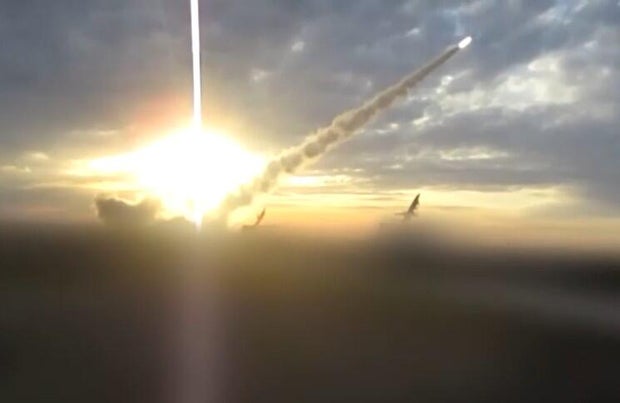
iran-drone-launch-july-2026.jpg
An image taken from video aired on July 21, 2026, by Iranian state TV shows what the broadcast referred to as Iranian drones being launched at U.S. military installations in the Persian Gulf and other Middle Eastern nations.

Iranian state TV

Asked how Iran had managed to strike the base with missiles on Friday, U.S. Central Command spokesman Captain Tim Hawkins told CBS News it would be inappropriate to comment as the incident remained under review. He said U.S. and partner forces had “defeated dozens of missiles and drones launched by Iran toward neighboring Gulf countries on July 17, but unfortunately a few got through and made impact.”

President Trump, speaking Tuesday at the White House, indicated that there were “other operators” at the base in Jordan that “let something through.” 

“They [Iran] did slip something through in Jordan, and we had other operators,” Mr. Trump said.

“We have the best equipment in the world, you know, we’ve stopped almost everything,” the president said. “But, when you let other people do your job with the United States, we let other people do the job, and sometimes it doesn’t work out so well.”

Mr. Trump did not provide any further information about what “other operators” he was referring to or what role they had in protecting U.S. forces in Jordan. 

The Pentagon acknowledged Monday, after CBS News obtained the figures, that nearly 100 American service members have been injured in multiple Iranian strikes on bases across the Middle East this month alone. That doesn’t include the recent round of attacks that killed at least two U.S. soldiers and wounded dozens in Jordan.

One veteran regional military analyst told CBS News that part of the reason for the rising American toll is that Tehran has upped its game.

“The Iranians have advanced missile technology,” said Jordanian Lt. Gen. Qasid Mahmoud, who served as Deputy Chief of Staff for his country’s armed forces before he retired. “They’re developing techniques and capacities to extend their reach, combining with drones to overwhelm radar defenses.”

“The Iranians use simple missiles to distract the radar,” Mahmoud, who has studied Iran’s military capabilities for years, told CBS News. “They then fire better quality missiles, which change their final target in the last 30 or 40 kilometers.” 

That change in trajectory, he said, makes it harder to intercept the missiles.
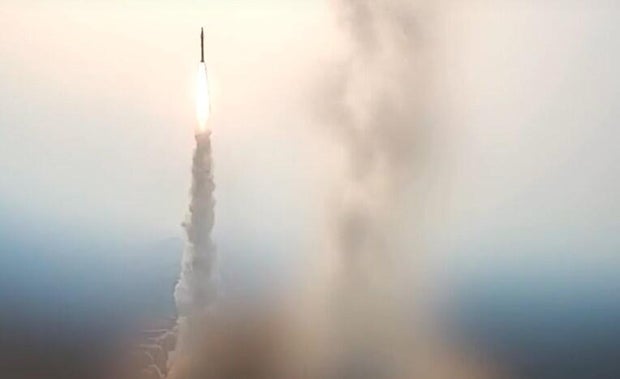
iran-missile-launch-july-2026.jpg
An image taken from video aired on July 21, 2026, by Iranian state TV shows what the broadcast referred to as an Iranian missile being launched at U.S. military installations in the Persian Gulf and other Middle Eastern nations.

Iranian state media

Despite hosting U.S. forces, Jordan had largely avoided Iranian attacks, with the Islamic Regime instead focusing its ire for months on America’s Persian Gulf allies, countries including Kuwait and Bahrain that have been targeted with repeated salvos since the war began. 

But the U.S. bases in those countries are heavily fortified, heavily defended compounds. 

Bahrain, for instance, is home to the U.S. Navy’s Fifth Fleet, while Kuwait hosts roughly 13,000 U.S. personnel on more than half of a dozen bases. Even in Bahrain, however, Iranian weapons have gotten through, including strikes earlier in the year that destroyed a radar installation.

The Jordanian government, on the other hand, is sensitive about even acknowledging the presence of U.S. forces.

Jordanian Foreign Minister Ayman Safadi has stressed that U.S. forces do not maintain any permanent bases in the country, saying repeatedly that they operate instead under joint agreements. That might suggest that outposts where American forces do operate in Jordan lack the kind of robust defenses used at permanent bases in Kuwait and Bahrain.

The two U.S. soldiers who were killed in the strike on the Jordanian air base, Private Isabella Gonzales of Carrollton, Texas, and First Lieutenant Tyler James Feehan from Hawaii, were both serving with Army Air Missile Defense Command — the kind of units responsible for air defense systems.

CBS News’ Omar Abdulkader and Ayman Qadi contributed to this report.

All-powerful Trump tells America, ‘Nothing bad can happen’

(CNN) — Just one of the wild actions and comments on Donald Trump’s manic Monday would rank among the most notorious things another president ever did.By close of business, Trump had taken strides toward the presidency he’s always wanted: one of unfiltered authority flowing from the presidential Sharpie, shredding traditional institutions and providing a platform for demagoguery.Often, the round-the-clock cacophony from the White House seems expressly designed to stifle public comprehension of each individual act planned to irrevocably change the country and the world.This was certainly the case on a day that fulfilled some core goals of the Trump base but also helped to explain the plunging presidential approval ratings that have Republicans looking with dread toward the midterm elections.It all started when one of the president’s former personal lawyers, now Appeals Court Judge Emil Bove, swore in another of the president’s former personal lawyers, Todd Blanche, as attorney general.This was peak Trump. Nine years after the president asked James Comey for loyalty — as the fired former FBI chief told it — one of his ultimate loyalists was on Monday installed in a Senate-confirmed position at the pinnacle of US justice.Blanche was with Trump in some of his darkest moments as he faced multiple criminal and civil charges before winning back the White House. Some Trump subordinates, like former Attorney General Pam Bondi, stumbled when striving to prove their loyalty. But Blanche has already demonstrated fealty — one reason his critics fear him and wonder whether he’ll act a spiritual successor to Trump’s McCarthyite lawyer Roy Cohn.As Blanche was clapped by staff back into his agency, more of the president’s men gathered by the Resolute Desk. He was about to act on a feeling he’s harbored even longer than his quest to make the DOJ his boutique law firm.Trump then signed an executive order aimed at reducing the number of childhood vaccines. And he administered a fresh dose of unscientific falsehoods, baselessly claiming vaccines cause autism and that little children had had inoculations the size of soda bottles poured into their bodies. At one point, he suggested that the measles, mumps and rubella vaccine could be “quite lethal” — amid a year when the US has recorded the most measles cases in more than a quarter-century. It was hard not to get flashbacks to his erratic Covid-19 pandemic news conferences.But America’s most powerful public health official and vaccine skeptic, Health and Human Services Secretary Robert F. Kennedy Jr., insisted: “This is what gold-standard science means.”Moments later, another longtime norm fracturedTrump confirmed he’d recently spoken to new Federal Reserve Chair Kevin Warsh, but denied a Wall Street Journal report they’d had multiple conversations. The president has left no doubt he wants Warsh to lower interest rates. “If it was up to him, it would be different, but he has a board,” Trump said, raising doubts about the central bank’s independence.The president also weighed in on the triumph of progressive and democratic socialist candidates in Democratic primaries ahead of the midterm elections: “We have jihadists being elected all over the place.”The president’s latest inflammatory comment about Muslim candidates appears to herald a viciously negative fall campaign. He didn’t specify who he was talking about, but his remark came a week after Abdul El-Sayed won the Michigan Democratic Senate primary.When he turned to Iran, the president showed how the once-intricate US foreign policy process has ceded to the wish-casting of the commander in chief who declared a war won after a few days that is now in its sixth month. And he claimed the Strait of Hormuz, an oil exporting choke point effectively controlled by Iran, is “opened now.” The Windward Maritime Intelligence Operations Center said Monday that only seven vessels had crossed the strait in the previous 24 hours. Before the war, the waterway often saw more than 100 ships a day.Each of these examples show how Trump has degraded the institutions of US government and purged them of experts, bureaucrats and officials who don’t share his idiosyncratic worldview.Many Trump supporters argue that he’s making good on his vow to dismantle a corrupt administrative state that has long thwarted conservative presidents. Others promote the idea of an all-powerful presidency and subscribe to legal theories that every government agency must bow to the chief executive’s vision.Trump runs everythingIn some ways, the maelstrom of business across the Oval Office desk Monday mirrors the deeply centralized decision-making process developed for years by the future president at the Trump Organization, where he was the sole source of authority. But Trump’s critics see his hands-on style as the behavior of a wannabe authoritarian and argue his hunch-driven style of leadership is a recipe for disaster.It’s hard to make a case that Trump’s approach is working for anyone outside his most loyal support base, despite his claim in an interview with Punchbowl News last week that “a lot of people are saying I’m one of the greatest presidents ever.”In a recent CNN/SSRS poll, only 21% of Americans said Trump’s military action in Iran had helped the US. Many analysts believe he’s led the US into a stalemate against a much weaker nation.His crusade to dominate the Justice Department is one of the personal fixations — along with his monument-building program — that help explain why a record-high 73% of US adults said in that same CNN survey that he hasn’t paid enough attention to the country’s most important problems.And according to polling from the health policy nonprofit KFF, an 81% majority of US adults say they are confident that MMR vaccines are safe for children. A small sector of Trump’s base, however, has long bought into the anti-vaccine movement.Some of the institutionalists who Trump disdains warned on Monday evening that his increasingly unchecked presidency is dangerous.“It is simply astonishing that this administration would continue to respond to ongoing measles outbreaks and the return of other vaccine-preventable diseases by playing politics with children’s lives,” said Dr. Richard Besser, president and CEO of the Robert Wood Johnson Foundation and former acting director of the Centers for Disease Control and Prevention.David Axelrod, who served as a counselor to Barack Obama, told CNN’s Erin Burnett that a president’s words “can send armies marching and markets tumbling.” But they can “also jeopardize people’s health because the president has enormous sway. … It’s really, really dangerous.”But Trump is beyond listening. Explaining his vaccine policy, he seemed both to encapsulate his attitude to unchecked power and to tempt fate.“Nothing bad can happen from what we’re doing,” he said. “Nothing bad can happen.”The-CNN-Wire™ & © 2026 Cable News Network, Inc., a Warner Bros. Discovery Company. All rights reserved.
Read Next Story