
Arrests made after bomb attack targets reporter threatened by mafia

▶ Watch Video: More than 200 people sentenced in Italy mafia trial

Italian police on Tuesday arrested four people suspected of carrying out an October bomb attack targeting a prominent journalist who had been threatened by the mafia.

The blast in a residential neighborhood of Pomezia, about 12 miles south of Rome, destroyed two cars belonging to Sigfrido Ranucci, known for investigations into corruption and the mafia. Ranucci had just returned home at the time, and his daughter had walked by a half-hour before, his employer said at the time.

Video shot by Ranucci, who has been under police protection since 2021 because of his hard-hitting investigations, showed the mangled remains of the cars and the gate.

The Carabinieri police said the four suspects detained near Naples were “strongly suspected… of the offences of possessing, carrying and using explosive devices in a public place, of making threats and causing damage, with aggravating circumstances due to having acted in a group of more than five people and using mafia-style methods.” 

Three of them have been placed in pre-trial detention and the fourth is under house arrest.
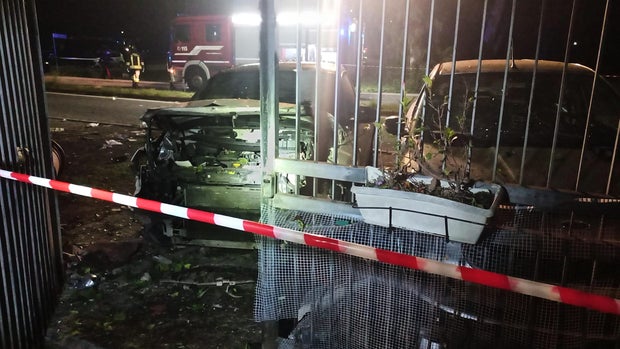
Italy Journalist Explosion
This image released by investigative journalist Sigfrido Ranucci shows his destroyed car, left, outside his home after an explosive device detonated beneath it, in Pomezia, near Rome, Italy, on Oct. 16, 2025. 

Sigfrido Ranucci/AP

Ranucci, the host of investigative program “Report” on the Rai 3 public TV station, told the ANSA news agency the day after the attack that he had received “an endless list of threats.”

Report posted a video on social media Tuesday showing the suspects being arrested.

“The investigation continues to reach the masterminds,” Report wrote in a post on X.

The probe into the blast, handled by the anti-mafia prosecutor’s office in Rome, has been “particularly complex,” the Carabinieri said in its statement. It involved close examination of video surveillance systems and phone records, as well as scientific analysis of the explosive device.

The bomb team are believed to have acted on orders from “third parties, who have not yet been identified,” the statement said.

“The masterminds tried to provide support to protect the alleged perpetrators, supplying them with funds, dedicated phone cards, legal assistance, and planning their possible escape abroad,” the statement said.

ITALY-BLAST-MEDIA-CRIME
Sigfrido Ranucci, Italian journalist of investigative television news show “Report,” waves to supporters from a balcony of Italian TV broadcaster RAI in Rome on Oct. 17, 2025. 

TIZIANA FABI/AFP via Getty Images

The explosion targeting Ranucci occurred on the eighth anniversary of the car bomb slaying of Maltese investigative journalist Daphne Caruana Galizia, who wrote extensively about suspected corruption in political and business circles. Like Ranucci, she had faced dozens of libel suits intended to silence her reporting. 

According to the campaign group Reporters Without Borders, Italy ranks 56th in the world for press freedom.

La batalla global por los derechos de ciudadanía italiana recibe un posible respiro

Italia causó gran conmoción en su diáspora global en marzo de 2025 al promulgar una nueva ley que imponía un estricto límite de dos generaciones para la ciudadanía por descendencia.De la noche a la mañana, millones de descendientes en todo el mundo —muchos de los cuales ya habían gastado miles de dólares en investigación genealógica y honorarios legales— vieron bloqueado su camino hacia un pasaporte europeo.Pero tras un aparente giro judicial esta semana, la crucial batalla para revocar la controvertida legislación se reanudó oficialmente.Inicialmente, el Tribunal Constitucional de Italia confirmó la estricta ley, conocida como L74/2025 y dejó devastados a los solicitantes al desestimar cientos de demandas que impugnaban la prohibición.Sin embargo, tras volver a examinar la legislación, el tribunal dio un giro radical.Ahora suspendió las últimas impugnaciones a la ley presentadas por jueces regionales italianos y remitió oficialmente el caso al Tribunal de Justicia de la Unión Europea para determinar si Italia infringió las normas jurídicas europeas.“Es un giro de 180 grados”, declaró a CNN Marco Mellone, uno de los cuatro abogados que impugnaron la ley en la última audiencia de junio. “Es una confesión de que cometieron un error en marzo”.“No me lo esperaba porque solicitamos una remisión en la audiencia anterior pero el tribunal la denegó”, dijo Corrado Caruso, profesor de Derecho en la Universidad de Bolonia, quien también alegó ante el tribunal. “Así que es un paso positivo porque significa que el tribunal tiene algunas dudas. Creo que hubo un cambio de opinión”.La abogada Monica Restanio, quien también defendió el caso, lo calificó como “la mejor noticia que podíamos recibir, y mucho mejor de lo que esperaba… volvieron a poner todo en juego”.Aunque el tribunal italiano afirma que todavía cree que la ley cumple las normas de la UE, Mellone interpreta esta medida como una admisión discreta de un error pasado. Fallos europeos anteriores han establecido firmemente que la ciudadanía no puede ser retirada sin previo aviso, de manera desproporcionada o de golpe.“Tuvieron la oportunidad de remitir el caso hace tres meses y no lo hicieron; es evidente que cambiaron de opinión”, afirmó. “Han sido valientes. La ley contradecía por completo 30 años de jurisprudencia del Tribunal de Justicia de la Unión Europea”.Restanio señaló que la jurisprudencia europea suele favorecer a los descendientes, “establece la necesidad de una notificación adecuada y una evaluación individual” antes de restringir la ciudadanía por descendencia. En cambio, Italia aprobó la Ley 74/2025 sin previo aviso, lo que dejó fuera a miles de personas que estaban a mitad del proceso de solicitud.Desde entonces, cientos de descendientes de italianos han perdido sus batallas legales impugnando la nueva ley, que prohíbe a los ciudadanos con doble nacionalidad en el extranjero transmitir su nacionalidad y aplica el límite de dos generaciones.La impugnación depende de si los demandantes nacieron italianos con una ciudadanía no reconocida, tal como había dictaminado la jurisprudencia previa.Si el Tribunal de Justicia de la UE falla en contra de la ley, esta quedará completamente anulada y obligará al Gobierno italiano a redactar una nueva legislación que cumpla con las normas de la UE.Caruso no pudo explicar por completo el giro repentino del tribunal. “Tal vez el tribunal fue demasiado rápido al desestimar nuestra solicitud en marzo; tal vez reflexionaron un poco más a fondo”, dijo y añadió que sentencias recientes no relacionados han sido notablemente “favorables a la UE”.Este no es el único desafío que se está tramitando en el sistema judicial. En abril, el Tribunal Supremo italiano examinó la denominada “cuestión menor”, una medida de 2024 que restringe la ciudadanía por descendencia. Restanio dijo que espera la sentencia definitiva “con gran serenidad”.Mientras tanto, Mellone calificó la remisión del Tribunal Constitucional como un momento histórico: la primera vez que un tribunal italiano admite que la nueva ley podría tener algún fallo.“Esto es una buena señal”, dijo. “Estábamos prácticamente derrotados. Ahora retomamos la lucha”.The-CNN-Wire™ & © 2026 Cable News Network, Inc., a Warner Bros. Discovery Company. All rights reserved.
Read Next Story