
Apalachee High School shooter sentenced to life without parole

▶ Watch Video: School shooter Colt Gray sentenced to life without parole

Colt Gray, the Georgia teenager who admitted to killing four people in the 2024 shooting at Apalachee High School, will spend the rest of his life in prison without the possibility of parole. Superior Court Judge Nicholas Primm handed down the sentence Tuesday in Barrow County.

Primm imposed the sentence after hearing three days of testimony from survivors, victims’ families, investigators and mental health experts. Gray pleaded guilty last week to all 55 charges, including four counts of malice murder.

Gray admitted killing teachers Richard Aspinwall and Cristina Irimie and students Mason Schermerhorn and Christian Angulo during the Sept. 4, 2024, shooting at Apalachee High School. Another teacher and eight students were wounded.

Because Gray was 14 at the time of the shooting, Georgia law prohibited prosecutors from seeking the death penalty. His sentence ranged from life with the possibility of parole to life without parole.

Judge says Gray studied trials of shooters and understood his actions

During his sentencing, Primm said that while the Supreme Court considered this sentence for youth only on the rarest occasions, Gray fit those parameters.

“I also recognize that you were failed by each of your parents, you were failed by your extended family, to a certain extent you were failed by a society that can’t stop propagating this misguided value in online cultures and social media rather than making genuine interpersonal connections and relationships,” Primm said. “But that failure does not absolve you from who you chose to idolize, worship, and become.”

He said that Gray’s actions weren’t done out of fear, anger, or hatred. Instead, the judge argued that the shooting was done for “the infamy of it.” Despite knowing that other mass shooters that he idolized were sentenced to life without parole, Gray made moves to plan the shooting, “contemplating the pain over and over,” Primm told the teen.

“You wrote ‘I want to make history. I want people to remember the pain I caused,’ and there you succeeded,” Primm said. “The pain that you visited upon this community is unlikely to disappear in my lifetime.”

Gray was taken away by officers after the judge informed him of his rights to appeal the charges.

Victims’ families describe lives forever changed

The sentencing hearing opened with emotional victim impact statements from survivors and relatives of those killed.

Family members described the lasting trauma left by the shooting, remembering the four victims and detailing how their deaths continue to affect parents, siblings, classmates and the broader Barrow County community.
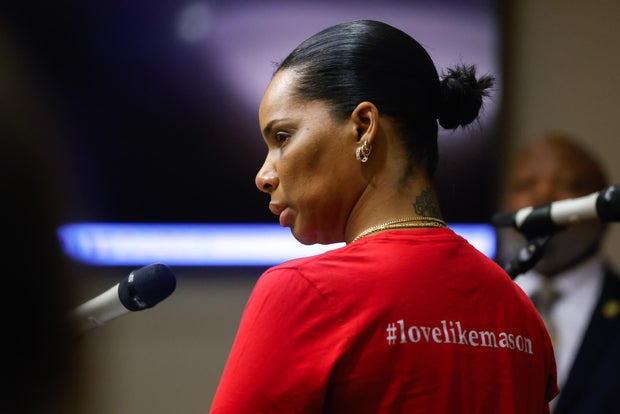
Georgia High School Shooting
Breanna Schermerhorn, the mother of Mason Schermerhorn, looks toward Colt Gray during the plea hearing at Barrow County Superior Court in Winder, Ga, on July 24, 2026. 

Arvin Temkar/Atlanta Journal-Constitution via AP

Mason Schermerhorn’s family remembered him as a caring teenager who “was so much more than a victim,” while recounting the frantic search for him and the moment they learned he had been killed. His sisters told the court they continue to struggle with anxiety, panic attacks and the emotional weight of returning to schools and public places. 

Prosecutors argued shooting was carefully planned

Prosecutors sought to show the attack was deliberate and extensively planned.

Investigators testified they recovered notebooks, cellphone evidence and Discord messages showing Gray’s fascination with previous mass shooters, particularly Parkland gunman Nikolas Cruz.

Evidence presented during the hearing included maps of Apalachee High School, writings describing how many people Gray expected to kill or injure and other materials prosecutors argued documented months of planning before the attack.

In their closing arguments, District Attorney Brad Smith argued that the teen had staged “Easter eggs” and references to other shooters in anticipation for his trial to keep his fame going.

“This is not someone is in some sort of uncontrollable emotional breakdown. He is still calculating up to the second of the shooting,” Smith told the judge.

Smith argued that Gray also mimicked other shooters in the interviews with investigators afterwards, saying that the teen was “in the midst of their plan.”

In earlier testimony, Barrow County District Attorney’s Office Investigator Ashley Gilliland played recorded jail phone calls between Gray and his mother.
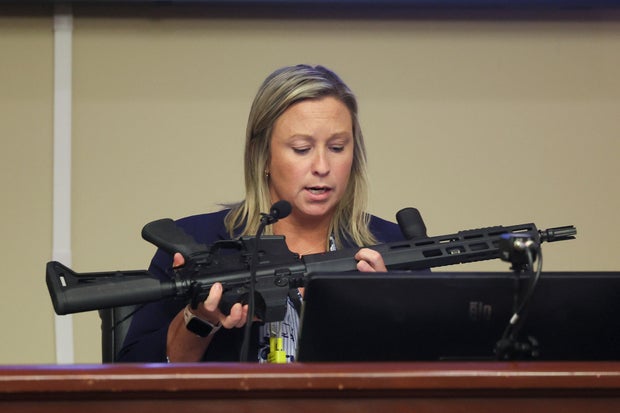
Georgia High School Shooting
Ashley Gilliland, an investigator with the Barrow County District Attorney’s office, looks over the assault rifle used in the Apalachee High School shooting by suspect Colt Gray during Gray’s sentencing on July 27, 2026, in Winder, Ga. 

Jason Getz/Atlanta Journal-Constitution via AP

In one recording, Gray said, “Can you believe it, Mom? I took over Thomas Crooks in popularity. Take that,” referring to the gunman who attempted to assassinate then-presidential candidate Donald Trump during a Pennsylvania campaign rally weeks before the Apalachee shooting.

In another call, Gray told his mother he was “in the big leagues,” comments prosecutors argued reflected his desire to achieve notoriety alongside other mass shooters.

After comparing the teen to a shark, Smith said that “Colt Gray cannot be in society” and called for him to spend the rest of his life in jail.

Defense points to mental illness, troubled childhood and progress in custody

The defense argued Gray’s actions should be viewed through the lens of years of trauma, neglect and untreated mental illness.

Forensic psychologist Dr. Kevin Richards testified Gray grew up amid financial instability, conflict between his parents and repeated upheaval at home. Richards said Gray became increasingly isolated, immersed himself in online communities centered on school shootings and exhibited symptoms of anxiety, depression and paranoia.

Richards testified Gray had been prescribed Zoloft, was diagnosed with an unspecified personality disorder and expressed remorse during interviews, telling him he “knew he screwed up a lot of lives.”

During cross-examination, however, Richards acknowledged Gray exaggerated some mental health symptoms and testified he found no evidence Gray suffered from schizophrenia, bipolar disorder or met Georgia’s legal standard for insanity.

Juvenile counselor says Gray followed rules while in custody

The defense also called Steven Baker, a counselor with Georgia’s Department of Juvenile Justice who worked with Gray after his arrest.

Baker testified Gray participated in social skills classes, life-skills programs and counseling designed to prepare juveniles for life after detention. He described Gray as cooperative, saying he generally got along with other youths, followed facility rules and consistently attended psychiatric appointments.

Baker testified Gray was transferred to another juvenile facility after his original facility lost its mental health counselor.

On cross-examination, prosecutors questioned Baker about restrictions inside the facility. Baker testified residents are prohibited from possessing offensive or violent images, including photographs of school shooters, and said rooms are routinely searched and personal belongings screened by security.

Baker said he could not recall any disciplinary reports involving Gray possessing prohibited materials or displaying photos of school shooters in his room.

DFCS commissioner details abuse allegations and family concerns

The defense also called Georgia Division of Family & Children Services Commissioner Candice Broce, who testified about the agency’s history with the Gray family.

Broce said DFCS had longstanding concerns involving the family, including allegations of physical abuse involving Gray and repeated questions about his safety and well-being.
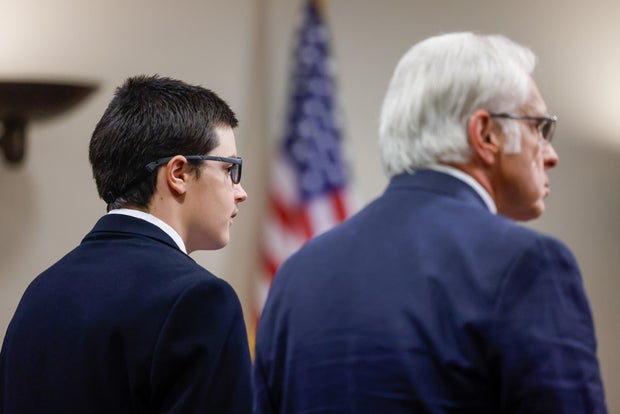
Georgia High School Shooting
Colt Gray, left, stands next to his attorney Charlton Allen and pleads guilty at Barrow County Superior Court in Winder, Ga., on Friday, July 24, 2026.

Arvin Temkar/Atlanta Journal-Constitution via AP

She testified Gray struggled with sleep and engaged in self-harm while in state care, prompting medication changes. According to Broce, Gray’s condition improved after contact with his mother stopped. She said he slept better, ate more and appeared to become “a different child.”

Broce also testified she believed Gray’s mother fueled his growing obsession with school shooters while he was 14 years old.

During cross-examination, prosecutors highlighted DFCS records documenting excessive school absences by Gray and his siblings, concerns about the children’s hygiene, reports of domestic violence between Gray’s parents, allegations of physical abuse and records showing Gray’s mother tested positive for drugs during the agency’s involvement.

Gray’s grandmother, Deborah Polhamus, echoes the sentiments during her testimony, agreeing with the prosecution that the teen’s parents failed him.

“I wouldn’t call them terrible but they were pretty close,” she said.

While what Gray did was horrible, defense attorney Charlton Allen argued that he could still be redeemed, and that his time in custody has helped him. 

“Life without parole is an extreme policy to look at – especially as a teenager,” Allen argued.

Guilty plea avoided a jury trial

Gray entered a non-negotiated guilty plea last week, acknowledging he understood the charges against him, the constitutional rights he was waiving, and that he was pleading guilty freely and voluntarily.

The plea eliminated the need for a jury trial after Judge Primm previously ordered any trial moved to neighboring Columbia County because of extensive pretrial publicity.

Gray’s father, Colin Gray, is scheduled to be sentenced on Thursday after a jury convicted him earlier this year on 27 charges, including second-degree murder, involuntary manslaughter and cruelty to children. Prosecutors argued he provided the rifle used in the shooting despite repeated warning signs about his son’s deteriorating mental health.
Lo que la huida de Trump en un camión de catering revela sobre una guerra que no terminará

El uso que hizo el presidente Donald Trump de un camión de catering para escapar en secreto de un país miembro de la OTAN en medio de una amenaza iraní es el último giro vergonzoso de una guerra que desafía repetidamente sus afirmaciones de victoria.El Servicio Secreto cumplió con su deber utilizando cualquier método necesario para sacar a Trump de Turquía en julio, finalmente en un avión alternativo al que ha estado trayendo a los presidentes de vuelta a casa sanos y salvos desde la década de 1990.Pero las revelaciones tardías sobre el drama, publicadas inicialmente por el Washington Post, desataron una nueva y grave tormenta política. Lo más significativo es que la estratagema evocó nuevas y perjudiciales imágenes sobre una guerra impopular que Trump no puede terminar.La existencia de una amenaza potencial contra el presidente no implica, por sí sola, que su guerra contra Irán sea un fracaso. Sin embargo, su salida de incógnito tras una cumbre de la OTAN probablemente se interpretará en el extranjero como una nueva afrenta al poder de Estados Unidos. Esto también plantea la siguiente pregunta: si Trump no puede garantizar su propia seguridad en territorio de un aliado clave, ¿cómo se puede creer plenamente en la afirmación de su administración de que prácticamente ha aniquilado la capacidad militar de Irán y la amenaza terrorista regional?Irán aún no se ha pronunciado. Pero su aparente éxito al obligar metafóricamente a Trump a ponerse a cubierto constituye un golpe propagandístico. A pesar de la bravuconería del presidente, el Gobierno no parece encaminarse al colapso ni suplicar un acuerdo.Los incidentes ocurridos en el aeropuerto de Ankara son solo la última ocasión en que la realidad se ha burlado de la optimista narrativa bélica del Gobierno.Por ejemplo, Trump insistió una vez más el lunes en que el estrecho de Ormuz estaba “abierto ahora”. Sin embargo, esta vía marítima crucial sigue estando, en la práctica, bajo el control de Irán, lo que significa que las fuerzas de Estados Unidos llevan meses luchando para volver al statu quo —y al estrecho abierto— que existía antes de la guerra.Mientras tanto, todo el mundo ha perdido la cuenta de las predicciones de Trump sobre la inminencia de un acuerdo, solo para que el estancamiento continúe.En otra muestra del aparente desorden estratégico de Estados Unidos, la guerra que Trump declaró ganada tras unos días ha mermado gravemente las reservas de misiles de Estados Unidos, incluyendo casi el 80 % de los interceptores de un sistema clave de defensa antimisiles, según informó CNN la semana pasada.Curiosamente, dada su posición, los presidentes suelen viajar por lugares modestos, ya que las medidas de seguridad les obligan a entrar en los edificios por garajes subterráneos, entradas traseras, cocinas y ascensores de servicio. Así que ni siquiera el máximo dirigente del lujoso Mar-a-Lago se habría sorprendido demasiado al tener que viajar en un camión de catering hidráulico en Ankara.Pero la salida clandestina de Trump de Turquía no encaja con la imagen que el presidente tiene de sí mismo como un ganador y un hombre fuerte.Incluso ensangrentado y maltrecho tras un intento de asesinato en 2024, se levantó, alzó el puño y gritó: “¡Lucha, lucha!”. Cuando un atacante intentó irrumpir en la cena de la Asociación de Corresponsales de la Casa Blanca en abril, Trump apareció en televisión para insistir en que no se dejaría intimidar y que el espectáculo debía continuar.“Donald Trump odia absolutamente todo esto”, dijo Alyssa Farah Griffin, directora de comunicaciones del presidente durante su primer mandato, a Phil Mattingly de CNN en el programa “The Lead” el martes. “Odiaba tener que refugiarse en el búnker debido al ambiente de amenazas en la Casa Blanca… Quería regresar de inmediato para demostrar que no tiene miedo, que no está huyendo”.Griffin, ahora comentarista de CNN, añadió: “Esto me indica que se trataba de una amenaza muy real. Si está dispuesto a tomar estas medidas y a llevarlas a cabo, refleja la situación actual que estamos viviendo en Medio Oriente”.El engaño de Trump en la pista de aterrizaje también avivó la polémica sobre la flota de aviones presidenciales, ya que previamente había abandonado sus planes de volar en su nuevo jet rojo, blanco y azul donado por Qatar, que, según advierten los críticos, carece de sistemas de seguridad suficientes para un presidente. El presidente y la Casa Blanca han negado que una amenaza los haya llevado a recurrir a un avión de reserva.Luego está la cuestión de si el personal, los agentes del Servicio Secreto, los periodistas y la tripulación corrían peligro de muerte cuando despegaron en un avión en el que, según se mostró en televisión, Trump había embarcado minutos antes, antes de marcharse en secreto.El martes, los periodistas le preguntaron a Trump por qué se consideraba demasiado peligroso para él volar en uno de los aviones que normalmente se utilizan como Air Force One, mientras que lo mismo no se aplicaba a los miembros de la prensa.“El avión en el que volé corría mayor riesgo… porque creo que ese sería el avión que tendrían más probabilidades de atacar”, dijo el presidente.Pero su comentario no respondía a la pregunta en cuestión, porque al subir a bordo del avión presidencial, había dado toda la impresión de que planeaba viajar en él, antes de su partida no anunciada.El gobernador de Illinois, JB Pritzker, un posible candidato demócrata a la presidencia en 2028, declaró el martes a Erin Burnett de CNN que Trump “puso a la gente en peligro para salvarse a sí mismo; así es Donald Trump”.Pritzker relacionó entonces el incidente con la guerra en general, diciendo: “Está dispuesto a poner a las tropas en peligro… se escabulló literalmente en un camión de catering mientras los periodistas y su propio personal estaban en un avión que aparentemente estaba bajo amenaza”.Las declaraciones de Pritzker han convertido la polémica en el centro de la contienda electoral de mitad de mandato. Y es probable que se inicien investigaciones si los demócratas ganan una o ambas cámaras del Congreso en noviembre.Trump, que ha sobrevivido al menos a dos intentos de asesinato directo, probablemente pasará el resto de su vida bajo la amenaza de un ataque iraní. Esta situación se remonta a su primer mandato, cuando ordenó el ataque que causó la muerte del general iraní Qasem Soleimani. El incentivo de Irán aumentó cuando el líder supremo Ali Jamenei murió en ataques aéreos de Estados Unidos e Israel al comienzo de la guerra actual.Durante el funeral de Jamenei en julio, se llevaron a cabo demostraciones coreografiadas de desafío en las que los manifestantes exigieron la muerte del presidente. Por lo tanto, el Servicio Secreto tiene buenas razones para tomar en serio cualquier información sobre posibles ataques. Se han reportado casos de asesinatos de iraníes opositores al Gobierno de Teherán en Turquía, y el régimen iraní ha sido uno de los principales exportadores de terrorismo del mundo.“Me parece totalmente plausible que exista una seria amenaza para el presidente por parte de alguna entidad respaldada por Irán. Estados Unidos, el Reino Unido y varios estados europeos han frustrado o desbaratado ataques respaldados por Irán en los últimos años, e incluso décadas atrás”, declaró la teniente general retirada de las fuerzas de Estados Unidos Karen Gibson en el programa “The Lead” el martes. “Han demostrado tener la intención y la capacidad de hacerlo”.En julio, Trump advirtió que 1.000 misiles estaban “listos para disparar y apuntando a la República Islámica de Irán, y que miles más se lanzarían inmediatamente después” si Irán intentaba o lograba asesinarlo. En la práctica, cualquier respuesta a la muerte de un presidente no se decidiría por las órdenes que él dejó, sino por las de su sucesor, en este caso, el vicepresidente J. D. Vance. La necesidad de restaurar la disuasión y la credibilidad de Estados Unidos probablemente exigiría una escalada masiva por parte de este país.Sin embargo, es notable que Trump no respondiera a su salida poco decorosa de Turquía con una reacción emotiva. Quizás el hecho de haber mantenido el asunto en secreto hasta ahora le salvó las apariencias. Pero también ha llegado a encrucijadas constantemente y se ha resistido a ampliar el alcance de la misión, lo que podría resultar en numerosas bajas de las fuerzas de Estados Unidos.Es posible que las acciones del Servicio Secreto en Turquía hayan evitado un ataque que podría haber sumido a Estados Unidos en un atolladero aún mayor.Pero la huida furtiva de Trump de Turquía le dificulta mucho más argumentar que ha hecho del mundo un lugar más seguro.The-CNN-Wire™ & © 2026 Cable News Network, Inc., a Warner Bros. Discovery Company. All rights reserved.
Read Next Story