(NEW YORK) — It was a night to remember for some of the sports world’s biggest stars at the 34th annual ESPY Awards on Wednesday.
The best sports moments, winning plays, and superstar players were celebrated at the David H. Koch Theater at Lincoln Center in New York City.
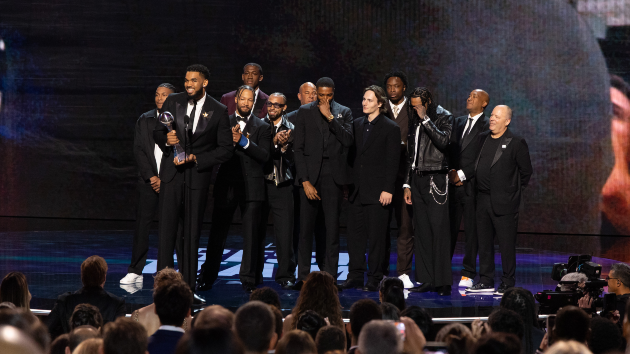
Olympian Simone Biles presented the ESPY Award for best team to the New York Knicks, one month after the NBA team secured this year’s championship title in five games against the San Antonio Spurs.
“I hope this trophy, especially here in New York, getting this trophy shows the word love. The love of each other and this team is what got us through the humps in December when we were not playing our best basketball. The love of the fans is what got us back [when we were] down 29 at home,” Knicks center-forward Karl-Anthony Towns said in a speech, as the team accepted the award.
Knicks guard Jose Alvarado added, “We’ve got the best fans in the world.”
Knicks captain Jalen Brunson also won multiple ESPYs on Wednesday, including best championship performance and best athlete – men’s sports.
“I’m at a loss of words. It has been a hell of a run to say the least,” Brunson said.
Brunson’s teammate OG Anunoby also took home the ESPY for best play for his now-famous tip-in that cemented the Knicks’ eventual win of game 4 during the NBA Finals.
“I think it’s pretty exciting for everyone,” Anunoby said of his ESPYs experience last night. “I mean I grew up watching this award show, so full circle, crazy to be here.”
The ESPYs also honored athletes on the rise, including 24-year-old Olympic gold medalist figure skater Alysa Liu, who earned the ESPY for best breakthrough athlete.
“The past six months have been really crazy, but I’ve been enjoying it,” Liu said. “And once it’s all kind of slowing down, I’m gonna journal about it, so I can remember everything.”
“Good Morning America” co-anchor Robin Roberts delivered the Arthur Ashe Courage Award honoring late NBA trailblazer Jason Collins, the first openly gay player in league history.
Collins died of a brain tumor in May, so Roberts presented the award to his twin brother Jarron Collins, who accepted it on his behalf.
“It really does make all the difference in the world. Representation matters,” Jaron Collins said.
“When you see someone of the LGBTQ community following their passions, following their dreams, living their life, being their authentic self — it inspires other people,” he added. “So, my brother, being a professional NBA basketball player and being openly gay, lived his life, lived his dream, lived his truth.”
Copyright © 2026, ABC Audio. All rights reserved.