
Fewer than half of Americans say they can afford healthcare: Gallup

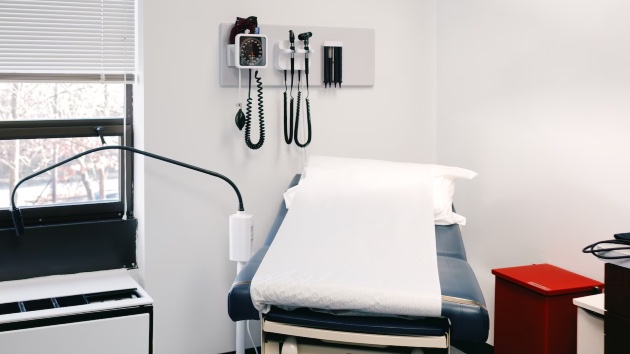
Close-up of examination table in doctor’s office (Grace Cary/Getty Images)

(NEW YORK) — Fewer than 49% of Americans can afford healthcare, the lowest rate since tracking began in 2021, according to Gallup data released Thursday.

In a single year, roughly 2.8 million people no longer identified as being “Cost Secure” meaning they could no longer afford access to quality care or pay for visits and prescriptions, according to the data. Worry about future healthcare costs, including visits and prescriptions, amongst Americans is also at an all-time high of over 40%, according to Gallup.

Gallup developed what it calls the “Healthcare Affordability Index,” which is sponsored by West Health, in 2021 drawing on self‑reported experiences from nationally representative surveys. The latest data comes from a study conducted between October and December of 2025, according to Gallup and West Health.

Healthcare has become a financial burden across income levels, according to the new data. According to the index, one in three upper-middle income households ($120,00 to $180,000) are not cost secure, nor are one in five households earning above $180,000.  

Young adults, aged 18-29, have experienced the sharpest decline in ability to afford healthcare with those identifying as “cost secure” dropping 7 percentage points in a year.

Women continue to trail behind men when it comes to affording healthcare.

Between 2021 and 2024 the difference between men and women being able to afford care was 9% but in 2025 the gap widened to 15%, making it the largest gender gap in healthcare affordability on record.

Healthcare and inflation continue to rise with healthcare spending reaching $5.3 trillion in 2024. This, in part, is due to hospital prices increasing to 3.4% in 2024, the fastest rate increase since 2007, and insurance premiums going up by 20% after the expiration of subsidies under the Affordable Care Act.

With many Americans experiencing significant healthcare-related financial challenges, studies show that this can lead to significant consequences, including delaying or deferring care, leading to worse health overall.

Torie A. Livingston, MD, MPH, is a third-year pediatric resident physician at the University of Chicago and is a medical intern of the ABC News Medical Unit. 

Copyright © 2026, ABC Audio. All rights reserved.

Turnover of Senate-confirmed officials in Trump’s second term outpaces all 21st century administrations

(CNN) — More Senate-confirmed officials have left President Donald Trump’s second administration in its first 18 months than they have during the same period in other 21st century administrations, according to a nonpartisan organization’s review of the turnover published Wednesday.The review from Partnership for Public Service, a group that focuses on improving the federal government, found that as of Monday, 27 Senate-confirmed officials in Cabinet departments have departed the administration — a figure that outpaces the 11 departures in the first 18 months of Trump’s first administration, which was known for its turnover.The departures impacted 13 departments and included three Cabinet secretaries: Homeland Security Secretary Kristi Noem, Attorney General Pam Bondi and Labor Secretary Lori Chavez-DeRemer. Other high-profile officials that have left include Secretary of the Navy John Phelan and Centers for Disease Control and Prevention Director Susan Monarez.The review also found that the administration is slow to fill the vacancies with Trump sending fewer nominations to the Senate than even his first term. It does not include US attorneys, US marshals or ambassadors who have left or nominations for those positions.“Turnover on this scale does not just thin the government’s leadership ranks—it concentrates power in the president,” Chris Piper of the Partnership for Public Service wrote in a blog post. “Left unaddressed, more of the government will be led by officials installed without the Senate’s constitutionally required advice and consent, and it will be less able to do the work Americans depend on.”White House spokesperson Olivia Wales said in a statement to CNN, “President Trump has the most talented Cabinet in American history who work every day to implement his common sense, America First agenda. In just over one year, the President and his Cabinet have made our country greater than ever before with the most secure border in history, the largest middle-class tax cut ever, and the lowest murder rate since 1900. The President and his entire administration will continue to tirelessly implement the Trump agenda and achieve tremendous results for the American people.”While every president has appointed officials in “acting” capacity, which temporarily avoids the Senate confirmation process, Trump has done so more frequently and openly, CNN has previously reported.During his first term, Trump said, “Acting gives you much greater flexibility. A lot easier to do things.”The-CNN-Wire™ & © 2026 Cable News Network, Inc., a Warner Bros. Discovery Company. All rights reserved.
Read Next Story