
▶ Watch Video: Trump administration building Ebola quarantine facility in Kenya
A Kenyan High Court judge on Friday temporarily blocked a Trump administration attempt to set up an Ebola quarantine facility on an air base in the East African country. White House officials said earlier this week that a 50-bed facility would be operational from Friday for American citizens exposed to or infected by the virus.
The non-profit Katiba Institute, whose mission is to defend Kenya’s constitution, filed the restraining application Thursday, citing a lack of transparency and public participation and arguing that “constitutional recklessness” had implications for “grave public health.”
The U.S. Centers for Disease Control and Prevention has identified six known strains of Ebola, four of which cause significant illness in humans. The most lethal Zaire strain has a mortality rate of up to 90%, according to the World Health Organization, while the Bundibugyo strain — behind an ongoing outbreak centered in the Democratic Republic of Congo — has a mortality rate between 30-50%.
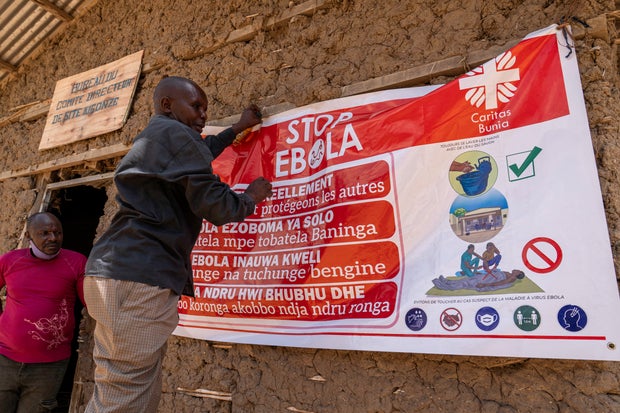
Glody MURHABAZI/AFP/Getty
Trump administration officials said the facility on the Laikipia Air Base, about 124 miles from Kenya’s capital Nairobi, was being designed to provide access to high-quality care for Americans who need to quickly get out of Congo and quarantine without the risks of a lengthy trip back to the U.S.
Another administration official said the government was planning for a facility that would serve “asymptomatic individuals” who may have been exposed to Ebola, in cooperation with the Kenyan government.
As of Thursday, the U.S. was not aware of any exposed Americans who were to be transported to the center, senior administration officials told CBS News.
The Kenyan court said Friday that “a conservatory order is hereby issued restraining the respondents from establishing … any Ebola exposure, quarantine, isolation or treatment facility in Kenya.”
Another organization, the Law Society of Kenya, has also filed a constitutional petition against the proposed Ebola quarantine center, but there was no immediate ruling on that Friday.
“Kenya appears to have been selected as an alternative containment site, thereby externalizing infectious disease risk management to the Republic’s territory,” Katiba said in its legal challenge.
The Kenyan government has 48 hours to respond to the petition.
Kenya’s health ministry has said it’s open to working with other governments, including the United States, but has not spoken in any detail about the proposed U.S. quarantine facility.
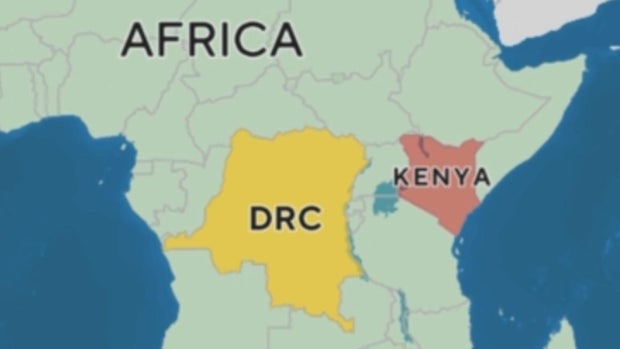
On Thursday, Secretary of State Marco Rubio spoke with Kenyan President William Ruto by phone, and a State Department spokesperson later said Washington would provide $13.5 million toward the African country’s Ebola defense operations.
The current Ebola outbreak, focused in Congo’s conflict-plagued Ituri Province on the border with Uganda and South Sudan, is believed to have killed at least 220 people and infected more than 900 others.
Uganda has confirmed seven Ebola cases, but with a lag time in confirming infections due to the virus’ long gestation period and slow public health reporting in the region, health experts fear there could be a surge in cases confirmed in the weeks ahead.