Book excerpt: ‘The Let Them Theory’ by Mel Robbins

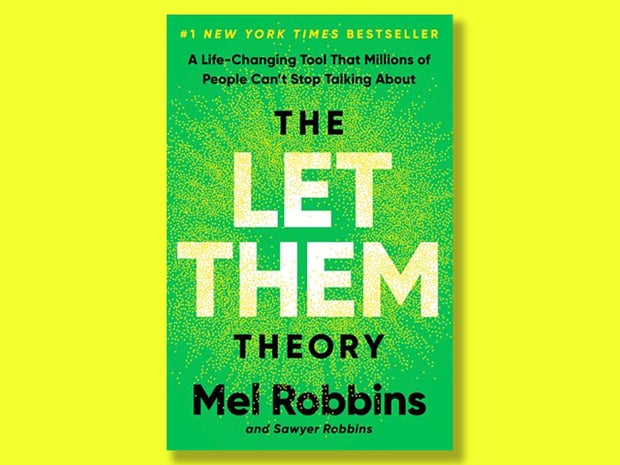
the-let-them-theory-cover-hay-house-1280.jpg

Hay House

We may receive an affiliate commission from anything you buy from this article.

Mel Robbins’ podcasts, TED Talk and bestselling books, including “The 5 Second Rule,” have made her one of the most successful motivational speakers.

In her latest bestseller, “The Let Them Theory” (Hay House), she discusses how personal growth is only possible when you stop pouring energy into things you cannot control – which includes changing other people.

Read an excerpt below, and don’t miss Norah O’Donnell’s conversation with Mel Robbins on “CBS Sunday Morning” February 1!


“The Let Them Theory” by Mel Robbins

Prefer to listen? Audible has a 30-day free trial available right now.


I’ve spent the last two years researching the Let Them Theory: why it works, and how you can use it to transform your life and improve your relationships with other people.

In writing this book, I’ve spoken to many of the world’s leading experts in psychology, neuroscience, behavioral science, relationships, stress, and happiness. You’ll meet them as you read the book, and their research will help you apply the theory in countless situations in your life. As you’ll soon see, the science is clear: This thing works. And it works really well.

But this book isn’t just about introducing you to the Let Them Theory. It’s about a fundamental law of human nature: All human beings have a hardwired need for control.

We all have an innate desire to control everything about our lives: our time, our thoughts, our actions, our environment, our plans, our future, our decisions, and our surroundings. Feeling in control makes you feel comfortable and safe, so naturally you try to control everyone and everything around you—oftentimes, without even realizing it. 

But the fact is, there is one thing you will never be able to control. No matter how hard you try, you will never be able to control or change another person. The only person you are in control of is you. Your thoughts, your actions, your feelings.

For too long you’ve been working against this fundamental law of human nature. You’ve been fighting to change people, battling to control situations, worrying about what people say, think, or do; and in doing so, you’ve created unnecessary stress, tension, and friction for yourself and in your relationships. I did too.

The Let Them Theory has transformed my entire approach to life and how I deal with other people. Instead of resisting the natural flow of human nature, I learned to embrace it. Instead of wasting my energy on something I can’t control—what others say, think, and do—I poured my energy into what I can control: me.

The result? I gained more control over my own life than I have ever had before. It was freeing. I stopped making other people the problem, and in doing so, my relationships improved in ways I never thought possible. It was like unlocking a door that had been sealed shut for years. And behind it? A life where I’m no longer weighed down by the need to manage other people.

In the coming pages, you’ll learn all about the theory, the easiest way to start using it, and how awesome it feels when you do. You’ll also learn about a surprising discovery I made early in our research. The Let Them Theory isn’t just … Let Them. Yes, it begins with these two words, but that’s not the whole story. Let Them is just the first half of the equation. There is a second, even more crucial step to this theory: Let Me.

In the next chapter, we’ll unpack both Let Them and Let Me and explore the science and psychology behind each one of the two steps. Then, you’ll learn about the eight core areas of your life where the theory will have the biggest positive impact. We’ll talk about your relationships, career, emotions, opinions, stress, love life, struggles, chronic comparison, friendship, and most importantly, your relationship with yourself. 

Over and over, you’ll learn how you’ve been trying to control the wrong things and unknowingly made other people a problem. The truth is, other people should be one of the greatest sources of happiness, support, and love in your life. But they can’t be if you keep trying to control what they feel, say, and do. That ends with this book.

Master the Let Them Theory, and you’ll stop exhausting yourself trying to control the uncontrollable. This isn’t just about feeling better. It’s about redesigning how you live your entire life. I can’t wait for you to discover the space and freedom to experience your life the way you’ve always wanted—on your terms.

Let’s begin.

     
From “The Let Them Theory” by Mel Robbins. Copyright © 2024 by Mel Robbins. All rights reserved. This excerpt, or any parts thereof, may not be reproduced without permission.


Get the book here:

“The Let Them Theory” by Mel Robbins

Buy locally from Bookshop.org


For more info:

¿Quién es Natalie Harp? Un senador demócrata enciende una disputa personal por la asistente de Trump

Una pulla de un destacado legislador demócrata contra una colaboradora cercana del presidente Donald Trump generó una disputa personal que podría tener repercusiones en una crucial contienda en las elecciones de mitad de término.El senador por Georgia Jon Ossoff, quien buscará la reelección en noviembre, mencionó a la poco conocida y cercana colaboradora de Trump durante un discurso el domingo en Atlanta, mientras arremetía en términos generales contra la posibilidad de que el presidente realmente quiera ejercer como comandante en jefe.“Mientras los marineros del Lincoln luchan en su guerra, mientras él agota inútilmente nuestras reservas de municiones y petróleo, el presidente se duerme durante sus reuniones, juega al golf y negocia acciones”, dijo Ossoff en un mitin de campaña.Y continuó: “No quiere hacer el trabajo. Quiere construir su salón de baile y viajar con Natalie en su palacio volador, aparentemente indefenso, regalado por el emir de Qatar”, en referencia a Natalie Harp, la asistente ejecutiva del presidente.El público de Ossoff vitoreó la pulla, y algunos usuarios de X destacaron en particular su decisión de mencionar a Harp.Consultado sobre las declaraciones del senador demócrata, Trump comparó el lunes a Ossoff con Pee-wee Herman y le dijo a Kristen Holmes, de CNN, en la Oficina Oval que él “preferiría hacer otras cosas”. Luego pasó a hablar de las obras en la Casa Blanca, afirmando que estaba “construyendo unas excelentes instalaciones” y elogiando su proyecto del Ala Este como “mucho más que un salón de baile”.La Casa Blanca ya había tomado nota de los comentarios de Ossoff y lo atacó desde su oficina de prensa el lunes por la mañana.“Jon Jackoff tiene que ser el mayor cobarde y perdedor de la política. En lugar de denigrar a personas trabajadoras que sirven a su país, Jon debería mirar en lo profundo de su alma y preguntarse por qué es una persona miserable que odia a este país”, escribió el director de comunicaciones de la Casa Blanca, Steven Cheung, en una publicación en redes sociales.El portavoz de la Casa Blanca Davis Ingle dijo que Ossoff era un “afeminado chico de teatro que da vergüenza ajena y juega a ser Barack Obama”, además de un “perdedor insignificante”.Los insultos ponen de relieve la atención con la que la Casa Blanca sigue a Ossoff, quien ha generado especulaciones sobre una candidatura presidencial en 2028 al catalogar las elecciones de mitad de mandato como un referendo sobre la corrupción, los costos y el fracaso del liderazgo mundial.Ossoff busca un segundo mandato frente al representante Mike Collins, un aliado de Trump respaldado por el presidente en ese estado políticamente dividido. Una encuesta de Fox News de junio mostró a Ossoff con una ventaja de 13 puntos sobre Collins entre los votantes registrados del estado, aunque estrategas de ambos partidos creen que la contienda se podrá difícil en los próximos meses.Está por verse si los intentos de Ossoff por provocar al presidente generan alguna reacción más allá de las réplicas en redes sociales, incluida la posibilidad de un mayor respaldo financiero para Collins. Trump, a través de su comité de acción política MAGA Inc., cuenta con un fondo de US$ 400 millones para utilizar en las próximas campañas y aprobó una primera partida de varios millones de dólares que se gastará en las próximas semanas, según dos personas familiarizadas con los planes.El incidente también volvió a enfocar la atención en Harp, quien se ha convertido en una de las asistentes personales y fuentes de información de mayor confianza del presidente, y lo acompaña con frecuencia en sus viajes de fin de semana a Mar-a-Lago y a su club de golf en Bedminster, Nueva Jersey. Cuando Trump salió discretamente del Air Force One para abordar una aeronave más pequeña en Turquía debido a una amenaza de Irán, Harp fue una de las pocas asistentes que lo acompañaron.Harp se ha convertido en una guardiana de la información que llega a Trump. Atrajo por primera vez la atención del presidente en 2019, cuando contó su experiencia de vivir con cáncer de huesos y sobrevivir a una crisis de salud catastrófica, algo que atribuyó a las políticas de “Derecho a Intentar” de Trump durante una entrevista con Fox News.“Ya no estoy muriendo de cáncer. Gracias al presidente Trump, estoy viviendo con cáncer”, dijo en “Fox & Friends”, una aparición que le valió espacios como oradora en la conferencia “Faith and Freedom” y en la Convención Nacional Republicana de 2020, seguida de un puesto en One America News Network, lo que consolidó su condición de defensora de Trump. Comenzó a trabajar como asistente personal del presidente en 2022.Según informes, Harp envió a Trump varias cartas elogiosas y personales en 2023 que “inquietaron” a personas de su entorno, de acuerdo con The New York Times. (“Usted es lo único que me importa”, dijo en una, según el reporte; “Quiero darle alegría”, en otra).En la actualidad, Harp sigue a Trump a todas partes con una impresora, y el presidente le dicta a través de ella muchas de sus publicaciones en redes sociales y mensajes de texto, lo que le otorga una posición de influencia debido a su proximidad.Con información de Alayna Treene, Arlette Saenz y Stephen Collinson, de CNN.The-CNN-Wire™ & © 2026 Cable News Network, Inc., a Warner Bros. Discovery Company. All rights reserved.
Read Next Story