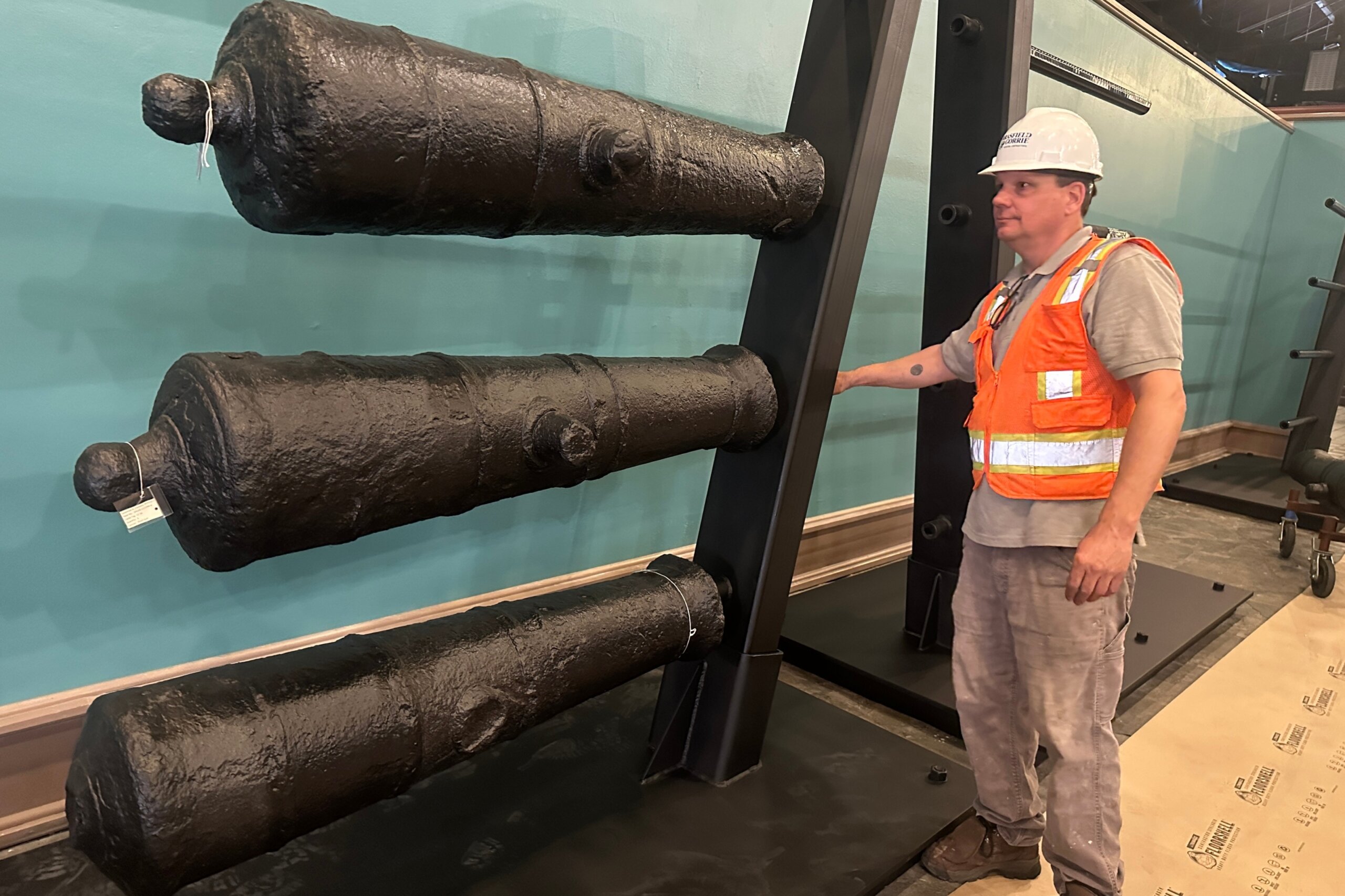
Presidential museum showcases political and personal sides of Obama with sprawling community campus

CHICAGO (AP) — Former President Barack Obama’s influence in his presidential museum runs deep, from the location on Chicago’s South Side to textured stone adorning its dramatic tower to striped reading chairs that are similar to ones in his own home.

The Obama Presidential Center opens to the general public on Juneteenth after a celebratory dedication in Chicago with dignitaries. But tens of thousands of people — friends and family of museum staff, students and journalists — have already been offered a sneak peek at the nearly 20-acre campus as crews finish final art installations and landscaping.

The roughly $850 million project covers both the political and personal realms of the nation’s first Black president. Campaign memorabilia and presidential artifacts are displayed in the admission-based museum tower while public spaces of the sprawling campus feature other things important to Obama: a new library, basketball court and picnic area with grills.

“This is a safe space for people to come and, yes, reflect on the historic moments of this presidency and the campaigns, but also to come together as a community to think about what change you can bring to your own neighborhood,” Josh Harris, the Obama Foundation’s vice president of public engagement, said during a recent tour with The Associated Press.

Here’s a closer look at the top attractions of the campus expected to draw as many as 1 million visitors annually.

President for a day

Obama’s presidential museum will be the first fully digital museum of its kind, ditching scores of official papers on display.

Instead, visitors will experience high-tech and hands-on exhibits spanning the campaigns, key moments of Obama’s presidency and life at the White House.

One of the largest attractions is a life-sized replica of the Oval Office.

On a recent day, a stream of visitors, including school children, walked through the circular room, stopping to sit behind the desk and pose for pictures. The top drawer holds a copy of a hand-written letter from predecessor former President George W. Bush and Obama’s beloved BlackBerry phone.

“We want to make sure that people from all walks of life have the opportunity sit behind the Resolute Desk,” said Harris. “You think about the possibilities that if a young organizer from the South Side of Chicago can be president, you can be president too.

Other sections of the museum detail the Affordable Care Act, immigration policies along with smaller moments like when Obama unexpectedly sang during a 2015 eulogy for those killed in a South Carolina church shooting. A large television screen plays a clip of Obama singing “Amazing Grace.”

Peppered throughout are areas for personal reflection, which museum organizers say is key.

“We’re passing that baton and inviting people to bring change home, however change may be defined, both small or large,” said Louise Bernard, the museum’s director.

Touching iconic ballgowns

When Obama touted the museum’s contents at its groundbreaking in 2021, he predicted one of the top draws.

“We want this center to be more than a static museum or a source of archival research,” Obama joked at the site. “It won’t just be a collection of campaign memorabilia or Michelle’s ballgowns, although I know everybody will come see those.”

Roughly a dozen outfits on mannequins are behind glass, including a black and red dress designed by Narciso Rodriguez that the former first lady wore on Election Night in 2008 in Chicago.

Visitors will also get a chance to touch swatches of the fabrics, including the rose gold chain mail Atelier Versace evening gown she wore at her final state dinner in 2016.

Obama’s personal touches

The museum’s location is near where Barack Obama started his political career, taught law at the University of Chicago and where the family lived. Michelle Obama also grew up on the South Side.

A life-long basketball lover, Obama sought a glass-paneled professional grade basketball court which will be used for community programs.

The former first lady designed a garden, where lettuce and strawberry plants sprouted on a recent day. There’s also charcoal grills that’ll be available to the public, which Obama has envisioned since he first pitched the plan in community meetings nearly a decade ago.

“President Obama always talked about his feelings of being in Chicago and one of his memorable moments was grilling in the park,” Harris said.

The Obamas’ design tastes and love of history are also evident.

The museum campus features dozens of commissioned works of art while different parts of the campus are named after prominent figures. The central “John Lewis Plaza,” named for the late congressman and civil rights leader, is designed to be a public gathering spot.

Inside a new Chicago Public Library branch, a 70-foot mural depicts literary figures including Walt Whitman and James Baldwin. At the center is a boy in an orange shirt being read to by Toni Morrison. He represents a young Obama.

Its presidential reading room features thousands of books chosen by the Obamas, ranging from presidential biographies to best-selling fiction. One of Obama’s favorite parts are two high-backed chairs with blue, yellow and black stripes. They were selected by the former president as top-notch reading chairs similar to ones he has at home.

Pricey admission with free options

Tickets are $30, the highest of any U.S. presidential museum or library. Next on the list is the Richard Nixon Presidential Library and Museum in California, where tickets are $29.

Obama Foundation leaders say the prices are justified for the state-of-the-art facility.

Tickets at the adjacent Griffin Museum of Science and Industry are $25.95. In downstate Illinois, tickets to the Abraham Lincoln Presidential Library and Museum in Springfield run $15.

Along with free days and discounts for Illinois residents, Obama Foundation officials also argue the most of the campus is free with only four floors of the museum tower requiring tickets.

Anyone can walk the campus, use the playground, library, sledding hill or grilling area. The tower’s top floor, which feature panoramic views of the nation’s third-largest city, is also free.

“The idea behind this institution, this campus, was to make it accessible to as many people as possible,” Harris said.
When you have advanced prostate cancer: What living with the disease looks like

(CNN) — “How long do I have to live ?”When I tell a patient he has prostate cancer, this is usually what he asks me first.With early-stage or low-grade prostate cancer, I can offer strong reassurance: Your life expectancy is good — expect a five-year relative survival rate of greater than 99% with treatment. Simply put, most men will not die from low-grade prostate cancer.However, once the cancer has spread outside the prostate to the bones and other organs the answer becomes more difficult. Treatment has changed dramatically over the past decade for advanced prostate cancer. New drugs, better imaging and the earlier use of combined therapies are helping men live longer.In a video released July 15, former President Joe Biden gave an update on his prostate cancer, saying he was receiving treatments that have been going well. In May 2025, Biden officially announced that he had an aggressive form of prostate cancer that had spread to his bones. Since then, based on official updates, he has continued hormone therapy, completed a course of radiation and maintained a public presence.His diagnosis brought renewed attention to prostate cancer screening and treatment. Now, more than a year later, his cancer journey offers an opportunity to examine what has changed in the treatment of advanced prostate cancer — and the hope these offer men living with the disease.I recently saw a patient who was diagnosed three years ago with cancer that had already spread to multiple areas in his bones. Since then, he has taken cruises, traveled with his family and spent weekends babysitting his grandchildren.He gets tired and cannot garden the way he once did. But he is still alive and considers every day a blessing. His experience, and what we see with Biden, shows what living with metastatic prostate cancer can look like today.Understanding survival ratesIf they haven’t asked their doctor already, many patients go online and find five-year survival rates, but every number they may find online comes with a huge asterisk.The American Cancer Society reports five-year relative survival of greater than 99% when prostate cancer is found in or near the prostate. The figure drops to 38% when it has reached distant parts of the body.But that number is based on large groups of men treated years ago. It does not fully reflect the impact of newer treatments — or account for an individual man’s age, overall health and response to therapy.Survival statistics describe groups of patients but do not predict what will happen to one person. That is why the 38% figure cannot tell us how long Biden — or any individual patient — will live. These patients’ outlook depends on details of their cancer and how they are responding to treatments.It’s treated more aggressively nowA man diagnosed with metastatic prostate cancer a decade ago and a man diagnosed today would not receive the same treatment. The thinking now is to use our best treatments early instead of holding back.For years, doctors began with hormone therapy — usually injections that lower testosterone — and saved other treatments until the cancer stopped responding.Today, those injections are often combined from the start with a newer hormone-blocking drug and/or chemotherapy. These combinations have helped men live longer and are one of the biggest shifts of the past decade.What Biden’s diagnosis told usThere are three details about Biden’s cancer that help doctors like me understand how aggressive it is and how to manage it effectively. Official statements highlighted that his cancer had a Gleason score of 9. The cancer had spread to his bones, and it was labeled as hormone-sensitive.The Gleason score is assigned after a pathologist examines biopsy samples. Scores typically range from 6 to 10, with higher numbers indicating more aggressive cancer. A score of 9 falls into the most aggressive category. However, the score alone cannot tell us whether the cancer has spread outside the prostate.When prostate cancer spreads, the most common destination is the bones — particularly the spine, pelvis and ribs. It can also reach organs such as the lungs or liver. Once it has reached distant parts of the body, it is generally not curable, but treatment can put a brake on it for years.Prostate cancer can also be hormone-sensitive or hormone-resistant. Because it typically relies on testosterone to grow, lowering the hormone or blocking its effects can help control the cancer. Hormone-sensitive means it still responds to these treatments.Over time, most advanced or metastatic prostate cancers find ways to grow despite low testosterone levels, which mean they are now hormone-resistant. Lowering testosterone alone is no longer enough to control the cancer, so doctors have to turn to additional therapies.Knowing if the cancer has spreadThe most sensitive imaging test available today is a PSMA PET scan. It uses a radioactive tracer that seeks out a protein found on the surface of prostate cancer cells. Areas containing cancer may appear as bright spots, helping identify where the cancer has spread. The American Urological Association supports using this imaging test to determine whether high-risk prostate cancer has spread and to help establish its stage.A traditional bone scan, used for decades, highlights areas where bone is reacting to injury or disease. It remains an alternative imaging option, but PSMA PET is increasingly replacing its use.What areas light up and where matter when deciding on treatments. A single spot in the spine and cancer that has spread to the liver are both called stage 4, but they are not the same disease and may not be treated the same way.Doctors also consider how much cancer has spread. We label it as “low-volume” disease when the cancer has reached a limited number of areas. High volume is when the spread is more widespread or has reached other organs such as the liver or lungs.Both require treatment that works throughout the body. Treatment for metastatic disease generally includes therapy that works throughout the body. For men with low-volume disease, adding radiation to the prostate may also help them live longer.Biden has completed a course of radiation, but his team has not disclosed what area was treated or enough detail to determine whether his cancer would be considered low- or high-volume.Treatment has become more preciseBeyond starting more treatments earlier, doctors can increasingly tailor therapy to the biology of an individual man’s cancer. We can now test both the tumor and a patient’s own DNA for mutations that help guide treatment.Roughly 1 in 10 men with metastatic prostate cancer carries an inherited mutation affecting the body’s ability to repair DNA. The best known are BRCA1 and BRCA2, the same genes linked to some breast and ovarian cancers.Certain mutations found in the tumor or inherited DNA may make targeted drugs called PARP inhibitors an option. If a mutation is inherited, it also gives family members information they can act on through genetic counseling, testing and earlier screening.Another advance is radioligand therapy. If a scan shows that cancer cells carry a protein called PSMA, doctors can attach radiation to a molecule that seeks out that protein. Delivered through an IV, it targets cancer cells throughout the body. This approach was expanded last year to more men whose cancer had become hormone resistant.Living longer can come with costsEvery treatment can cause side effects. With hormone therapy, one of the first is often hot flashes, similar to what women experience during menopause. These are not dangerous, but they can affect a man’s quality of life.Fatigue is also common. Testosterone helps maintain muscle, so lowering it can reduce strength and energy. Regular walking and resistance training can help preserve muscle and reduce fatigue.The side effect almost no one talks about is loss of sex drive or low libido. At diagnosis, most men are thinking about staying alive, not their libido. But months later, it often matters. It is worth discussing with your care team and your partner rather than assuming it is simply the price of treatment.The side effect I worry about most is weaker bones. Low testosterone reduces bone density, while cancer deposits can weaken the bone’s structure. Follow-up care should include exercise, a bone-density scan, and ensuring adequate levels of calcium and vitamin D. For men with hormone-resistant cancer that has spread to bone, bone-protecting drugs can reduce the risk of fractures and other complications.New or worsening back pain, especially with leg weakness, numbness or trouble controlling the bladder or bowels? These could mean the cancer is pressing on the spinal cord. It is a true medical emergency that requires immediate attention.Cancer care requires a team approachIdeally, several doctors work together to coordinate a patient’s care. The urologist is often the starting point. A medical oncologist manages treatments that work throughout the body, while a radiation oncologist targets specific areas, whether that is the prostate itself or a painful bone lesion. The primary care doctor helps protect the patient’s heart and bones and looks after the person’s overall health.A man’s age, other medical conditions, ability to tolerate side effects and goals for treatment all shape treatment plans. Two men with nearly identical test results may be offered — or choose — different paths based on their health and priorities.Good communication among doctors is essential, but gaps can happen. Being your own advocate means knowing who is on your care team, asking questions and understanding your options.I also recommend bringing someone you trust to important visits for support and to take notes and help you remember what was discussed.More treatments, better testing offer hopeFor men worried about prostate cancer, talk with your health care provider about the benefits and risks of PSA testing. Black men and those with a strong family history should begin that conversation in their 40s. New urinary symptoms are often not cancer, but they still deserve attention, as does blood in the urine or semen, unexplained weight loss and/or persistent back or bone pain.For men living with advanced prostate cancer, there is reason for hope. There are more treatments and better testing than there were a decade ago, and good care pays attention to how a man feels, not just to what his scans show.The-CNN-Wire™ & © 2026 Cable News Network, Inc., a Warner Bros. Discovery Company. All rights reserved.
Read Next Story