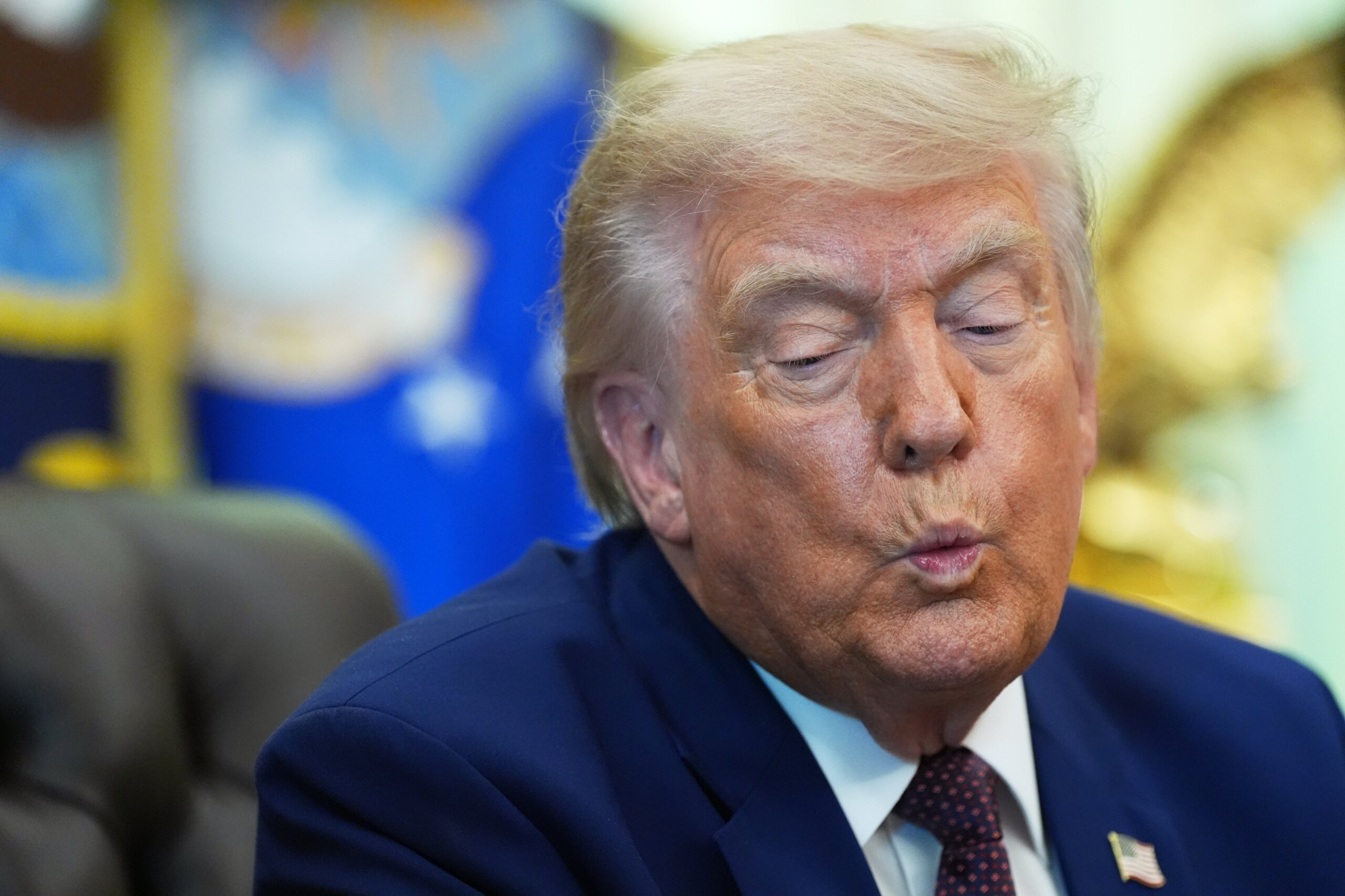
UNITED NATIONS (AP) — Iran and the United States reaffirmed their commitments to diplomacy at a contentious meeting of the U.N. Security Council on Tuesday, but the gap between the Trump administration and the Islamic Republic on a nuclear deal remains wide and deep.
The sixth round of negotiations between Washington and Tehran had been scheduled for soon after Israel’s 12-day war with Iran in June, during which the U.S. joined Israel in bombing Iranian nuclear sites. The talks were canceled, and in September Iran’s supreme leader, Ayatollah Ali Khamenei, rejected any direct nuclear negotiations with the United States.
But Iran’s U.N. Ambassador Amir Saeid Iravani told the Security Council that “Iran remains fully committed to principled diplomacy and genuine negotiations.” And said it’s now up to France, Britain and the U.S. “to reverse course and take concrete, credible steps to restore trust and confidence.”
He said Iran remains committed to the core principles of the 2015 nuclear deal aimed at preventing Tehran from developing nuclear weapons, in which Iran had agreed to limit its nuclear program in exchange for the lifting of sanctions.
President Donald Trump in 2018 pulled the U.S. out of the agreement between Iran and the five permanent members of the Security Council, plus Germany.
In a rare public exchange between diplomats from the two countries, U.S. Mission counselor Morgan Ortagus, a Trump ally and former State Department spokesperson, said, “The United States remains available for formal talks with Iran but only if Tehran is prepared for direct and meaningful dialogue.”
Ortagus said Trump extended “the hand of diplomacy” to Iran during both of his administrations.
“But instead of taking that hand of diplomacy, you continue to put your hand in the fire,” she said, looking directly at Iravani. “Step away from the fire, sir, and take President Trump’s hand of diplomacy. It’s extended to you.”
She stressed, however, that the Trump administration has been clear that there can be no enrichment of nuclear material inside Iran, a major point of contention.
Irvani said the U.S. insistence on zero enrichment was contrary to Iran’s rights under the 2015 deal and showed the U.S. was not pursuing fair negotiations. He said if France and Britain continued to side with the U.S., “diplomacy will be effectively destroyed.”
“Iran will not bow down to any pressure and intimidation,” Irvani said.
In September, the agreement’s three Western members — Britain, France and Germany — triggered a “snapback” mechanism to reinstate the sanctions that had been lifted, citing Iran’s failure to comply with the deal’s conditions.
As tensions between Tehran and Washington have increased, Iran has accelerated its production of uranium to near weapons-grade. The U.N. nuclear watchdog, the Vienna-based International Atomic Energy Agency, has reported that Iran has over 440 kilograms of uranium enriched up to 60% — a short, technical step away from weapons-grade levels of 90%.
France’s deputy U.N. ambassador Jay Dharmadhikari defended the “snapback” of U.N. sanctions, saying that since 2019 Iran has been in “increasingly flagrant violation” of all limitations designed to guarantee that its nuclear program remains peaceful. But he said the reimposition of sanctions does not mean the end of efforts to find a diplomatic solution.
Russia’s U.N. Ambassador Vassily Nebenzia shot back, telling the French envoy: “You failed miserably in your so-called diplomatic efforts to strike a deal on the nuclear issue with Iran, and you know it.”