Related stories
(Happy Birthday Carl Sagan)
Believe it or not, astronomical winter officially arrives Dec. 21 at 10:03 a.m. EST.
Astronomically speaking, this is the date and time of the Winter Solstice for the Northern Hemisphere and the Summer Solstice for the Southern Hemisphere. We will have our longest night of the year and starting on Sunday the sun will start climbing higher in the sky each day with an ever-increasing length of daylight.
The Earth’s seasons — Fall, Winter, Spring and Summer — are caused by the Earth’s orbit around the Sun and the 23 1/2 degree tilt of our planet’s axis. This causes the amount of sunlight falling on the Earth’s Northern and Southern Hemispheres to constantly change. The two hemispheres are always opposite in their seasons — our Fall is their Spring while our Summer is their Winter.
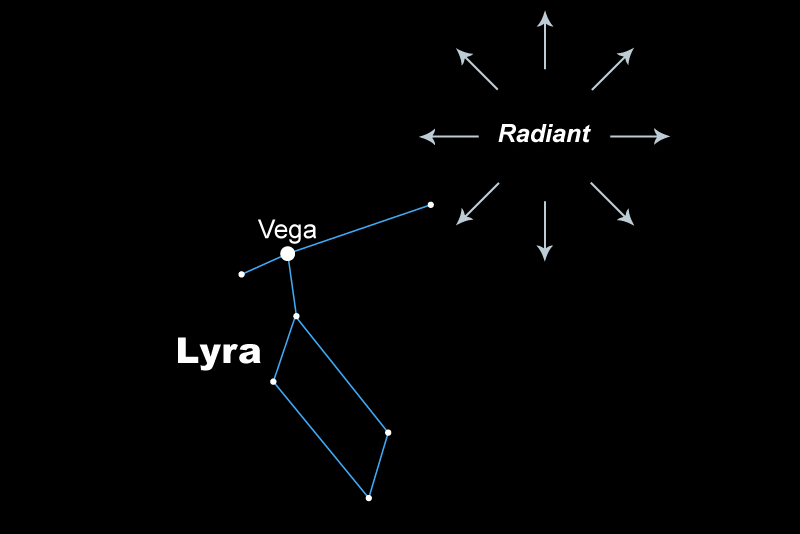
If you are out enjoying the longest night of the year, the Ursid Meteor Shower is predicted to peak on the night of Dec. 21 to dawn. There will be no moon to hamper the view.
Early Saturday morning, with my Odyssey Pro smart telescope, I imaged Comet 3I/ATLAS in just 24 seconds, which means it is bright. A follow-on exposure of 5 minutes imaged the comet nicely. 3I was approximately 169,150,000 miles away, traveling at approximately 125,000 mph. It was one day past the closest point of approach to Earth. I was mesmerized looking at this interstellar comet, awed at its billions of years of age, wondering where it had traveled in our galaxy among the stars and where it would wonder in the future. What a universe.
On Dec. 31, you will learn what my “Top Space Story for 2025” is and on Jan. 1, WTOP’s monthly “Eyes on the Skies” will kick off 2026.
Wishing everyone Happy Holidays and Joyous New Year.
Follow my daily blog to keep up with the latest news in astronomy and space exploration. You can email me at skyguyinva@gmail.com.