
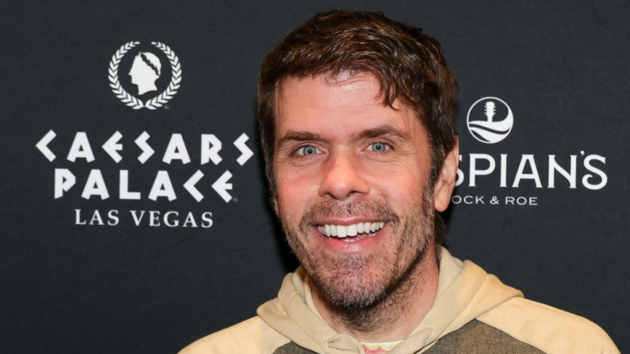
Perez Hilton taken to hospital after appearing to harm himself on livestream: Sheriff’s office

Perez Hilton attends the grand opening of Caspian’s Cocktails & Caviar at Caesars Palace on Jan. 10, 2025, in Las Vegas, Nevada. (Ethan Miller/Getty Images)

Celebrity blogger Perez Hilton was transported to a Miami area hospital this week, where he was said to be receiving medical attention after appearing to harm himself on a TikTok livestream video, law enforcement officials said Wednesday.

The update, which did not mention Hilton by name, comes after law enforcement in Miami responded to Hilton’s home on Tuesday after receiving multiple calls claiming Hilton was “livestreaming acts of self-harm on social media,” according to the Miami-Dade Sheriff’s Office.

“The individual has been safely recovered and transported by Miami-Dade Fire Rescue to a local hospital, where he is receiving medical attention,” the Sheriff’s Office said Wednesday. “The Miami-Dade Sheriff’s Office Crisis Response Unit and Licensed Mental Health Professionals are also on scene providing support and resources to the individual’s family.”

Hilton’s TikTok livestream on Tuesday allegedly appeared to show him harming himself with a knife, with a bloody torso and face.

The Miami-Dade Sheriff’s Office said in a previous statement Tuesday that deputies spoke with his family members on scene and “tactically disengaged while continuing to monitor the situation.”

“In many incidents involving a person experiencing a mental health crisis or actively harming themselves, deputies prioritize de-escalation by creating time, distance, and opportunities for communication,” the Sheriff’s Office said, adding this tactic can “reduce the likelihood of a suicide-by-cop encounter and minimize the risk of injury to the individual, deputies, and the public.”

Hilton’s representatives, Golden Artists Entertainment, released a statement Tuesday night, saying they were “aware of the concerning content circulating online involving our client.”

“At this time, we have not been able to make direct contact with him, despite our ongoing efforts to reach him. Our primary concern is Perez’s health and well being, as well as the well being of his family,” the statement added.

ABC News has reached out to TikTok for a comment.

If you or someone you know is struggling with thoughts of suicide — free, confidential help is available 24 hours a day, 7 days a week. Call or text the national lifeline at 988.

Copyright © 2026, ABC Audio. All rights reserved.

This photojournalist was sentenced to 15 years in an Iranian prison. She refuses to be silenced

(CNN) — “Don’t forget me.” This is the desperate plea of Iranian photojournalist Yalda Moaiery, who has spent more than two decades documenting life under the Iranian regime, including most recently the bloody crackdown on protests in January, the war with the United States, and a new campaign of repression currently underway.Moaiery, whose stories and photographs have appeared around the world, has now herself become a target and was sentenced to 15 years in prison earlier this month by an Iranian court with “activities in furtherance of the interest of the Zionist regime against national security.” She hopes to appeal the decision.Even as she prepares for the alarming prospect of years inside Iran’s notorious prison system, Moaiery told me she will continue to bear witness as long as she can. “I’m not willing to work as a person in that framework of propaganda,” she said. “This is the main problem, but all of my interviews, all of my photos…all, all the things that I did as a photojournalist…is like crime for them, and these are all of my charges, including talking with you.”I first interviewed Moaiery for CNN in February following anti-government protests which had spread across more than 100 cities, driven by anger over Iran’s economic turmoil and the government’s crackdown.She provided a rare eyewitness account from inside Iran, even as the regime attempted to block communications with the outside world. Through a choppy internet connection, she told me the scale of the protests had been unlike anything she had ever seen.“I’ve never seen such a crowd in these 25 years that I’m working as a photojournalist,” she said at the time. “It was incredible. A huge number of people, hundred [of] thousands of people, were on the street and groups of people like family members, all family members even the children, the babies, the elderly, everyone were there.”But as the government cracked down on the demonstrations, killing thousands according to estimates by human rights groups, Moaiery told me the people’s hope had disappeared.“Terrible – one the saddest time in our history,” she said at the time. “I’m 44 years old. I’ve never experienced such a feeling in my life. I’ve never been such a hopeless person in my life. And all the people that I’m talking to them, people in the streets…my friends everyone. People are so hopeless, so sad. And this is the main question that they are asking each other…what can we do?”After the US and Israel launched war on Iran in February, I spoke to Moaiery again. Though the government continued to block internet access, she managed to communicate that many Iranians she spoke to were hoping the conflict might bring down the regime.“People are supporting the war,” she said. “I have to be honest…people want the war to be continued because they tried many peaceful ways to change this regime.”Six months later, however, as the war drags on with no end in sight and economic and political pressure intensifies, I asked Moaiery if that initial hope for change remained. “No, not at all,” she said this week. “During the war…I knew many people that they were willing that this war continue, but it’s really changed these days and people are not thinking like this.”“Most of them [are] thinking about the economic situation,” she continued. “People cannot afford the very basic needs…the real war is here. The real war is the economy right now.”More broadly, she told me she and many people she interviewed believe the war has made the regime stronger. “Stronger, unfortunately,” she said. “We are facing…the worst version of the Islamic Republic that I haven’t seen….I am the child of the Islamic Republic. I was born some years just after the regime took the power, but I’ve never seen such a thing in my life.”“The very new version of the Islamic Republic is much more angry, much more tough,” she said.Moaiery was experiencing that toughness even as we spoke. She said that hours before our latest interview, Iranian authorities threatened to raid her home if she spoke to the international media again.“They just [threatened] me hours before that if you talk again with someone – of course they didn’t mention your name – but if you talk to someone about this case, we are coming to your home again and they’re [going to] raid your home again and we’re [going to] take your cell phones,” she told me.Yet, once again showing her now familiar courage and resolve, she insisted, “I do not care. I mean, of course I’m scared of the things that’s [going to] happen. Fifteen years is a lifetime, but… this is the risk that I was accepting in my whole life to tell the truth, to show the truth, to be an independent journalist, and photojournalist.”“I’m not giv[ing] up. I do not have any regrets,” she added.We at CNN took the charges against Moaiery very seriously. Prior to our most recent interview, I asked her if she was worried that speaking to me would make her situation worse. She said, on the contrary, she believed “it will help definitely,” adding, “We have to have this interview.”Moaiery’s view is not uncommon. Others imprisoned by the Iranian regime, including journalists Jason Rezaian and Roxana Saberi and businessman Siamak Namazi, have said that public attention to their cases, including coverage and interviews in the international media, helped apply pressure to eventually win their release.That remains her hope as she now faces the daunting prospect of a lengthy imprisonment.“As a journalist, as an independent journalist, we do not have any kind of weapon,” she told me. “We have only the media and truth, and this is the thing that I always try to keep and I think when I inform the people about what is happening in my country, what is happening about me or my case.”“It will help to the other journalists all around the world who are living under the authoritarian…regime[s],”she continued. “I think it’s like a global solution for all of us, and of course it will help.”It was then that she added those powerful words –– “Don’t forget me” –– to which I responded, “We won’t forget you.”The-CNN-Wire™ & © 2026 Cable News Network, Inc., a Warner Bros. Discovery Company. All rights reserved.
Read Next Story