
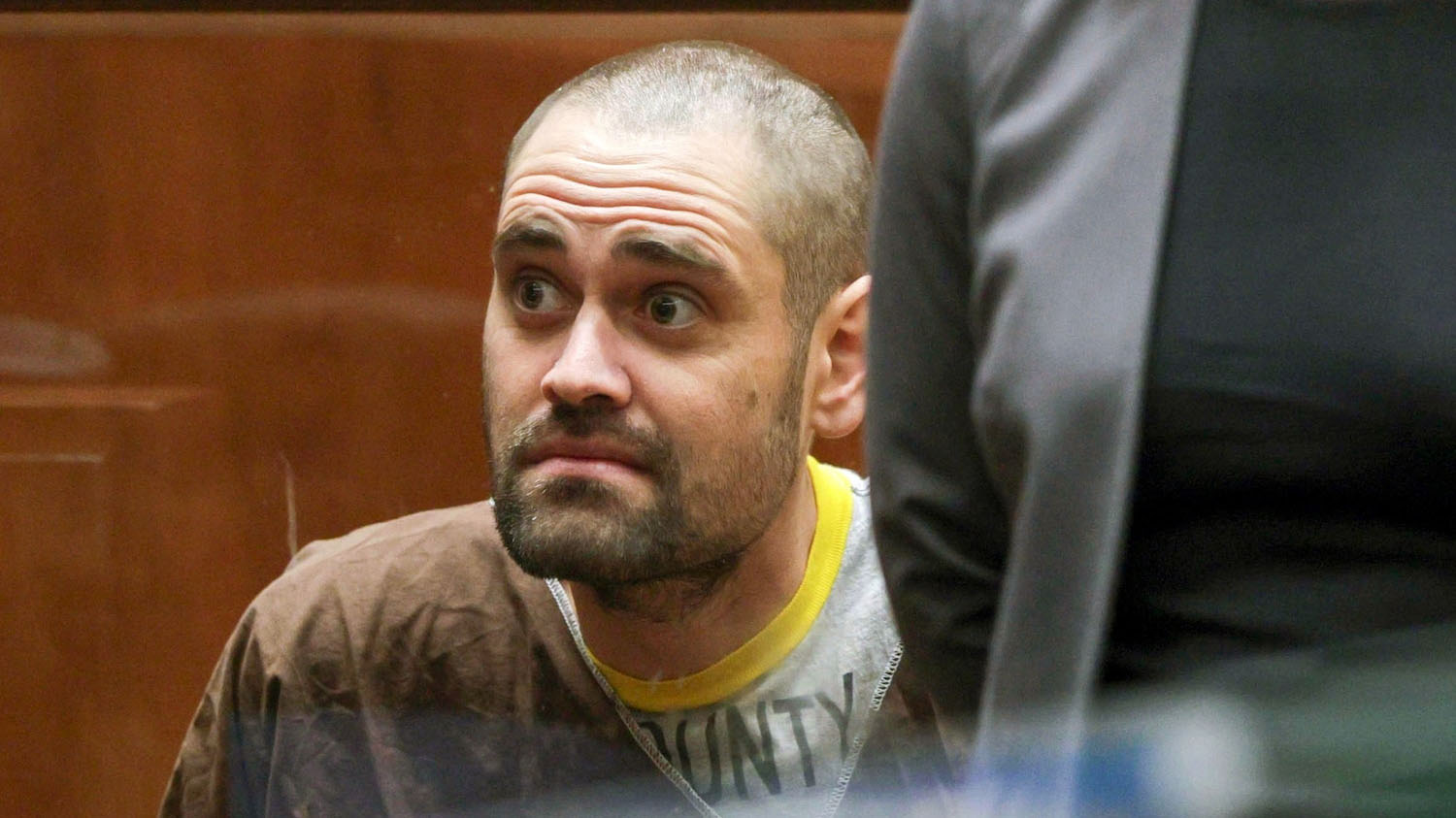
Nick Reiner indicted on charges alleging he murdered parents Rob and Michele Reiner

Nick Reiner appears during his arraignment in Los Angeles County Superior Court on Feb. 23, 2026, in Los Angeles. (Chris Torres/Pool/Getty Images)

(NEW YORK) — Nick Reiner has been indicted on charges alleging he murdered his parents, renowned director Rob Reiner and his wife Michele Reiner, by means of lying in wait, prosecutors announced Wednesday.

The indictment, which was returned on July 20 and unsealed Wednesday, charges Reiner with two counts of murder with the special circumstance allegations of multiple murders and murder by means of lying in wait, according to the Los Angeles County District Attorney’s Office. Reiner also faces a special allegation that he used a dangerous and deadly weapon, a knife, the office said.

Nick Reiner, 32, pleaded not guilty to the indictment on Wednesday. He remains held on no bond and is next scheduled to appear in court for a pretrial hearing on Sept. 15.

Rob Reiner and Michele Reiner were found stabbed to death in their Brentwood home on Dec. 14, 2025. The night before their deaths, Nick Reiner — who had been living on his parents’ property at the time — got into an argument with Rob Reiner at a holiday party and was seen acting strangely, sources told ABC News in December.

Nick Reiner was arrested and initially charged with two counts of murder with the special circumstance allegation of multiple murders, as well as faced a special allegation that he used a dangerous and deadly weapon.

The indictment, which added a special allegation of lying in wait, means the case will no longer have a preliminary hearing that had been scheduled to occur in the coming weeks.

“This was a profound betrayal by someone who was loved and trusted by the very people he is accused of killing,” Los Angeles County District Attorney Nathan Hochman said in a statement. “The indictment unsealed today also adds a special circumstance allegation that the defendant committed the murders by means of lying in wait. We hope that by having a grand jury return an indictment in this case it will bring us one step closer to a trial and achieving justice.”

If convicted as charged, Reiner faces death or life in state prison without the possibility of parole. The district attorney’s office said it has not yet made a decision on whether to seek the death penalty.

This is a developing story. Please check back for updates.

Copyright © 2026, ABC Audio. All rights reserved.

A stuntman’s body was changing. It took nearly a decade to find out why

When Ray Kohn started feeling pain in his knees and elbows in 2015, he attributed it to his work as a stunt driver and mechanic.But as the years went on, he began to notice his body changing in unusual ways: His head grew so much that he needed a larger helmet, and his hands became so big he had to have his wedding ring resized three times. His voice changed. His teeth shifted in his mouth, creating an underbite. He gained over 100 pounds despite his extremely active lifestyle, and he was constantly hungry no matter what he ate. Meanwhile, the pain in his knees and elbows continued. Cortisone shots, meant to reduce inflammation and pain, never lasted long. In 2019, he had the first of three knee surgeries. Later, he'd have operations on his elbow. Nothing worked. No doctor he saw had an answer — even as knee pain forced him to cling to the wall to walk. "I was falling apart, and I didn't know why," Kohn, now 47, said.Looking at videos from past stunt work showed the extent of the changes."I was like 'Look how much I changed. I'm not growing old. I'm actually transforming.' Why is this happening?" Ray Kohn. Ray Kohn In the fall of 2022, Kohn went to a dermatologist after noticing lines form on his head. The doctor asked to see his hands and commented on their size. Then, she looked at his tongue, eyebrows and other facial features, and sent him for blood tests that found he had abnormally high hormone levels. Those results sent him to see Dr. Divya Yogi-Morren, an endocrinologist with Cleveland Clinic who specializes in pituitary diseases."I went into the clinic room and I took one look at him and I already knew what he had, just from looking at him and shaking his hand," Yogi-Morren told CBS News.She fetched her coworker, Cleveland Clinic pituitary neurosurgeon Dr. Varun R. Kshettry, with whom she usually sees patients, because she knew his expertise would also be needed.Yogi-Morren and Kshettry said Kohn had the clinical features of a disease called acromegaly, a rare illness that causes the body to produce too much human growth hormone. The disease is often caused by a tumor on the pituitary gland, and brain surgery is the first line of treatment. Wrestler Andre the Giant, who died of congestive heart failure at 46, also had the condition, which causes cardiac complications. "They said 'If you don't get this out of your brain, you're going to die. This is going to kill you,'" Kohn recalled. "And the first thing that I asked was 'Can I still stunt-jump after this surgery?'" What is acromegaly, and how is it treated? Acromegaly is a hormonal condition that occurs when you have too much human growth hormone, said Dr. Alice Levine, an endocrinologist at Mount Sinai who studies acromegaly. Levine was not involved in Kohn's care. People need large amounts of the hormone as a child, but adults need less of it. Excess human growth hormone is usually caused by an otherwise benign tumor on the pituitary gland. An MRI found that Kohn had such a tumor: His scan found a nine-millimeter mass, nearly the same size as the 10-millimeter gland.In a person with acromegaly, human growth hormone also goes to the liver and binds to receptors there, Levine said. That process elevates a different hormone, called IGF-1, which regulates growth and metabolism in the body. Those two hormones combined resulted in the symptoms Kohn experienced. Parts of the body, especially bones, just keep growing. A person with acromegaly will also experience fluid retention, soft tissue swelling and other internal issues like pre-diabetes, cardiovascular complications and respiratory issues like sleep apnea. Other hallmark symptoms include the embossed lines in the head, large hands and growth between the teeth — all symptoms that Yogi-Morren and Kshettry immediately recognized in Kohn. "He had all the symptoms," Yogi-Morren said. "He had a symptom in almost every system." It took nearly 10 years for Kohn to be diagnosed and treated for acromegaly. All three doctors told CBS News that this isn't unusual. Yogi-Morren estimated that there's usually a "diagnostic delay of about six to 10 years." Kohn said he was relieved to finally have a doctor who could tell him what was wrong. Acromegaly can be hard to diagnose because of the variety of symptoms, Kshettry said, and Yogi-Morren said patients might not realize just how much their bodies are changing.A 3-D illustration comparing a man with acromegaly (left) and the same healthy man (right).
Read Next Story