
Washington — The U.S. on Thursday imposed fresh sanctions on 15 individuals and entities based in Ecuador, along with 10 vessels, for their roles in an alleged maritime cocaine trafficking operation.
According to the Treasury Department, the network — tied to Ecuadorian groups Los Choneros and Los Lobos, both designated by the U.S. as foreign terrorist organizations — used a fleet of seemingly legitimate fishing vessels operating out of Manta, Ecuador, to move thousands of kilograms of cocaine each month.
The department said the network supplies Mexican cartels with cocaine that is then sold in the U.S.
The vessels allegedly refueled and resupplied smaller “go-fast” boats carrying the drugs north through the eastern Pacific Ocean toward Mexico, where cartels like the Sinaloa cartel and Cartel de Jalisco Nueva Generación took over distribution to the U.S.
“Working alongside our law enforcement partners, we will continue to disrupt the cartels’ drug trafficking operations and protect our borders,” Treasury Secretary Scott Bessent said in a statement.
Among those sanctioned are members of the Mero family, who the Treasury Department said ran the fishing company Arcasdenoe S.A. and coordinated fuel, food and medical support for cocaine shipments. Several other Ecuadorian nationals accused of coordinating tens of tons of cocaine per month and controlling a half-dozen additional front companies were also named.
Ten vessels were identified as allegedly providing logistical cover, detection avoidance and, in one case, direct cocaine transport as part of the scheme.
The designations build on the State Department’s September 2025 terrorist designations of Los Choneros and Los Lobos, and on earlier actions by Treasury against those groups and CJNG.
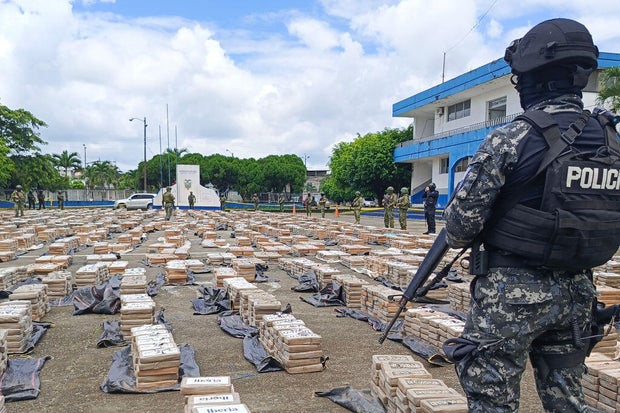
DANIEL VITE/AFP via Getty Images
Officials tied the announcement to Operation Pacific Viper, a U.S. Coast Guard-led counternarcotics campaign launched in August 2025 that Treasury said has seized more than 225,000 pounds of cocaine in the eastern Pacific through June 2026.
Under the new sanctions, any U.S.-based assets belonging to the designated individuals and entities are frozen, and U.S. persons are generally barred from doing business with them. Treasury’s statement noted that violations can carry civil or criminal penalties, and that foreign financial institutions facilitating transactions for those sanctioned under one of the relevant executive orders could face secondary sanctions.
Treasury said the action reflects coordination among the Homeland Security Task Force, the DEA, U.S. Southern Command, Naval Intelligence and the Coast Guard, and is one of nearly 30 such actions targeting cartel networks since early 2025.
The State Department said the trafficking operations “generate billions of dollars annually for cartels responsible for a significant share of the deadly drugs flowing into our communities.”
“The United States will continue to use all our tools to dismantle the cartels profiting at the expense of American lives,” the department said.
Earlier this year, U.S. commandos participated in a joint mission with Ecuadorian troops aimed at dismantling a suspected criminal hub linked to Los Choneros.
In 2024, the U.S. deemed Los Lobos the largest drug trafficking ring in Ecuador and said the gang “contributes significantly to the violence gripping the country.”