
Key Republicans say they’ll support Blanche for AG after he rescinds ‘Anti-Weaponization Fund’

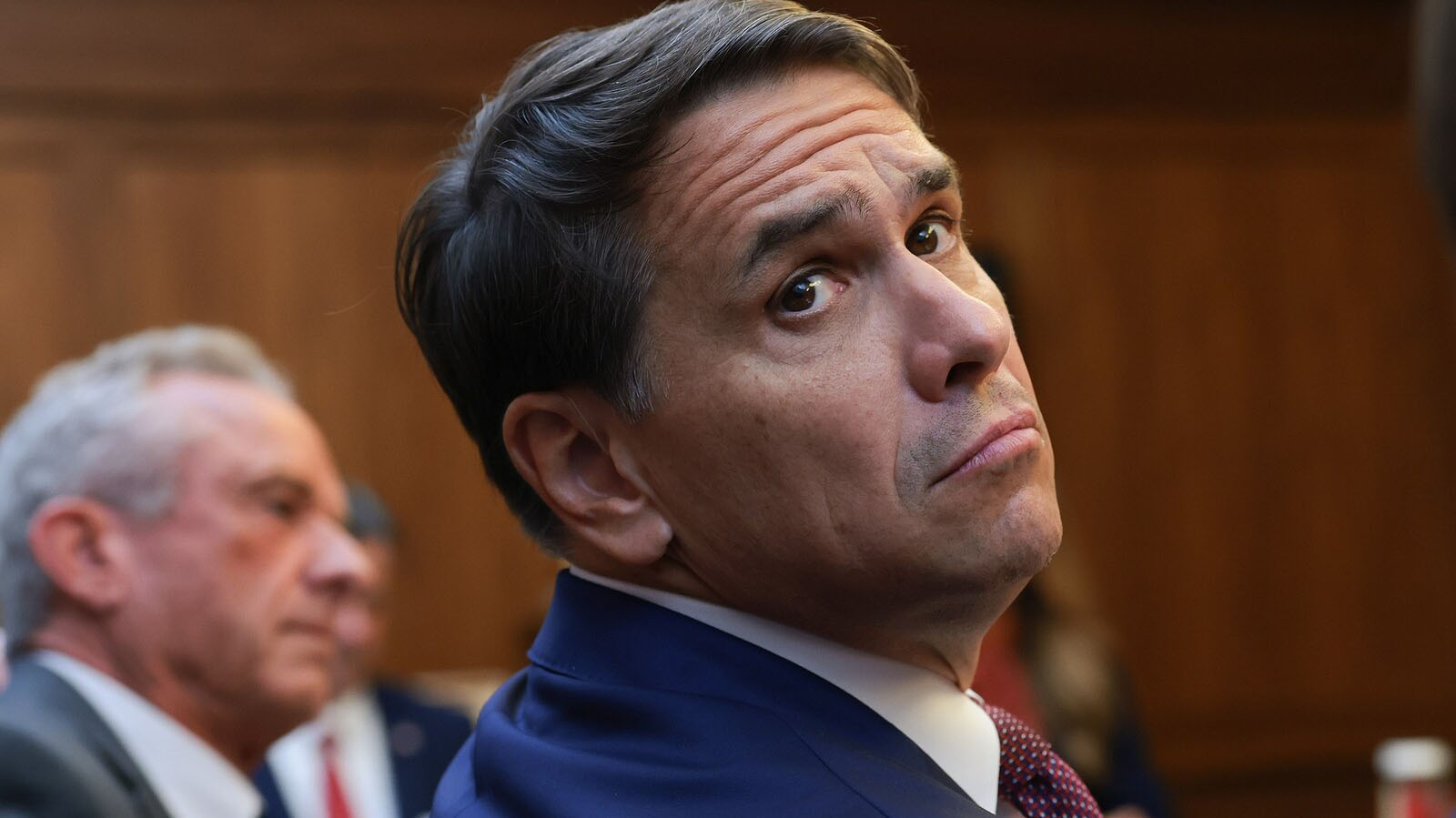
Acting Attorney General Todd Blanche attends a Cabinet Meeting at Camp Davaid, the presidential retreat, July 31, 2026, in Camp David, Maryland. (Anna Moneymaker/Getty Images)

(WASHINGTON) — Under pressure from two Republican senators blocking his confirmation as the next attorney general, Todd Blanche said he is formally rescinding his establishment of President Donald Trump’s so-called “Anti-Weaponization Fund.”

Blanche posted two separate orders on X Sunday night, one rescinding the nearly $1.8 billion fund, as well as another clarifying language regarding the scope of an arrangement that had shielded Trump from facing further IRS audits of his past tax returns.

The move prompted Republican Sens. John Cornyn and Thom Tillis, who had been holding up Blanche’s nomination, to announce Monday that they are ready to move forward.

The Senate Judiciary Committee is scheduled to vote on Blanche’s nomination on Tuesday at 9 a.m. Blanche will likely need the support of every Republican on the committee to advance to the floor.

He is expected to be voted out of committee, setting up a final confirmation vote later this week.

“We are pleased that the Department of Justice has issued a formal order terminating the anti-weaponization fund,” Cornyn and Tillis said in a joint statement. “Additionally, the Department has acknowledged in a binding written order that the audit settlement is limited to the plaintiffs and the scope does not extend beyond the defendants in the lawsuit, the IRS and the Treasury, addressing concerns that multiple of our Republican colleagues share.”

“We want to express our gratitude to Mr. Blanche and his staff for working with us on this, and we look forward to voting to advance his nomination out of the Senate Judiciary Committee soon,” they said.

As part of Trump’s settlement with the IRS in his $10 billion lawsuit against the agency, the DOJ issued an addendum, signed by Blanche in his role as acting attorney general, that would bar the government from continuing any existing audits of tax returns filed by Trump, his family and their companies.

Cornyn said last week that he did need the DOJ to modify the language of the settlement, but that he wants written documentation that the settlement won’t provide tax audit immunity that extends to affiliated organizations for Trump and his family that weren’t part of the lawsuit.

Blanche’s post on Sunday is a signal that he had secured approval from Sens. John Cornyn and Thom Tillis, who had been key holdouts on his nomination. The GOP senators had been working behind closed doors and in private talks with Blanche and his team to craft statements they’d find acceptable to alter the language of the controversial settlement. 

“Sen. Cornyn has reached an agreement with the Department of Justice, which will be issuing a formal order permanently terminating the anti-weaponization fund and making clear in a binding written document that the scope of the audit settlement is limited to only the plaintiffs, including the President, and the IRS,” Cornyn spokesperson Natalie Yezbick said in a statement late on Sunday.

Some legal experts and even MAGA supporters of the fund, however, have already begun questioning whether it precludes DOJ from giving mass payouts to pro-Trump rioters or the clarification that Cornyn had initially sought to the IRS immunity clause.

The order dealing with IRS immunity notably states that DOJ would interpret the order to mean that it only applies to plaintiffs in Trump and his son’s initial $10 billion lawsuit against the IRS — but that interpretation doesn’t appear to be similarly binding on Trump’s personal lawyers or his family.

And some previous vocal supporters of the so-called “Anti-Weaponization Fund” are already cheering on the language of the order rescinding it — noting that there’s nothing specifically barring DOJ from payouts to pro-Trump supporters who may have attacked police during the Jan. 6, 2021, attack on the Capitol.

Blanche’s orders on Sunday come after Trump floated the possibility of temporarily withdrawing Blanche’s nomination to permanently lead the Department of Justice because of the resistance from the two outgoing Republican senators.

Both senators’ terms will end in January. Cornyn lost a primary battle in Texas earlier this year after Trump endorsed his opponent, Ken Paxton. Tillis announced last year he would not seek reelection after Trump threatened to field primary challengers.

Withdrawing Blanche’s nomination is a decision that would have no consequence in terms of Blanche leading the DOJ.

Blanche can continue to serve as acting attorney general. Acting department officials can serve in the role for 210 days, according to the Federal Vacancies Reform Act — however, that resets if a nomination is withdrawn.

Copyright © 2026, ABC Audio. All rights reserved.

Duane Davis said he’d never told anyone the story. Jurors just heard him walk police through the night Tupac was killed

Las Vegas (CNN) — Earlier this week, the defense attorney representing Duane Davis said during opening statements that his client’s public statements were “bullsh*t” — but an interview with police aired in court and Davis’ own memoir seem to tell a remarkably consistent story.Davis, who is accused of orchestrating Tupac Shakur’s murder during a September 1996 visit to Las Vegas, spent a majority of court Thursday listening to a younger version of himself recount the events leading up to the shooting and the killing itself during a 2008 recorded interview with law enforcement. His version of events in the recording sounds strikingly similar to the account published in Davis’ 2019 memoir, “Compton Street Legend.”The hours-long interview — part of a proffer agreement related to drug charges — was at times filled with jovial back-and-forth between Davis, his attorney and investigators, with the former South Side Compton Crip recounting some of the highest points of his power and influence.“Nothing you say today will be used against you,” Greg Kading, who was a Los Angeles Police Department detective, told Davis in the recording.But prosecutors say Davis’ decision to write his book and speak openly about his story in interviews effectively negated the deal, and the judge in his trial agreed to allow the recording to be played to the jury.After the notorious fight between Davis’ nephew, Orlando Anderson, and people associated with Death Row Records – Shakur’s label that was co-founded by Marion “Suge” Knight – at the MGM Grand, Davis and his crew headed to Knight’s Las Vegas Club 662, staying there briefly before giving up on finding their targets, Davis said in the recorded interview.While driving after a liquor store pickup, Davis recounts hearing fans yell on the street, “Tupac! Tupac! Tupac!” and seeing the rapper hanging out the window of a car while waving, he said in the recording.The jury was listening intently and looking at the screen as the story of the shooting unfolded, more engaged after already listening to hours of the recording.Davis’ car did a U-turn to go back around and drive up to the car Shakur and Knight were in, Davis said. Terrence Brown was driving, with Davis in the passenger’s seat, while Deandre Smith was on the left passenger side and Anderson, also known as “Baby Lane,” was on the right passenger side, Davis told investigators.The driver pulled up on the passenger side of Shakur’s car, and Davis told investigators, “If we would have been on my side, I would have blast.” But since the car was on the other side, Davis said he handed the gun to Smith in the back seat.Davis said Knight looked over at him during the shooting, and the investigator asks him why.“I don’t f**king know,” Davis said in the recording, adding he had known Knight since they were 7 or 8 years old. Davis thought Knight was killed in the shooting because a bullet struck him in the back of the head, he said in the recording.Shakur apparently tried to jump in the backseat while Knight was ducking out of the way, Davis continued. He estimated that about six bullets were shot.As the recording played, with Davis recounting seeing the ambulance that was carrying the rapper, Shakur’s sister clenched her left hand against her mouth. A family friend moved to put their arm around her.After they made their getaway, Davis’ group dumped their car at the nearby Carriage House, leaving the gun on a tire, Davis said in the recording, and went back the next day to pick it up.Investigators questioned why the group left the gun with the car, saying it didn’t make any sense, and Davis retorts in the recording, “You want the truth, or you want me to tell you a lie? … Okay, we left a f**king gun on the car, dude.”“Doesn’t it feel good, man, to get it off your chest?”“I ain’t never told nobody that story,” Davis said in the recording after detailing his plan to go after Shakur.“Doesn’t it feel good, man, to get it off your chest?” one officer says.“Oprah’s going to be, like, ‘Mr. Davis, we really appreciate it,’” Los Angeles Police Department detective Daryn Dupree, who testified in court Wednesday, jokes.“…and then he’ll be like, ‘Read my book,’” another officer chimes in.The recorded interview shared in court Thursday and Davis’ book contain two major differences: how the gun got in the back seat, and who instigated the shooting.In Davis’ book, he wrote that when his crew went to the liquor store, he took the gun and “tossed it in the backseat.” Later, when Davis’ car pulled up to their opponents, and he locked eyes with Knight, Davis says “Tupac made an erratic move and began to reach down beneath his seat.”“Pac pulled out a strap, and that’s when the fireworks started. One of my guys from the back seat grabbed the Glock and started bustin’ back,” the book reads.In the police recording, he said he handed the gun to Deandre Smith, and that Anderson “leaned over on the window, he rolled down the window, popped.” Davis doesn’t mention to police whether Shakur fired or had a gun.The recording revealed more than just details about the night of the shooting, with Davis going into the inner dynamics of the South Side Crips and the gangsters associated with Death Row Records, including allegations that Sean “Diddy” Combs offered Davis a million dollars to kill Shakur and Knight. CNN has reached out to Combs’ representatives for comment on the alleged bounty.Court will continue Friday morning and prosecutors are expected to play another recording from 2009.CNN’s Alea Motwane and Josh Campbell contributed to this report.The-CNN-Wire™ & © 2026 Cable News Network, Inc., a Warner Bros. Discovery Company. All rights reserved.
Read Next Story