
Judge to press DOJ to explain Epstein files redactions, withheld materials related to Trump

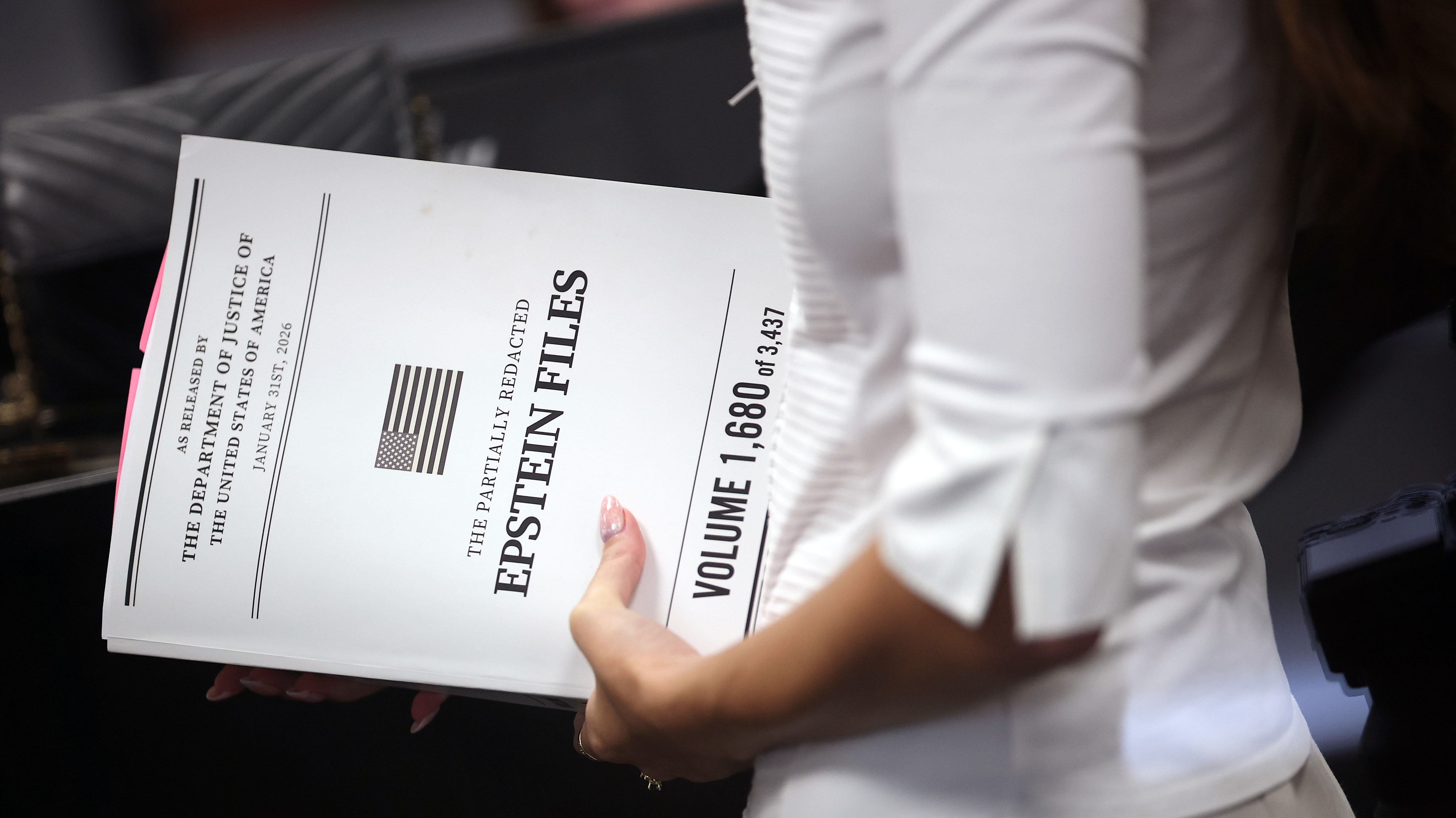
A survivor of Jeffrey Epstein holds a copy of files on July 29, 2026, in Washington, D.C. The Epstein survivors attempted to meet with Sen. Cornyn and Attorney General nominee Tod Blanch over the Department of Justice’s handling of the Epstein files. (Kevin Dietsch/Getty Images)

(WASHINGTON) — A federal judge on Thursday is set to press lawyers with the Department of Justice to explain why some materials from the Epstein files were withheld from the public. 

U.S. District Judge Emmet Sullivan scheduled the hearing in a lawsuit filed by an independent journalist who sued over what she alleged were improper redactions and withheld materials from the files on Jeffrey Epstein, the late convicted sex offender.

In June, Sullivan concluded that the redactions and withheld materials violated the Epstein Files Transparency Act. He ordered the DOJ to either turn over the materials or explain why the materials needed to be withheld.  

“The Attorney General has conceded that he is in violation of the Act,” Sullivan wrote in his ruling. 

In recent weeks, the DOJ has sought to justify the redactions, rather than turn over the materials. Unsatisfied with some of those reasons, Judge Sullivan set Thursday’s hearing to press DOJ lawyers about the release of the Epstein files. 

Specifically, the judge said the DOJ has not provided documentation to prove that redactions were made to some files because “[lawyers for] victims or potential victims … have contacted the government and requested that the persons be treated as victims.”

He also raised concerns that the DOJ withheld handwritten notes from an interview with a woman who made unsubstantiated allegations against President Donald Trump, who has denied any wrongdoing. 

The DOJ has argued that the handwritten notes are “substantially similar to” the FBI reports of the interviews that were publicly released, and that the notes risk exposing victim information. However, Sullivan noted the Epstein Files Transparency Act does not have an exception for “substantially similar” or duplicative documents, and that the DOJ has released similar versions of other documents.

“The Defendant shall be prepared to explain why the handwritten notes cannot be redacted manually, or why the redactions cannot be accomplished in another way,” Sullivan wrote. 

The DOJ has argued that all the redactions were lawful and asked to delay the case for two months. 

“The Department has not knowingly violated, nor has it ever acknowledged violating, the EFTA as it continues working to comply with statutory requirements,” DOJ lawyers argued in a court filing. 

Copyright © 2026, ABC Audio. All rights reserved.

Pentagon officials considering firing Stars and Stripes publisher, sources say

Washington — Pentagon officials have discussed firing the longtime publisher of Stars and Stripes before his scheduled retirement, U.S. officials told CBS News, as the Trump administration strategizes an overhaul of the military news outlet partly funded by American taxpayers.Max Lederer, who has served as the publisher of Stars and Stripes for 19 years, this week announced to colleagues his decision to retire on Sept. 30, citing fundamental differences with the Trump administration. Editor-in-Chief Erik Slavin has spoken publicly, including to CBS News, about disagreements with Pentagon leaders. It was unclear when a decision on the news outlet's leadership would be made. Spokespeople for the Defense Department didn't immediately comment. The outlet, which receives about 65% of its funding through the Defense Department, has long prided itself on its editorial independence from the public affairs apparatus at the Pentagon. Chief Pentagon spokesman Sean Parnell has posted on social media about "bringing Stars and Stripes into the 21st century," writing in January: "We will modernize its operations, refocus its content away from woke distractions that syphon morale, and adapt it to serve a new generation of service members."CBS News has reported that an average of 1.4 million people see Stars and Stripes each day — mostly online, although it puts out a print version overseas for service members in remote places where access to the internet can be unreliable.Two U.S. officials said public records show readership has declined since peaks during World War II, the Cold War and the Vietnam War.Print delivery slid from about 7 million annual copies in 2019 to 6.2 million in 2024, and unique visitors to stripes.com fell about 30% in that period, from 20 million to 14 million a year, records show.Pentagon staff said there are stacks of newspapers in the building that seem to go untouched, containing articles that service members can access online from other outlets.Another complaint has been that the newspaper has been mostly an aggregator of news instead of providing predominantly original news. Subscription services for the fiscal year had been projected to be about $411,000, records show. The outlet no longer uses wire services such as Reuters or The Associated Press. Parnell said in January that the outlet would "focus on warfighting, weapons systems, fitness, lethality, survivability, and ALL THINGS MILITARY. No more repurposed DC gossip columns; no more Associated Press reprints."Asked for comment, Lederer in an email to CBS News on Wednesday said he wasn't comfortable participating in an interview before he leaves his job. In his note to staff on Tuesday, which was obtained by CBS News, Lederer wrote: "It has become clear that my philosophy of leadership, and my understanding of the value and mission of Stars and Stripes, differ in fundamental ways from the direction the leadership of the Department of Defense has for the organization."He said that until the end of September, "I will do everything I can to make sure the transition is smooth for each of you."Over the years, the newspaper has reported on failures inside the military itself, including deteriorating housing, problems in the barracks and allegations of neglect at military child care centers. It has also published writings critical of military policies and leadership. Gen. Dwight D. Eisenhower during World War II famously defended the newspaper and wanted it to be "free from propaganda" and influence from military brass, according to a December 1988 GAO report to Congress examining allegations of military censorship of Stars and Stripes. Recently, Stars and Stripes has provided coverage of the war in the Middle East and what it means for service members. It was one of the first outlets to report on the families of sailors on the USS Abraham Lincoln aircraft carrier confronting the acting Navy secretary about the nearly nine-month deployment.
Read Next Story