
The Trump administration is trying to deport a self-described CIA spy who infiltrated al Qaeda after 9/11 and won his permission to live in the U.S. by helping convict terrorists.
Immigration and Customs Enforcement agents arrested Blerim Skoro, a Kosovo-born father of three, outside an immigration office in New Jersey where he was renewing his paperwork earlier this month.
His lawyers have filed in federal court to halt his deportation, saying Skoro, 55, was promised residency after years of significant work as a “CIA agent.”
Skoro, a Staten Island, New York, cab driver who has an American wife and children, was granted a deferral of removal in 2022 due to the risk of his capture and torture by terrorists if he were deported.
The ruling was due in part to Skoro’s help securing the arrests of al Qaeda, al Shabaab and Hezbollah members, his lawyers claim.
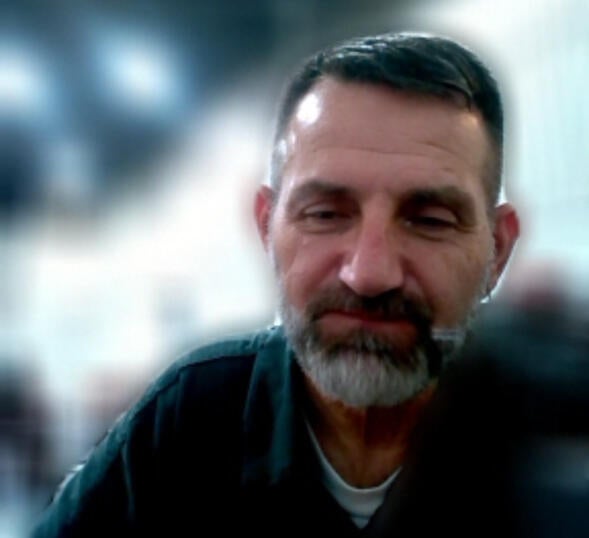
Susan Skoro
Now he fears that the government, for which he claims to have put his life on the line, is going to send him back to Kosovo — he says into the hands of those who want him dead.
“I never thought they were going to betray me like this,” he told CBS News in a phone interview from Elizabeth Detention Center, in New Jersey. “Please, if I die, I should die in this country so my kids can bury me.”
Skoro’s relationship with U.S. intelligence officials began when he was jailed for trafficking drugs in 2000, FBI documents show.
He says he was struggling to make ends meet supporting his children and refugee parents after the family fled the Kosovo conflict in the 1990s. He got caught transporting heroin overseas for an Albanian criminal gang.
Raised a Muslim, he was welcomed by a group of Islamic radicals in a Manhattan prison where he began serving his drug trafficking sentence, FBI files that list him as a confidential informant show. After 9/11, he says the CIA approached him to exploit the connection.
While incarcerated at FCI Allenwood, a federal prison in Pennsylvania, between 2002 and 2006, Skoro says he gleaned intelligence for the FBI on terrorists including Faysal Galab of the Lackawanna Six, which federal agents described as America’s first homegrown terrorist sleeper cell; Randall “Ismail” Royer of the Virginia jihad network, convicted of organizing violence against U.S. troops overseas; and Hezbollah member Junuz Fuaz.
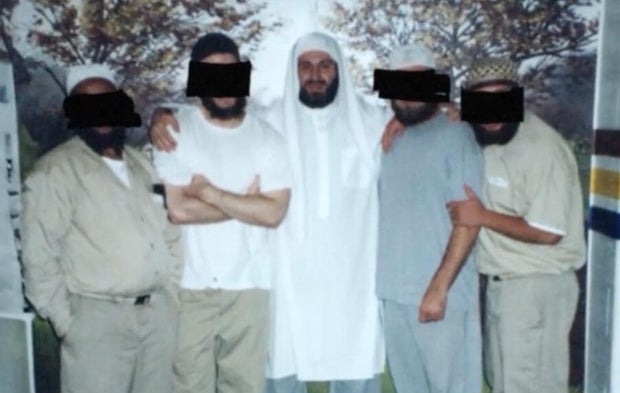
“The Accidental Spy,” Cambridge Picture Company
Heavily redacted FBI records from 2004 obtained by CBS News list Skoro as an informant in an investigation targeting Osama bin Laden, at times providing “actionable” and “reliable” information including details of a “Syrian training camp.”
Skoro believed he would receive a reduced sentence for his work, but was instead deported to Kosovo in 2007 and claims he was told by the CIA to infiltrate al Qaeda from the Balkans — only returning to the U.S. in 2014, he said in a previous legal declaration for his immigration case.
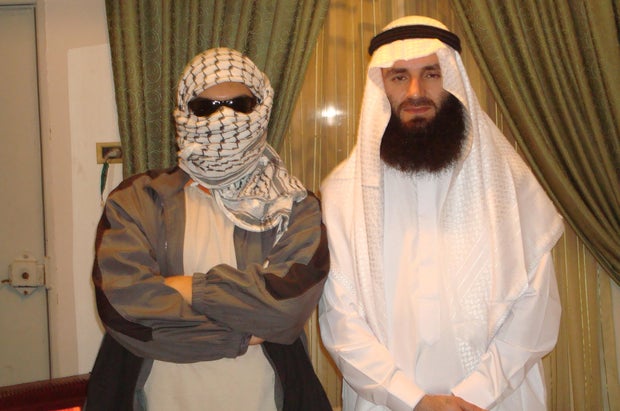
“The Accidental Spy,” Cambridge Picture Company
Skoro claims he was undercover in the terrorist group from 2007 to 2009 for the CIA, traveling to an ISIS camp in Syria and working in Lebanon, Jordan, Pakistan and Egypt as well as his home country.
Photos and videos he took during that time show him in apparent Middle Eastern settings with known terrorists. The footage was used in a 2024 documentary, “The Accidental Spy,” and in an episode of The Shawn Ryan Show on YouTube last year.
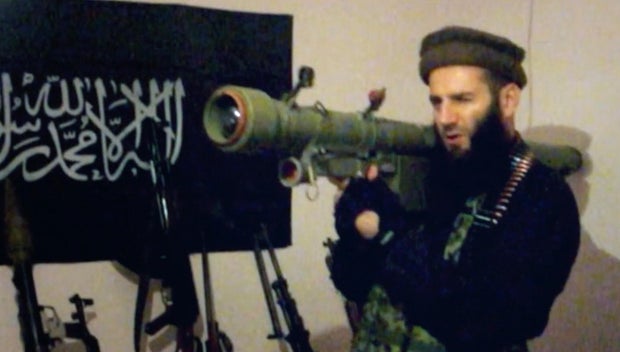
“The Accidental Spy,” Cambridge Picture Company
He appears to have been directly involved in the arrest of Brooklyn terrorist Betim Kaziu, who was sentenced to 27 years in prison after attempting to buy weapons for the Somali terrorist group al Shabaab to target U.S. troops stationed abroad.
In his December 2020 declaration, Skoro wrote that he secretly called his CIA handler to give his location while hosting Kaziu at his Kosovo apartment, leading to the terrorist’s arrest with a rifle, ammunition and grenades in July 2009.
Skoro shared emails with CBS News between him and a man he claims was his CIA handler, “Chris,” dated Sept. 24, 2009, which say: “I was very glad to see our friend Kaziu is now back in the States.” The CIA did not respond to a request for comment.
Skoro claims he helped intercept shipments of uranium to Kosovo, preventing a possible “dirty bomb” plot, and that starting in April 2015, after he was back in the U.S., he offered more intelligence to the FBI and New York Police Department when he says he was contacted by an ISIS recruiter.
Skoro’s attorney, Joshua Dratel, told CBS News that for the past decade his client has led a “completely law-abiding, productive life with his family after a harrowing experience that he performed for the United States with great courage and skill.”
His habeas corpus petition filed in federal court after his arrest earlier this month says he “worked for the CIA, the Federal Bureau of Investigation and the United States Drug Enforcement Agency over the course of nearly a decade,” and claims he performed “devoted and heroic work as a United States law enforcement agent.”
His wife, Susan Skoro, was with him at the Elizabeth, New Jersey, immigration office when he was arrested on Aug. 3.
She said when he checked in at the front desk, ICE officers descended on him, bundled him into a room, then took him away in a car.
“They betrayed him. He’s done his time. He almost lost his life, and nobody gives a s**t. He deserves a pardon,” she said.
“He can’t get deported anywhere safely. We’re always looking over our shoulders.”
The Kosovar first came to America in 1994 claiming asylum after deserting the then-Yugoslav Army, having witnessed rape and child murder by soldiers, he said.
After years of self-described espionage on behalf of the U.S., Skoro says his cover was eventually blown and he was shot in the leg during an assassination attempt in Kosovo, prompting him to flee and reenter the U.S. illegally via Canada in 2014.
He fell into ICE’s hands in 2016 after the NYPD arrested him for using his daughter’s student discount public transit card, sparking a lengthy immigration battle.
In November 2022, a federal judge barred the government from deporting Skoro back to Kosovo due to the risk of his torture and murder there, under the international treaty known as the Convention Against Torture, but stopped short of granting him legal residency.
Bhairavi Desai, executive director of Skoro’s taxi union, said she was “shocked” to discover the legal residency of the “impressive, funny and kind” driver was on shaky ground.
“I thought that given the work that he did on the war on terror on behalf of the CIA, he would have already had permanent status here,” Desai told CBS News.
“It just seems really brutal to have used him in this way and now to discard him.”
Skoro’s lawyers filed a habeas corpus petition on Aug. 4, arguing that thanks to his 2022 court-awarded protection, ICE must get permission from a judge before deporting him — something the agency failed to do.
This month ICE deported a group of Mexican nationals who had been under the same protection as Skoro — a deferral of removal under the Convention Against Torture — after the State Department received assurances from the Mexican government that the deportees would not be harmed.
Their deportation proceedings also began without a federal court filing, The New York Times reported last week.
“This is yet another case that concerns whether Immigration and Customs Enforcement (‘ICE’) can — without notice, reason, or process — arbitrarily arrest and indefinitely detain a noncitizen who has been granted Withholding of Removal under the Convention Against Torture,” Skoro’s amended habeas corpus petition, filed on Aug. 17, said.
“The answer to this question is resoundingly no. This holding has been confirmed by opinions across the country.”
U.S. District Court Judge Robert Kirsch ordered the government to respond by Thursday.
ICE acknowledged CBS News’ request for comment but did not provide a response. The CIA and FBI did not respond.