
▶ Watch Video: Roads destroyed and homes flood in Midwest after severe flooding
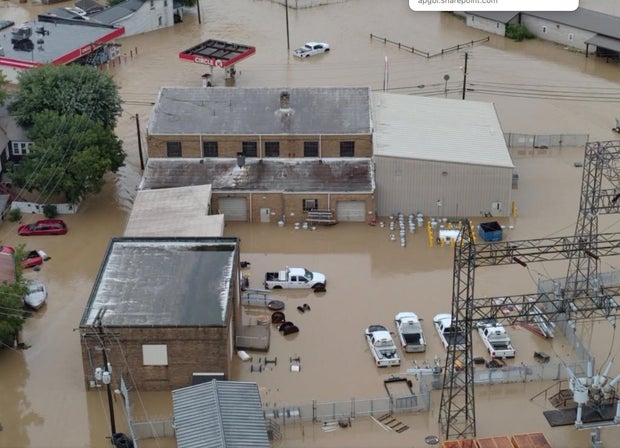
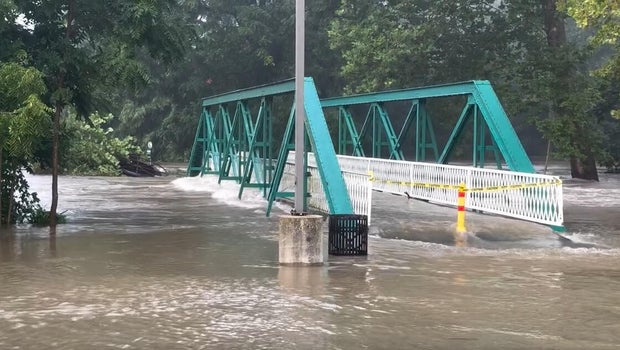
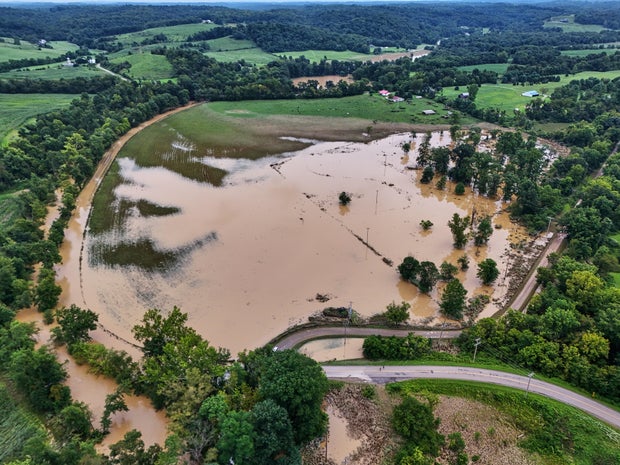
Flooding submerged Indiana neighborhoods in water for the second day in a row, as parts of the state saw Wednesday the highest daily rainfall totals ever recorded in their areas.
Some braced for more severe weather still ahead, as meteorologists warned Thursday that Indianapolis faced the greatest threats of storms slated to bring heavy rain to the Midwest throughout the rest of the week.
Upwards of 36 million people were under flood alerts Thursday across the region, according to the National Weather Service. Its forecast offices in Kentucky, Illinois, Indiana, Iowa and Tennessee warned that rainfall across each state could be persistent and widespread, potentially drenching parts of each state with another 4 inches or more.
The expected round of rainfall could bring strong winds, large hail, and additional flash flooding to communities recovering from extreme weather that has already wreaked havoc in recent days.
AEP Ohio via AP
Since Monday, 277 flash flooding incidents have been reported across the Ohio Valley, according to CBS News meteorologist Nikki Nolan, as deadly storms and tornadoes slammed the region. Since Tuesday, leaders in the region have declared seven different flash flood emergencies, and a quarter of a million people in Indiana and Illinois woke Thursday to power outages caused by the storms.
“The rain never stopped”
Many people had to be rescued by boat in Cambridge City, Indiana, after catastrophic floods on Wednesday left them stranded. Water filled city streets, rising several feet in the hardest-hit places and seeping into, at best, the ground floors of local homes. Some residents faced harsher conditions, with the deluge completely covering the roofs of their cars or crashing into their homes through doors and windows.
One man desperately clung to a light pole in Cambridge City as muddy, brown water swirled around him, before he was eventually rescued. Another, Christian Corder, of nearby New Castle, Indiana, evacuated his home after it flooded and told “CBS Mornings” that dealing with the aftermath has been “very overwhelming.”
“A lot of stuff is ruined,” Corder said, recalling how “the rain never stopped — it just kept coming and coming.”
New Castle received more than 11 inches of rain in just over a day. Such a high rainfall rate is extremely rare, with only a 1 in 1,000, or 0.1%, chance of it happening in any given year.
Town of Yorktown Indiana Community/Facebook
CBS News’ Meg Oliver said she encountered several washed-out roads and detours along a five-hour drive across Indiana on Wednesday that was supposed to take three. Even the region’s major interstate highway, I-70, was partly shut down after a section of it buckled under the weight of pounding rain.
Cambridge City streets remained submerged in water Thursday or were otherwise caked in mud, said Oliver.
And the destruction hasn’t been limited to Indiana: Wednesday’s flash flooding swept as far south as Knoxville, Tennessee, where fire trucks blocked off waterlogged streets. It came on the heels of an initial bout of severe weather that blasted parts of Ohio a day earlier. That storm left a trail of damage described as “historic” by Ohio Gov. Mike DeWine.
AP Photo/Gene J. Puskar
Flooding risks still ahead
Forecasters warned the worst may not yet be over for some Midwesterners, as rivers continued to swell Thursday in states previously struck by this week’s floods. Rising water levels could challenge records in some areas, potentially reaching levels not seen in more than a century.
In addition to Indianapolis, the oncoming storms could impact multiple metropolitan centers, including Des Moines, Louisville and Nashville, where most flood warnings and watches weren’t scheduled to lift before Friday.
“Excessive runoff may result in flooding of creeks, streams, and other low lying and flood prone locations,” said the weather service office in Jackson, Kentucky, on Thursday, in an alert issued for a vast portion of the state.
Although forecasters have said Illinois would likely be spared from the strongest and most destructive storms, a flood watch for the Chicago area was set to take effect Thursday evening and last until Friday morning, CBS Chicago reported.