
David Krumholtz clarifies his comments about his break from acting

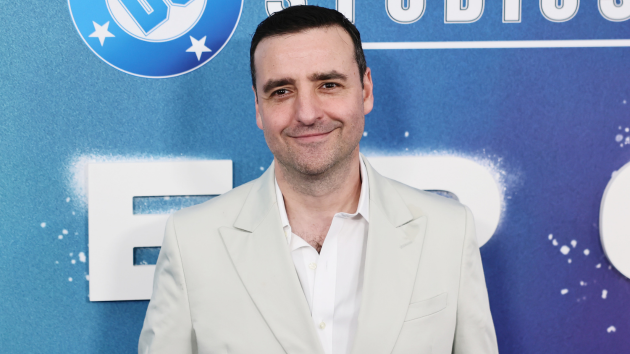
David Krumholtz attends the premiere of ‘Supergirl’ on June 22, 2026, in New York City. (Theo Wargo/Getty Images)

David Krumholtz is clarifying comments regarding his break from acting.

The actor took to a since-deleted Threads post on Tuesday to write that he is “frustrated, fed up, [and] fried” with the entertainment business and that he’s taking “an indefinite break” as “the profession has lost its gleam.”

“I kinda sorta put my acting career on hold the other day. It’s been something I’ve been petrified to do for years,” Krumholtz wrote in his original Threads post. “Specifically, the fear was that I’d go broke and not be able to handle being out of the game. But I sent the definitive email.”

Krumholtz clarified his remarks in an Instagram post on Wednesday, saying he is not technically retiring, only taking a break from acting.

“Firstly, I am very well. And I feel very loved. Secondly, I never used the word ‘retiring’ or ‘quitting’. Instead, I said that I decided to put my career on hold,” Krumholtz wrote. “I don’t expect anyone to understand, but the outpouring of support for my decision has been deeply heartwarming.”

The actor went on to say he is grateful for the support he has received in making his dreams and ambitions come true, but “a time has come where the weight of those dreams and ambitions has become surprisingly oppressive.”

Krumholtz said he prioritizing his mental health with this decision.

“My mental health is vital to my family. My career has run the gamut. I’m in disbelief. But I find myself at a crossroads between the inherent self involvement being a professional actor requires, and a burning desire to give more of myself to others in need, in whatever way I can. And so, for the time being, I’m pursuing that goal,” he wrote.

Audiences would recognize Krumholtz from his recent roles in this summer’s Supergirl and the best picture-winning 2023 biopic Oppenheimer. He also appeared in The Santa Clause franchise, 10 Things I Hate About You and Slums of Beverly Hills.

Copyright © 2026, ABC Audio. All rights reserved.

Moderna and Merck say melanoma vaccine succeeded in large trial

(CNN) — A personalized mRNA cancer vaccine combined with the immunotherapy Keytruda succeeded in a late-stage trial for the deadly skin cancer melanoma, its makers said Wednesday, potentially opening up a new way of treating the disease.The study is ongoing, but interim results found that the treatment, intismeran, met ​both its primary target of reducing cancer recurrence and its secondary ⁠goal of keeping cancers from spreading to other parts of the body. The treatment is being developed by Moderna and Merck, which also makes Keytruda.The results are “as big a day for humanity as Nov. 16, 2020,” when Moderna released late-stage clinical trial results showing that its Covid-19 vaccine worked, the company’s chief executive, Stephane Bancel, told CNN Wednesday. “This is a new chapter in cancer care.”Moderna said the company and partner Merck aim to file for approval from regulators within months, though they declined to provide a more specific timeline.“For many years, the idea of creating an mRNA treatment designed specifically for an individual patient’s cancer was aspirational,” Bancel said in a statement. “We are now helping turn that vision into a reality.”Treatment for melanoma patientsThe cancer ‌treatment ⁠combines Keytruda with a made-to-order mRNA vaccine that is based on an analysis of mutations found in the patients’ own tumors.The trial enrolled 1,137 high-risk patients with stage 2b to 4 melanoma that had been surgically removed.Volunteers were randomized to receive ​up to nine doses ​of Keytruda plus ⁠the personalized vaccine or Keytruda alone for about one year.The companies said no new safety signals have emerged in the ​trial. Previous studies showed that the most common side effects were fatigue, pain at the injection site and chills.In January, the companies announced results of a mid-stage trial of the ​treatment showing ⁠that it reduced the risk of recurrence or death by 49% after five years.Melanoma is the deadliest form of skin cancer. In ​2023, there were more than 1.5 million people in the U.S. living with melanoma, according to the National ​Cancer Institute.The companies said they will present their results at an upcoming medical meeting and share them ⁠with ​regulators.Karen Knudsen, CEO of the Parker Institute for Cancer ⁠Immunotherapy, said the Moderna results could signal a new era for treating solid-tumor cancers.“The positive hit here leads us into truly this next phase in immunotherapy,” Knudsen said. “This is an auspicious ​start — this is where things begin.”Backlash against mRNAMessenger RNA, or mRNA, is a single-stranded molecule that delivers genetic information to direct the formation of proteins. Before it was used in vaccines against Covid-19, mRNA was stirring excitement among cancer researchers.However, the technology has faced backlash in the wake of the pandemic, with some questioning the safety of mRNA. Experts say major safety concerns are unfounded, but government funding for mRNA, particularly for its use against respiratory viruses, has been slashed during President Donald Trump’s second administration, driving concerns that mRNA innovation would stall.The US Department of Health and Human Services last year canceled a $590 million deal with Moderna to develop an mRNA-based vaccine against emerging pandemic influenza. In August, HHS followed up by announcing it would no longer fund mRNA research through the Biomedical Advanced Research and Development Authority. The latter move involved the cancellation of 22 separate contracts.After the FDA initially declined to review Moderna’s mRNA-based flu vaccine because of the design of the company’s clinical trial, the agency recently approved it.Moderna shares surgeWednesday’s announcement sent Moderna’s shares surging 160%.Moderna has been ​diversifying its portfolio beyond its Covid-19 vaccine. The company recently added an FDA-approved flu ​vaccine while developing experimental shots for diseases including norovirus and Lyme disease.Analysts had noted the cancer vaccine data could be an important catalyst for the company and potentially strengthen investor sentiment, which had soured after a height during the pandemic. Last ​month Barclays analysts said they expect the therapy could generate about $3 billion for treating ​melanoma by 2035.The-CNN-Wire™ & © 2026 Cable News Network, Inc., a Warner Bros. Discovery Company. All rights reserved.
Read Next Story