
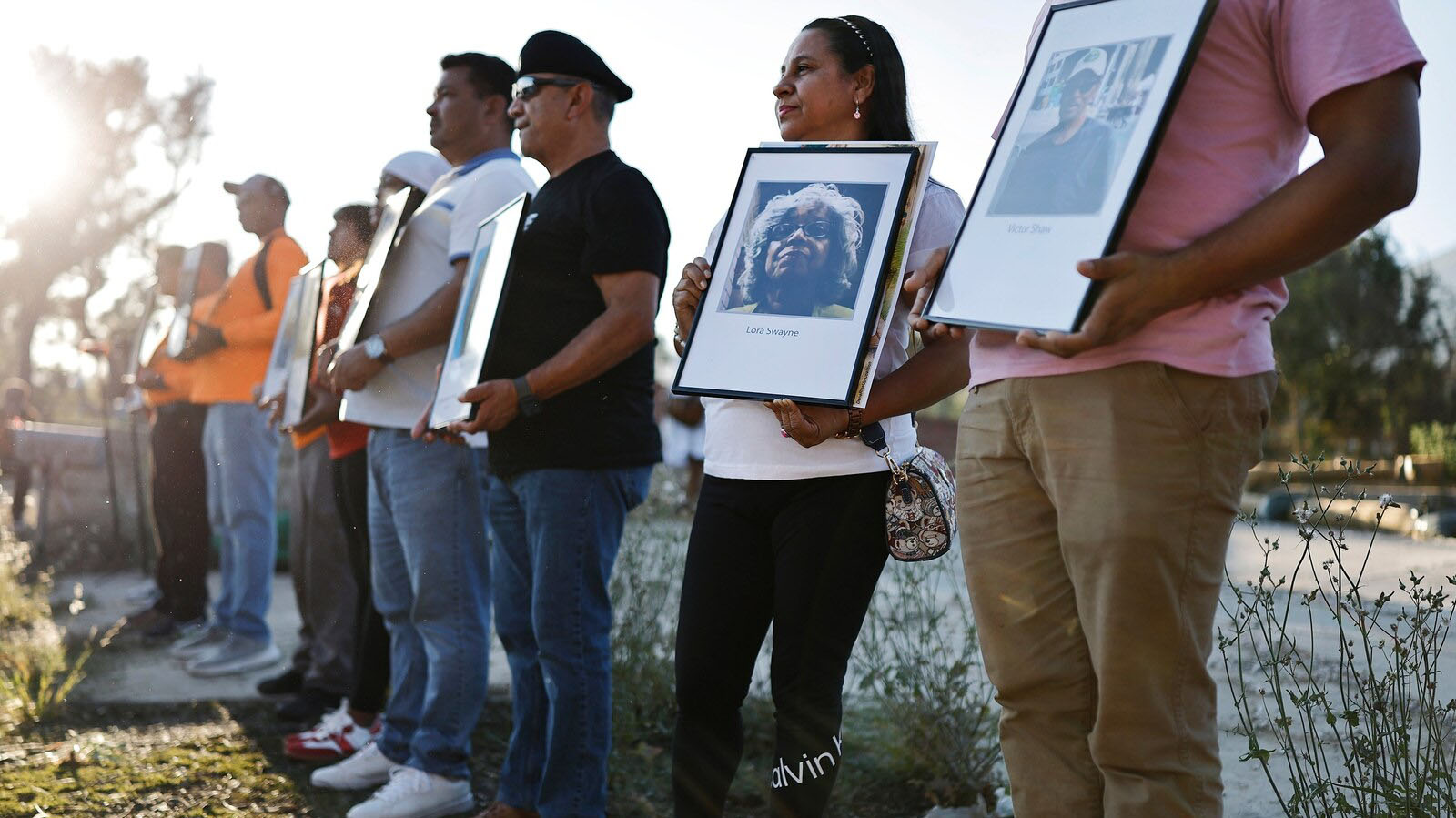
(NEW YORK) — More than 18 months after it ignited and became one of the most destructive wildfires in U.S. history, authorities announced the cause of the 2025 Eaton Fire in Southern California.
The Los Angeles County Fire Department (LACFD) and the California Department of Forestry and Fire Protection (Cal Fire) on Tuesday released a report blaming the Eaton Fire on electrical arcing events that took place on an out-of-service Southern California Edison (SCE) tower.
The Eaton Fire, which started on Jan. 7, 2025, ravaged the community of Altadena near Los Angeles, killing 19 people and destroying more than 9,400 homes and businesses, authorities said.
“I recognize that no report or investigation into the Eaton Fire can ease the deep pain and tragedy our residents have endured,” Los Angeles County Fire Chief Anthony C. Marrone said in a statement. “While the cause has been determined, our focus remains on assisting our residents to rebuild their homes and livelihoods, and ensuring lessons learned drive meaningful and impactful change in memory of the 19 lives lost.”
SCE is the primary electric utility company for much of the Southern California, serving 15 million people.
Lawyers representing plaintiffs in numerous lawsuits against SCE released a joint statement, saying the report leaves the company “no place to hide,” and called it “an important step toward accountability.”
Besides the thousands of homes lost in the Eaton Fire, more than 1,000 other homes were damaged, according to the plaintiffs’ lawyers.
The Eaton Fire caused an estimated $8 billion to $10 billion in damage, according to a 2025 report by Verisk, a global data analytics company serving the insurance sector.
“It’s time for Edison to stop fighting the victims it harmed and provide every Eaton Fire survivor with the full compensation they deserve,” the plaintiffs’ lawyers said.
The report by LACFD and Cal Fire found that the origin of the Eaton Fire was a hillside transmission tower above Eaton Canyon Wash, and sparks from the arching electrical lines set dry vegetation beneath the tower on fire. Gusting winds in the area rapidly spread the blaze into residential areas of Altadena, destroying block after block of homes and prompting thousands of evacuations.
It took about a month for firefighters to fully extinguish the Eaton conflagration, which burned about 22 square miles.
The Eaton Fire occurred the same week as the Palisades Fire, which killed 12 people and wiped out more than 6,800 homes in nearby Pacific Palisades and Malibu. The cause of the Palisades Fire was determined to be arson, and a 29-year-old Florida man was arrested in October of 2025 on charges of setting the fire, officials said.
Together, the Eaton and Palisades fires caused an estimated $28 billion in damage, according to Verisk.
David Eisenhauer, an SCE spokesperson, told ABC News on Tuesday afternoon that the utility giant is reviewing the report from the LA County Fire Department and Cal Fire.
“We have taken our potential role in the start of this fire seriously from the beginning,” Eisenhauer said. “As we’ve previously said, SCE believes that it is likely that its equipment was associated with the ignition of the Eaton Fire.”
Eisenhauer added, “Our hearts are with the Altadena community, and we continue to support them as they recover and rebuild through our Wildfire Recovery Compensation Program.”
ABC News reported on Jan. 13, 2025, as the Eaton and Palisades fires were still burning, that one possible theory for the cause of the Eaton blaze involved transmission lines or electric facilities.
At the time, witnesses shared with ABC News Ring camera and cellphone videos that appeared to show what they believe to be the start of the Eaton Fire at the base of a transmission tower in the Eaton Canyon area.
In their report, fire investigators said that pursuant to the California Public Utilities Code, “SCE is to maintain and operate its electrical lines and equipment in a manner that would minimize the risk of catastrophic wildfire posed by them.”
SCE has claimed in lawsuits filed earlier this year that Los Angeles County emergency authorities failed to send timely evacuation warnings to residents in east and west Altadena. Most of the people who died in the fire lived in west Altadena.
Copyright © 2026, ABC Audio. All rights reserved.