
London — Jason Arday’s school teachers were clear with him as he grew up. Life was going to be tough.
Arday was diagnosed with autism and a condition called global development delay at the age of just three. It meant he was unable to speak until he was 11, and he couldn’t read or write until he was 18.
“Not many teachers at school had any belief in me,” he told CBS News on Thursday. “Educational psychologists and behavioral therapists were… very robust in their assessment that I would struggle in later life and I would need assisted living.“
Now 37, Arday has just been appointed as the University of Cambridge’s youngest ever Black professor.
Arday, who will start his work as a professor of sociology of education at the world-renowned university Monday, said the key to his extraordinary rise was perspective.
“I never saw any of it as a deficit, mainly because my mother never spoke to me of me being disadvantaged in any way,” he told CBS News.
Even his “paralysis of speech,” he said, “was a blessing… It allowed me to observe human interaction.”
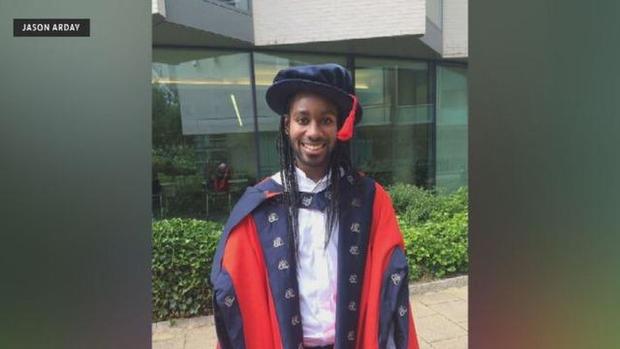
Jason Arday
When, he did learn to read and write as a young man, he said those “observations… came to life.”
Arday’s mother helped him “engage with the world in different ways, through music, particularly song lyrics… and the use of sound to make sense of things.”
Modern Celtic musician Enya was a childhood favorite, he added.
Arday said his mother had always told him “that I was blessed, I was very fortunate and I would go on and do great things. Now, I don’t think any of us could have guessed we might get to this point. But if I managed to achieve anything in my life, it’s really because of the amazing people I had around me.”
“Not as celebratory as people think”
Arday was born and raised in south London. He went to college to earn a degree in education and physical education, and then went on to earn two master’s degrees before qualifying as a teacher. He then earned his PhD at Liverpool John Moores University.
He paid for his studies by working at national grocery and drug store chains.
Arday said his personal journey has shaped his teaching style, which he described as being built on love, solidarity and understanding.
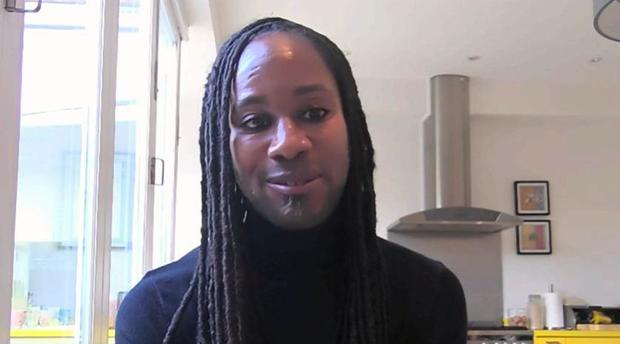
“There’s a whole vocabulary of ways to engage people pedagogically, and there are so many different ways in which people learn… What is really important,” he said, “is instilling belief in people.”
Arday will join five other Black professors at Cambridge, but only 160 of the U.K.’s nearly 23,000 professors are Black in total – just 1%, according to the latest figures from the Higher Education Statistics Agency.
Cambridge’s new professor is determined to see that statistic change. His work at the university will focus on the lack of Black and minority ethnic people in higher education and academia.
“Upon sitting or standing on a vista, one of the things that you want to be able to see is… people that look like yourself,” said Arday, “and when you don’t have that, it’s actually not as celebratory as people would think.”
That has pushed him to “return to my original mission, which is really to engage in the redistribution and diversification of global academia – and in particular U.K. higher education.”